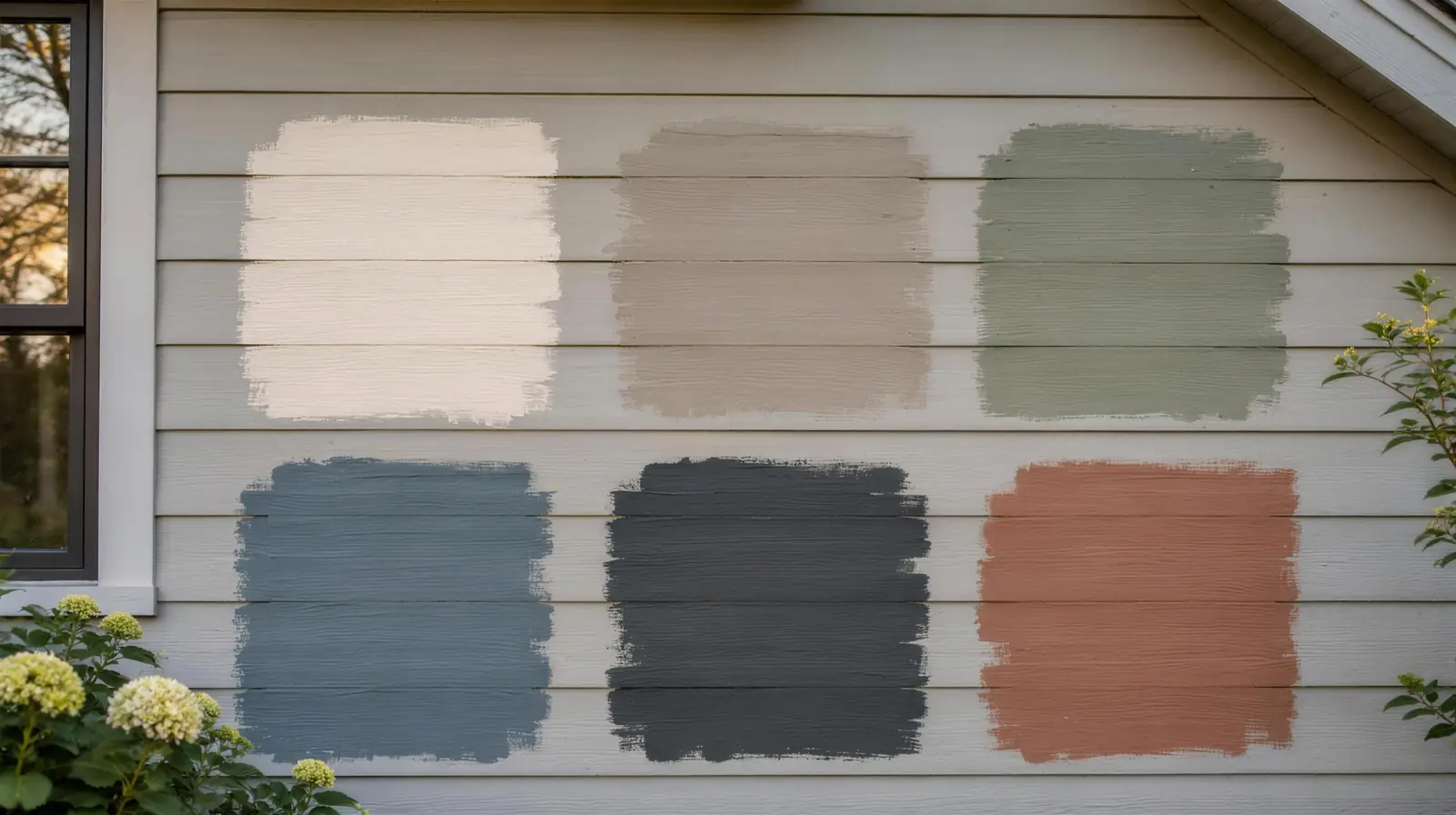
Most HOA paint approval delays are paperwork delays. The committee doesn't reject the color. It sends the packet back because something is missing: no sheen listed, no photo showing where the trim color goes, no garage door color at all. Each round trip can cost a full meeting cycle.
That's why November is a good month to submit. Many architectural review committees meet on a set schedule and slow down over the holidays, so a complete packet sent now leaves room for one round of questions and still keeps a spring paint date open. Start with the checklist, then read what commonly comes back and how to answer it.
The packet checklist
Get the current design guidelines and the application form from the HOA or its management company before anything else. Covenants and design guidelines differ by community, and some spell out exactly what to submit. Where they don't, this is what we'd put in the packet.
- The community's application form, every field filled in, signed by the owner of record
- Paint maker, color name and color number for each surface: body, trim, fascia and soffit, accents, front door, garage door
- Physical color chips or a painted sample board, if the guidelines ask for them
- The sheen for each color
- A current photo of every side of the house that will be painted
- A marked-up photo or simple sketch showing which color goes where
- Photos of the neighboring houses, if the guidelines limit matching nearby homes
- The palette scheme number, if your community uses an approved palette
- Any material changes riding along with the paint, such as new trim boards, gutter color, shutters or railings
- The planned start window and the painting contractor's contact details, if the form asks for them
What committees commonly send back
Almost none of these are about taste.
The colors are listed, but not where they go
"Body: color A, trim: color B" leaves open questions. Is the fascia trim color or body color? Are the garage door and front door painted to match the body, the trim, or an accent? Committees usually review placement along with the colors themselves, because a palette-approved trim color on a large garage door changes how the house reads from the street. A photo with each surface labeled answers this before anyone asks.
No sheen listed
Some guidelines limit sheen. Even when they don't, a reviewer may ask, and an unanswered question means waiting for the next meeting. List the sheen for every surface. A flatter finish on the body with satin or semi-gloss on trim and doors is a common pattern, but your guidelines win if they say otherwise.
Too close to the neighbors
Some communities don't allow the same color scheme as an adjacent home, or limit how close together identical schemes can be. If your guidelines include a rule like that, photos of the houses next door and across the street save a back-and-forth. If you don't know what the neighbors used, the management company may have it on file from their own approvals.
"Same colors" that aren't quite the same
Some communities require approval for any exterior repaint, including same-color repaints. Others only want to see a change. If a color was discontinued, or a shade was adjusted at the last repaint, "same colors" may no longer be accurate. Bring the current color numbers and a photo, and say plainly if anything differs.
Missing signatures and blank fields
It sounds too small to matter, but an unsigned form or a missing lot number can cost you a meeting cycle just like a missing color can. If the house is held in a trust or has co-owners, find out who needs to sign before you submit.
When to ask for a variance
If the color you want isn't on the approved palette, you may be able to ask for an exception. Whether that's possible, and how it works, depends on the community's governing documents. Read the design guidelines and ask the manager before you build a case.
If this, then that
- If every color is on the palette and placed the way the palette shows, then submit the standard application. No variance needed.
- If you're using palette colors in a different placement, such as an accent color on the body, then ask whether that counts as a change that needs separate review.
- If a palette color has been discontinued by its maker, then ask the committee to name an approved substitute before you choose one yourself.
- If you want a color that isn't on the palette, then ask whether exceptions are allowed at all, and if so, submit a large painted sample with photos of the house and street.
- If the guidelines are silent on your situation, then put the question to the committee in writing and keep the answer.
Timing the packet around the committee
Ask the manager when the committee meets, how far ahead of a meeting the packet has to arrive, and whether it reviews applications over the holidays. Then work backward, so any question from the committee lands in December or January, not in May.
Townhome communities work differently. The association often handles exterior painting for whole buildings on its own schedule, so check whether an individual owner can submit a color change at all. Our HOA and townhome painting page covers how we work with boards and managers on approvals.
Covenants and design review are common in the south metro's master-planned communities. If you're preparing one for exterior painting in Highlands Ranch or exterior painting in Castle Pines, those pages cover the housing and conditions we plan around in each area.
The bottom line
A packet that names every color, its sheen and its exact location, backed by photos, gives the committee nothing to send back. Submitted in November, a single round of questions costs you a few weeks of winter instead of part of your painting season.
Request an estimate and we'll help pull together the color, sheen and placement details your committee asks for.