How each Denver house type fails
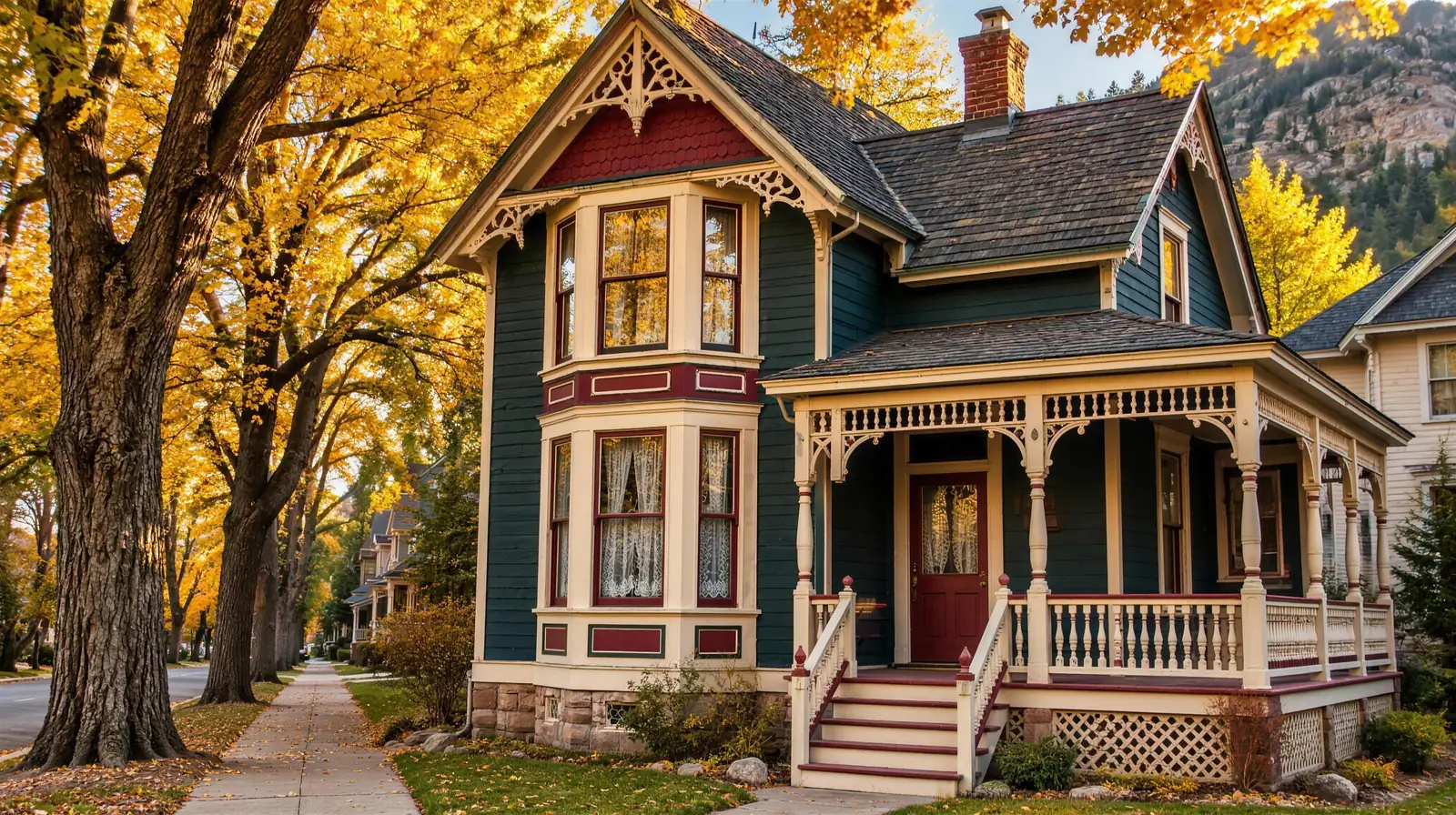
Victorians
The Queen Annes and other late-1800s houses in neighborhoods like Capitol Hill, Highland and Curtis Park carry the most paint per square foot of any house in the city: spindles, brackets, shingled gables, porch columns and window casings stacked with a century of coats. Paint fails here by layer, with old coats letting go underneath newer ones, so the prep is slow hand scraping and spot priming. Multi-color schemes add hours, and we price them by the detail, not the wall area.
Brick bungalows and Denver squares
Early twentieth-century bungalows and the boxy two-story Denver squares are usually brick on the body with painted wood eaves, porches, window trim and sometimes stucco or shingle in the gables. The brick may need nothing. The deep eaves, porch floors and window sills take the beating and are where we spend most of the time.
Tudors
Park Hill and other neighborhoods have Tudor Revival homes that mix brick, stucco and half-timber boards. The timbers rot first at their lower ends where water collects against the stucco, and the stucco needs a coating that lets moisture out.
Postwar ranches
The ranches of southwest and southeast Denver are simpler: long fascia runs, brick or siding, garage doors, sometimes aluminum siding with a chalky factory finish that needs washing and a bonding primer. Many ranches have also picked up vinyl windows, metal-wrapped trim or vinyl siding over the decades. Vinyl can be painted with products made for it, but only in colors the manufacturer allows, since dark colors can make it warp in the sun.
Should your Denver brick be painted?
Denver has an unusual amount of brick housing for a Western city, and the question comes up on almost every older house. Unpainted brick and soft historic mortar move moisture in and out freely. A film of paint can trap that moisture, and once brick is painted it stays a painted surface that needs recoating for the life of the house.
If this, then that
- If the brick has never been painted and is sound, then we recommend leaving it bare and painting only the wood trim.
- If the brick was painted long ago and the paint is peeling, then it gets cleaned, loose paint removed, and a breathable masonry coating applied.
- If brick faces are flaking or mortar joints are washing out, then a mason should repoint first; paint will not hold on a wall that's coming apart.
- If the house is a designated landmark or sits in a historic district, then we check with the city's Landmark Preservation staff before painting any masonry that is currently unpainted.
For the wood side of a brick house, see our trim and fascia painting page.
Landmark districts and lead-safe work
Denver has a Landmark Preservation program with designated landmarks and historic districts, and exterior changes to those properties can require review. Routine repainting of surfaces that are already painted is generally a different matter from altering materials, but rules and guidance can change, so we ask the owner to confirm with the city before we plan work on a designated property.
Our exterior prep and repair page explains how we set up containment and how we handle rotted sills and trim found during scraping.
Mile-high sun, hail and the city's painting season
At about 5,280 feet the sun is harder on paint than at lower elevations. South and west walls fade and chalk first, and dark colors on those sides lose depth fastest. Spring snow can arrive into May, summer afternoons bring storms and hail, and October nights cool off enough that the product data sheet's surface temperature minimum shortens the day. A large Victorian can take a big piece of the season, so starting early matters. If you live just outside the city line, we also cover Lakewood and Glendale.