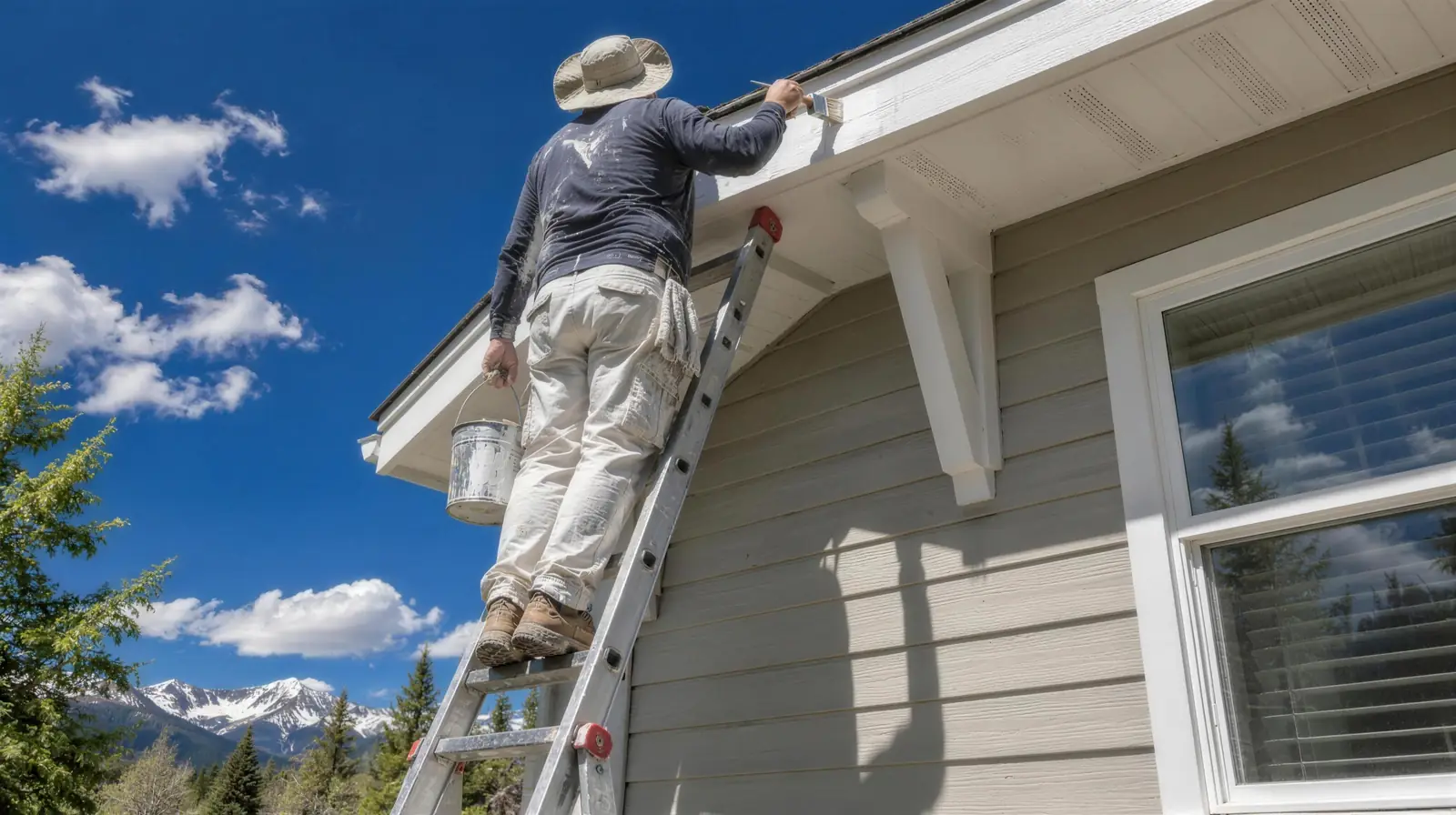
Why trim fails before the siding
Trim has more joints, more end grain and more contact with standing water than any other painted surface. Fascia sits behind the gutter, where overflow and ice dams keep it wet. Window sills face up and hold snow. Door jambs and garage jambs meet concrete that stays damp. Every miter and butt joint is a place for caulk to crack and water to wick into end grain.
Sun finishes the job. Trim paint on south and west walls loses gloss, chalks and fades first, and the daily expansion and contraction of thin boards cracks old, brittle paint at the joints. Along the Palmer Divide, in Monument, Palmer Lake and Larkspur, heavier snow and long freeze-thaw seasons make fascia and sill rot more likely.
Fascia and soffit painting
| Surface | What we check | Typical approach |
|---|---|---|
| Wood fascia | Soft ends near downspouts and corners, peeling behind gutters | Probe for rot, repair or replace, prime bare wood and cut ends |
| Metal-wrapped fascia | Faded or chalky aluminum, loose wrap | Wash, degrease, bonding primer, acrylic topcoat |
| Wood soffit | Peeling from attic moisture or ice dams | Scrape, spot prime, keep vents clear |
| Vented aluminum or vinyl soffit | Chalk, dirt, faded color | Wash, coating suited to the material, perforations kept open |
Soffit vents feed the attic ventilation. Paint that bridges the perforations in a vented soffit, or clogs the screen on a wood soffit vent, cuts airflow, so vents get masked or brushed lightly, never rolled shut.
Window and door trim: caulk, prime, finish
Most window trim repaints are a caulking job with paint on top. Old caulk that has cracked, shrunk or pulled away from one side gets cut out. Bare wood gets spot primed, knots get a stain-blocking primer, and fresh sealant goes into the clean, primed joints where trim meets siding. The drip cap over the window and the weep holes in vinyl and aluminum window frames stay open.
The finish coat is usually a 100% acrylic in satin or semi-gloss, which sheds dirt and wipes clean better than flat. Rot at sill corners and the bottoms of casings is common; small spots take epoxy consolidant and filler, bigger ones a new piece of trim. That repair work is covered in more detail on exterior prep and repair.
PVC and engineered trim
Not all trim is wood. Many newer houses use cellular PVC or engineered wood trim boards. PVC takes acrylic paint well once it's cleaned and lightly scuffed, but it expands more with heat than wood does, and PVC trim makers often restrict how dark a painted color can be unless the paint is formulated for it. Engineered trim follows the same rule as engineered siding: any cut end or nail hole that reaches the wood strands gets sealed before paint.
Front doors in full sun
A west-facing front door is one of the hardest surfaces on a Front Range house to keep looking good. Wood doors check and peel along panel edges. Fiberglass and steel doors chalk and fade.
The biggest trap is a dark door behind a full-glass storm door. The glass traps heat in the space between the two doors, and many door makers warn that this can blister the finish and warp the door. If you want a dark front door on a sunny elevation, sort out the storm door question first.
Doors need real dry time before they close against weatherstripping. Paint that feels dry can still stick to itself or to the seal (painters call it blocking), so the door stays propped open for the time the data sheet suggests, and hardware is removed or carefully masked.
Garage door painting
Most garage doors in Front Range subdivisions are steel with a factory finish, and many face the street on a south or west side. That finish chalks over time, and hail leaves dents and scratches that rust once they reach bare steel.
- Wash the whole door, including the panel recesses, and let it dry.
- Sand or wire-brush any rust, then prime bare steel with a rust-inhibiting metal primer.
- Scuff the glossy factory finish so the new coat has something to grip, or use a bonding primer.
- Brush the recesses and roll the flat panels, one section at a time.
- Leave the bottom seal and side weatherstripping unpainted.
- Keep the door still until the paint is dry enough that the section joints won't stick.
The wood jambs and header around the door matter as much as the door itself. Their bottom ends sit against the driveway, take snowmelt and de-icing slush all winter, and are a common spot for rot, so they get probed before anything is painted.
Dark colors on a steel garage door in direct sun run hot. Some door makers publish guidance on dark colors, especially for insulated or composite doors, and it's worth reading before choosing charcoal for a west-facing door.
Trim-only repaints and timing
Because trim wears out first, repainting fascia, trim and doors on their own can stretch the time between full repaints, as long as the new trim still looks right next to an older body color. White and off-white trim are forgiving. Matching an exact faded color is harder, so some owners shift the trim color slightly on purpose.
- Which fascia and sill locations will be probed for rot, and how are repairs approved?
- Will old caulk be cut out or covered over?
- What primer goes on bare wood, knots and rusted metal?
- Which sheen for trim, doors and the garage door?
- How will soffit vents and door weatherstripping be protected?
Small surfaces dry quickly, which makes trim easier to fit around afternoon storms in hail season, but data sheet temperature limits still apply in spring and fall. When the body of the house is due too, trim gets scoped with siding painting so both colors are chosen together.
Request an estimate for trim, fascia and doors alone, or as part of a full repaint.