Stain types and how each one wears
Deck and fence stains run along a scale from clear to opaque. More pigment means more UV protection, and it also means the finish behaves more like paint.
| Stain type | Look | How it wears | Where it fits |
|---|---|---|---|
| Clear or toner sealer | Grain fully visible | Little UV protection; wood grays quickly in strong sun | Short-term water repellency |
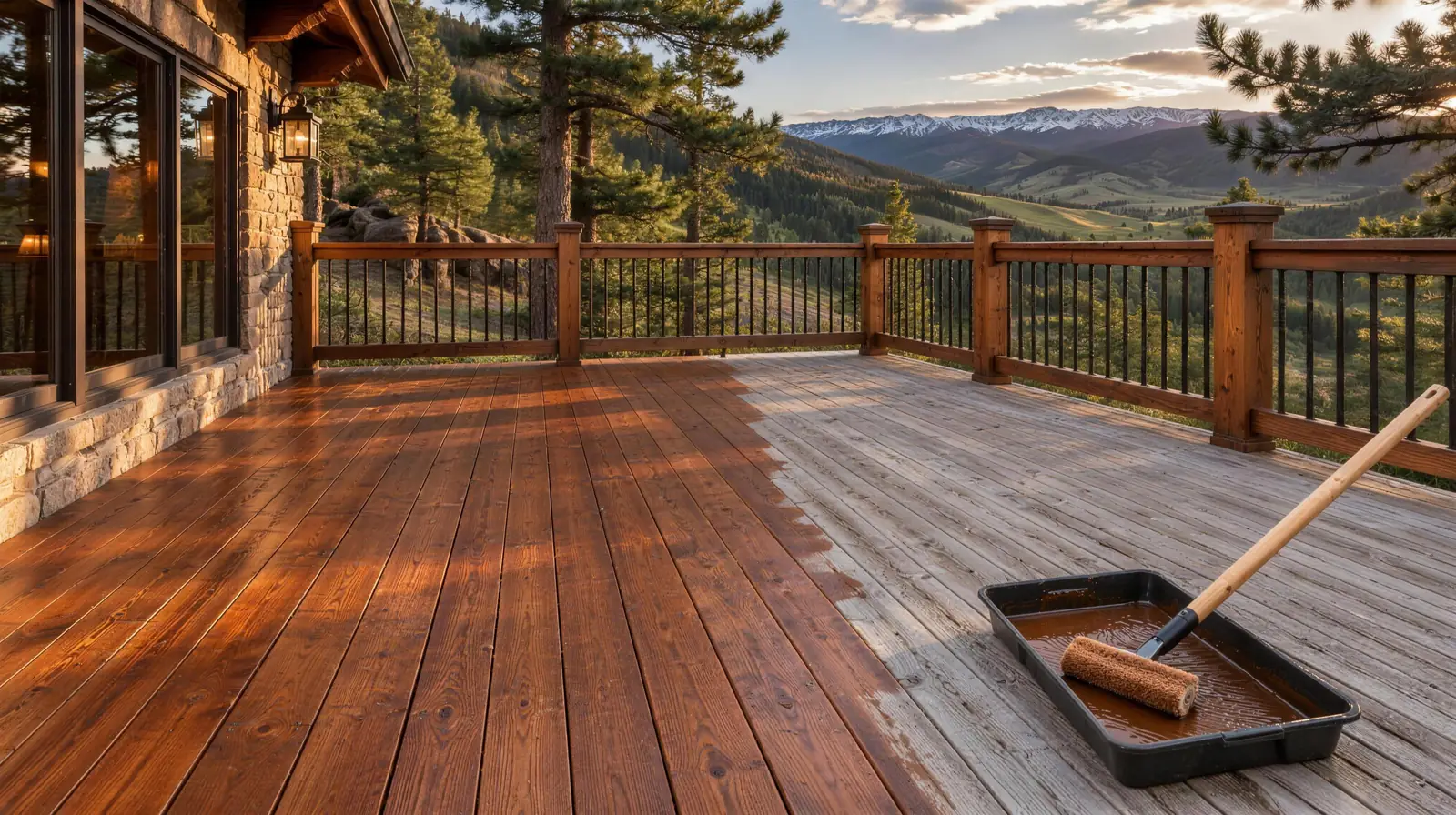
| Semi-transparent | Grain shows through color | Fades and erodes; recoats without stripping | Most cedar and pressure-treated decks and fences |
| Semi-solid | Some grain texture shows | Between the two | Older wood with uneven color |
| Solid (opaque) | Covers grain like thin paint | Forms a film; can peel on deck floors | Fences, rails and vertical surfaces |
Oil-based penetrating stains soak into the wood and wear by fading, which keeps maintenance coats simple. Water-based stains dry faster, clean up with water and have less odor, and many sit closer to the surface. Neither is wrong. The rules that matter: don't switch between them without stripping, and don't put a penetrating stain over a film that's still on the wood, because it has nowhere to go.
Tone matters too. A nearly clear, light stain shows the most grain but gives the least UV protection, so a mid-tone semi-transparent usually holds color longer on a sunny deck. Dense hardwood decking such as ipe won't absorb most standard stains and takes oils made for hardwoods.
Why decks fail faster than fences
A deck floor is a horizontal surface in full sun at altitude. Snow sits on it for days, melts, refreezes in the gaps and checks, and then the boards dry out under a strong spring sun. Foot traffic grinds the surface. A fence stained the same day with the same product, standing vertical, usually looks better for longer.
West-facing decks along the edge of the foothills, in places like Ken Caryl, Golden and Loveland, take the full afternoon sun. That's where solid stain on deck floors peels first and semi-transparent stain fades first.
Cleaning and brightening come first
- Clear furniture and grills, and cover plants and the lower siding.
- Clean with a deck cleaner, usually an oxygen (sodium percarbonate) cleaner for graying and dirt, or a stripper where old film stain has to come off.
- Rinse at low pressure. Too much pressure raises fuzzy fibers and gouges the soft growth rings.
- Apply a brightener, usually oxalic acid based, to neutralize the cleaner or stripper and lift tannin and iron stains.
- Sand furred areas and set any raised nails or screws.
- Let the wood dry fully. Dry Colorado air helps, but the boards still have to pass a water drop test.
Applying stain in Front Range weather
The stain label sets temperature limits, recoat windows and how long the surface has to stay dry afterward. Stain applied to hot boards in direct midday sun dries before it soaks in, leaving lap marks and a shiny surface film that wears off unevenly. Mornings suit west-facing decks; afternoons suit east-facing ones.
Penetrating stain goes on in thin coats, worked into the wood with a brush or pad, and excess is back-brushed before it skins over. More isn't better. Stain that can't soak in stays tacky and wears off in a season. Follow the label on one coat versus two, and whether the second goes on wet-on-wet.
Afternoon thunderstorms and hail in late spring and summer can arrive fast, and fresh stain needs a dry window. We watch the National Weather Service forecasts from the Boulder and Pueblo offices and schedule deck floors for days with a clear afternoon.
Fence staining: both sides, the bottom and the neighbors
Cedar and pine privacy fences, common in suburbs like Highlands Ranch, usually get stain sprayed and back-brushed, since rough-sawn pickets and rails have a lot of edges. The bottom few inches matter most. Sprinklers that hit the fence and snow drifted against it keep board bottoms wet, and that's where the graying and rot start. Adjusting a sprinkler head can do more for a fence than another coat of stain.
Two practical points come up on almost every fence. The neighbor's side needs the neighbor's permission, and overspray onto their yard, car or house has to be controlled with shields and wind limits. And many HOAs specify a fence stain color, sometimes by product name, so staining the wrong color can mean doing it twice. HOA and townhome painting covers the approval side.
Deciding what your deck or fence needs
If this, then that
- If the wood is fairly new and mostly sound, then a semi-transparent penetrating stain keeps the grain and recoats easily.
- If a deck floor already has peeling solid stain, then strip and sand, or accept recoating with solid on a shorter cycle.
- If boards are cupped, split or soft, then replace them first, because stain doesn't restore structure.
- If the decking is composite, then it generally isn't stained; cleaning is usually the right service.
Soft joists, loose railings and failed ledger flashing are carpentry problems and should be checked before any finish goes on. Rotted trim, posts and boards around painted parts of the house fall under exterior prep and repair.
Request an estimate and mention the deck size, fence length and current finish if you know it.