Reading a Colorado Springs house by its era
The city grew in waves, and you can usually tell which wave a house came from by walking around it once. That tells us more about the job than the square footage does.
| Era and area | Typical exterior | What fails first | Where the prep time goes |
|---|---|---|---|
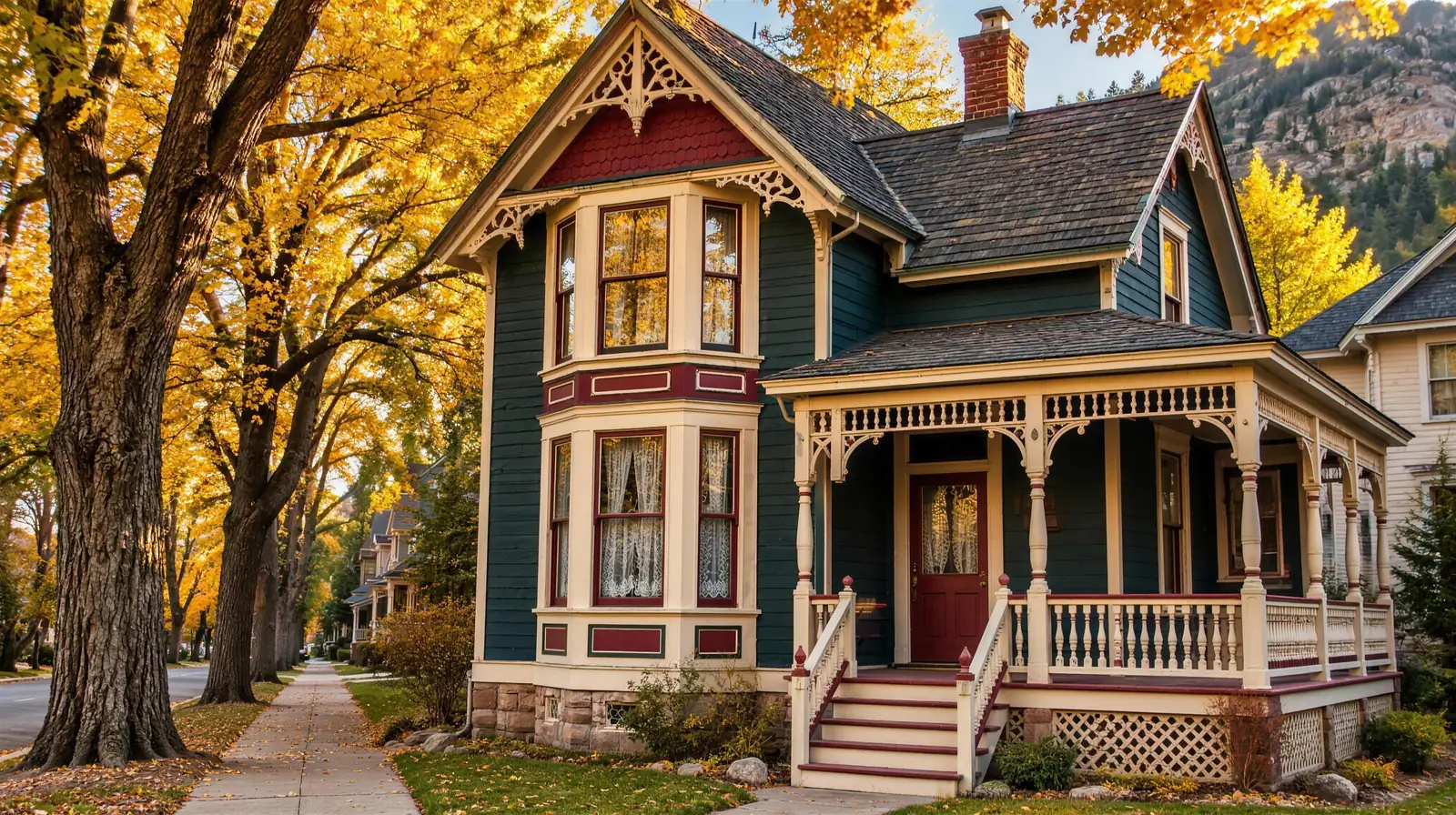
| Late 1800s to 1940s, the Old North End and older central blocks | Wood clapboard, shingle accents, some brick | Window sills, porch floors, layered paint cracking in a grid pattern | Lead-safe scraping, wood repair, a bonding or oil-based primer where old coatings demand it |
| Postwar ranches, 1950s to 1970s | Wood or hardboard lap, brick wainscot, long eaves | Fascia end grain, garage door bottoms, sun-side siding | Fascia repair, spot priming, recaulking at brick lines |
| 1980s to 2000s subdivisions, much of the north and east side | Stucco, hardboard lap, painted wood trim | Swollen hardboard edges, hairline stucco cracks, chalky south walls | Board replacement, crack patching, a breathable masonry coating on stucco |
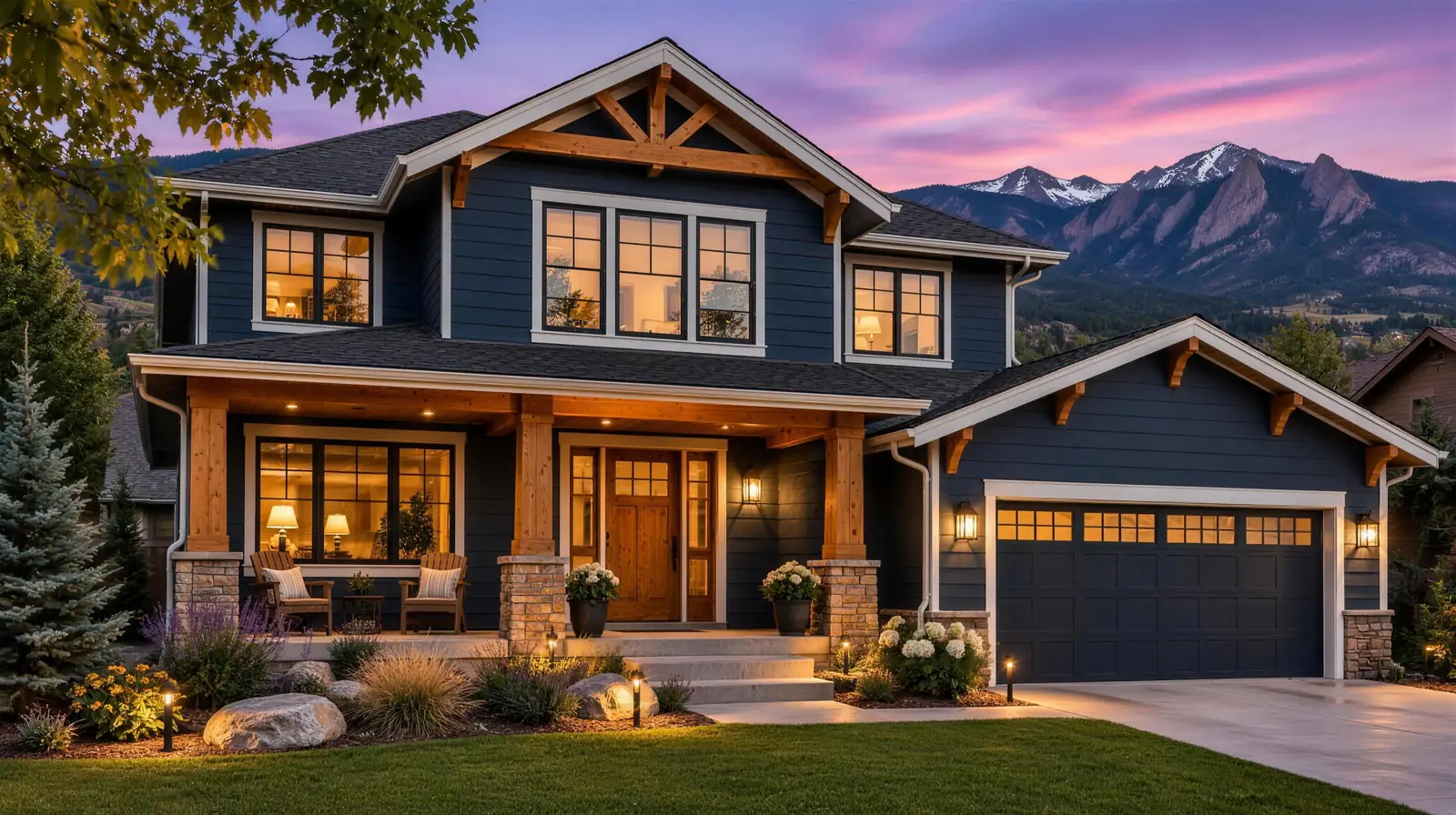
| Newer construction | Fiber cement, engineered wood, stone veneer | Builder caulk shrinking, thin builder paint fading | Washing off chalk, new sealant at every joint, full two-coat finish |
Stucco is the single most common surface we look at on newer homes here. Our stucco painting page explains how we choose between a standard masonry paint and an elastomeric.
Hail belongs in the plan from the start
Storms that drop hail on the Springs are a regular part of late spring and summer. On a painted house, hail does three things: it dents aluminum gutters and downspouts, knocks small chips out of stucco, and cracks the paint film on wood and hardboard edges. The film cracks are the ones people miss, because the wall still looks fine from the street.
When we inspect after a storm, we look closely at the west and north faces, since storms here often arrive from those directions, and at window wraps and fascia, where a single cracked spot lets water into the wood behind it.
West side and east side wear differently
Neighborhoods climbing toward the foothills sit higher, closer to the mountain front and often under more trees. Those homes see strong downslope wind events in the colder months, more pine needles in gutters and more shade on one or two sides. Shaded walls stay damp longer after snow, so we check them for mildew and soft wood at the bottom courses.
Out east, lots are more open. Full sun hits every wall at some point of the day, wind carries grit off undeveloped ground, and lawn sprinklers soak the lowest row of siding all summer. Paint on those houses tends to chalk and fade evenly before it peels, which makes the timing easier to judge: rub a dark cloth on the south wall, and if it comes back coated, the finish is near the end of its life.
Repainting before a sale or a move
With Fort Carson, the Air Force Academy and other installations nearby, a lot of houses in the Springs change hands on a schedule set by orders, or become rentals when owners relocate. That changes the brief. A house going on the market needs a clean, even finish in a color buyers won't argue with, and the prep has to be honest, because inspectors probe soft fascia and swollen siding.
For a rental, we usually steer owners toward durable finishes and a color scheme that's easy to touch up between tenants. Either way, rotted trim and failing caulk come first. Our exterior prep and repair page shows what that work involves.
What to settle before your estimate
Know whether there's an open insurance claim, whether you plan to change colors, and whether your neighborhood has a covenant or association that reviews exteriors. If the house was built before 1978, expect us to plan for lead-safe work. Homes on the west side in or near Manitou Springs often bring tighter access and older materials, so mention slopes and stairs when you reach out.
Request an estimate and we'll walk each side of the house before we write anything down.