Four Decades of Building, Four Kinds of Siding
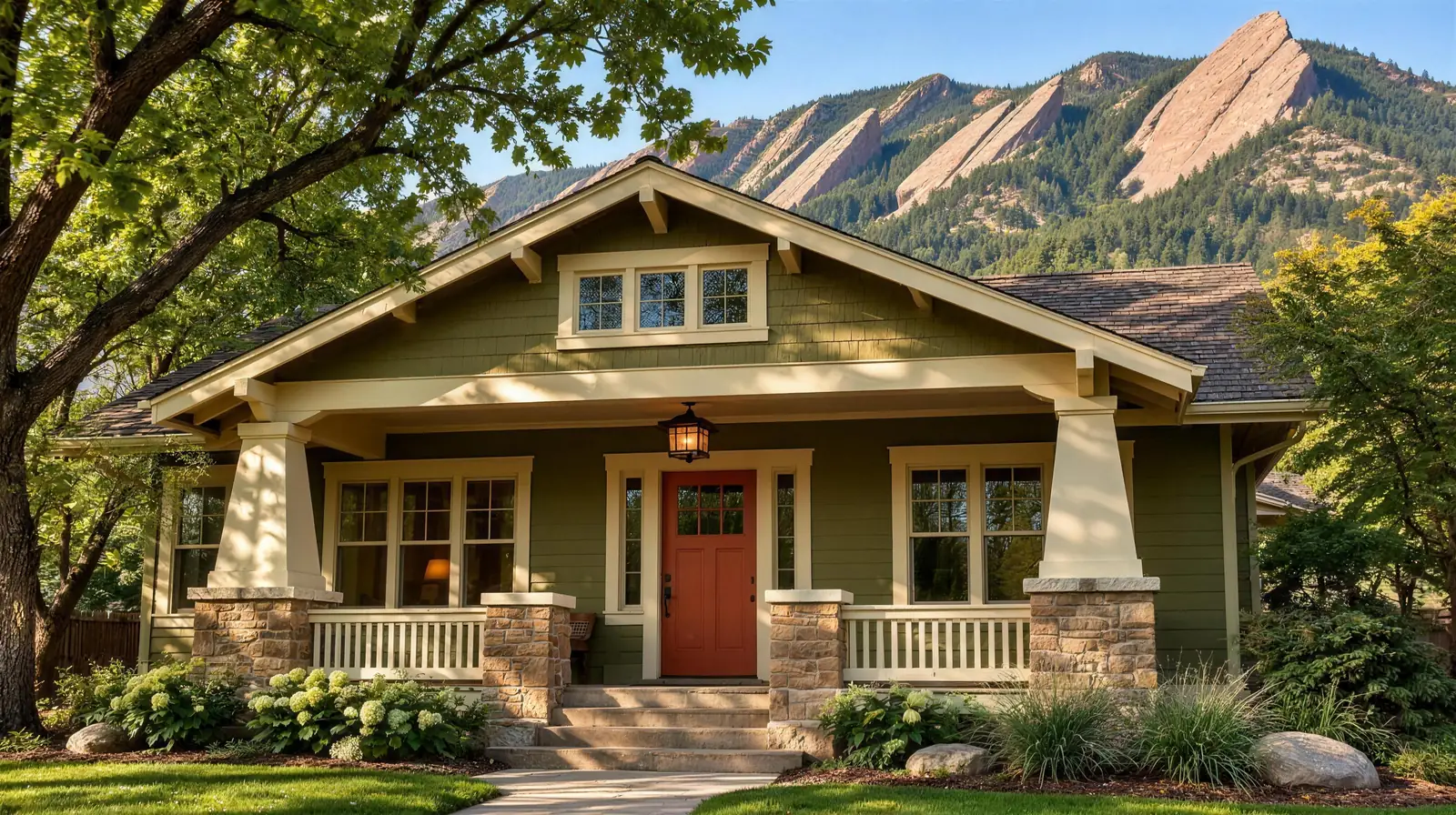
Highlands Ranch filled in over roughly 25 years, and you can read that on the walls. As a rough rule, the earliest neighborhoods sit closer to C-470 and the newer ones toward the southern edge. The older houses lean on hardboard lap siding and painted wood trim. Later builds brought more fiber cement, more stucco, and stone wainscots at the front.
Each material fails in its own way, so we inspect by material before we talk about color.
| Surface | What fails first | How we handle it |
|---|---|---|
| Hardboard lap siding | Swelling and flaking along bottom edges and at butt joints, where water sits | Probe for soft spots, replace swollen boards, seal exposed edges, prime before topcoats |
| Fiber cement lap | Caulk joints opening, heavy chalk on sunny walls | Wash the chalk off, reseal joints with a flexible sealant, acrylic topcoat |
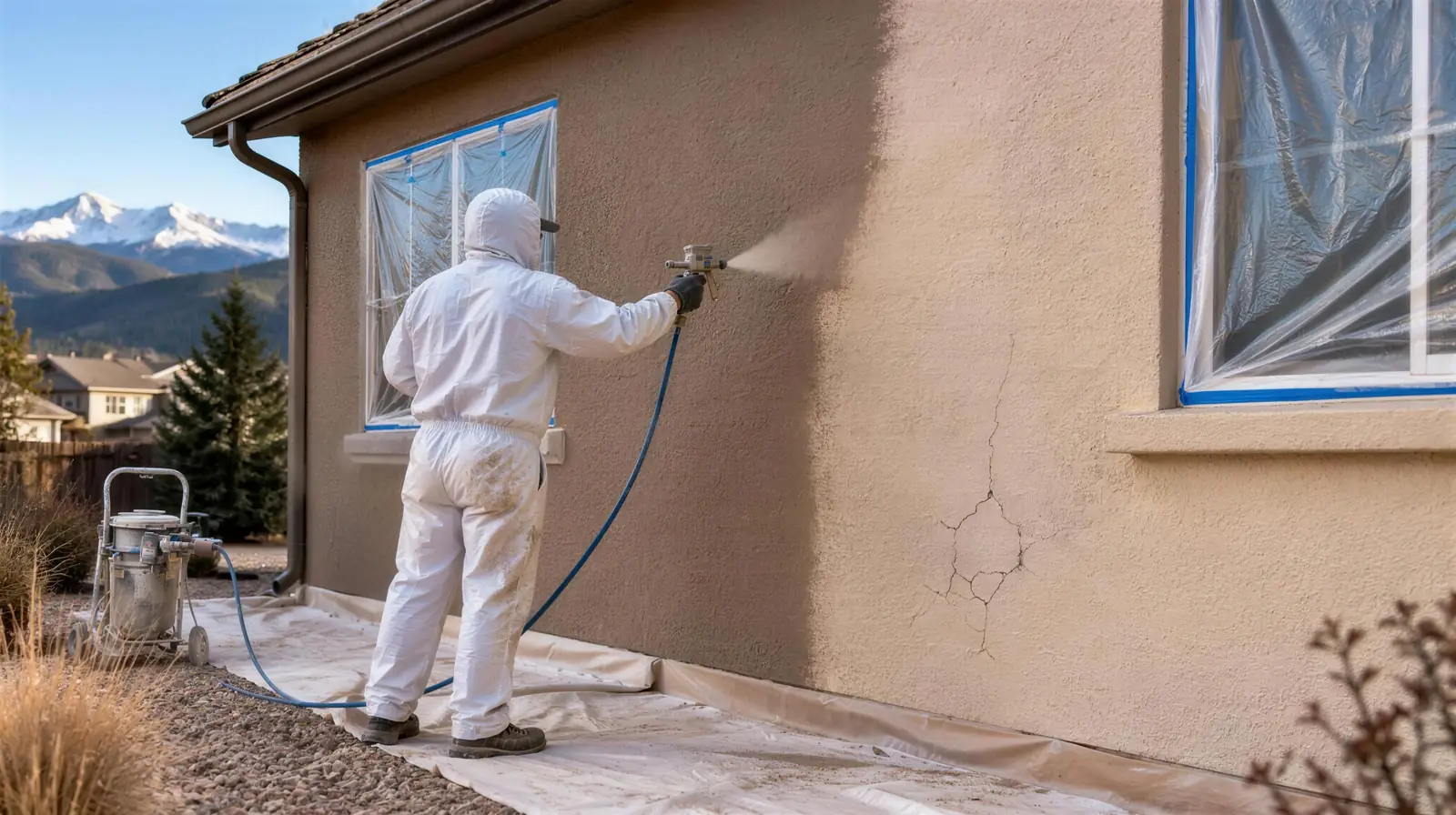
| Stucco fields and bump-outs | Hairline cracks, faded color, staining near grade | Patch cracks, then a masonry coating matched to the stucco type |
| Wood fascia and trim | Split end grain and peeling on south-facing runs | Scrape to sound edges, spot prime, caulk, two finish coats |
Our siding painting page covers each siding type in more depth.
Get the Colors Approved Before You Book a Start Date
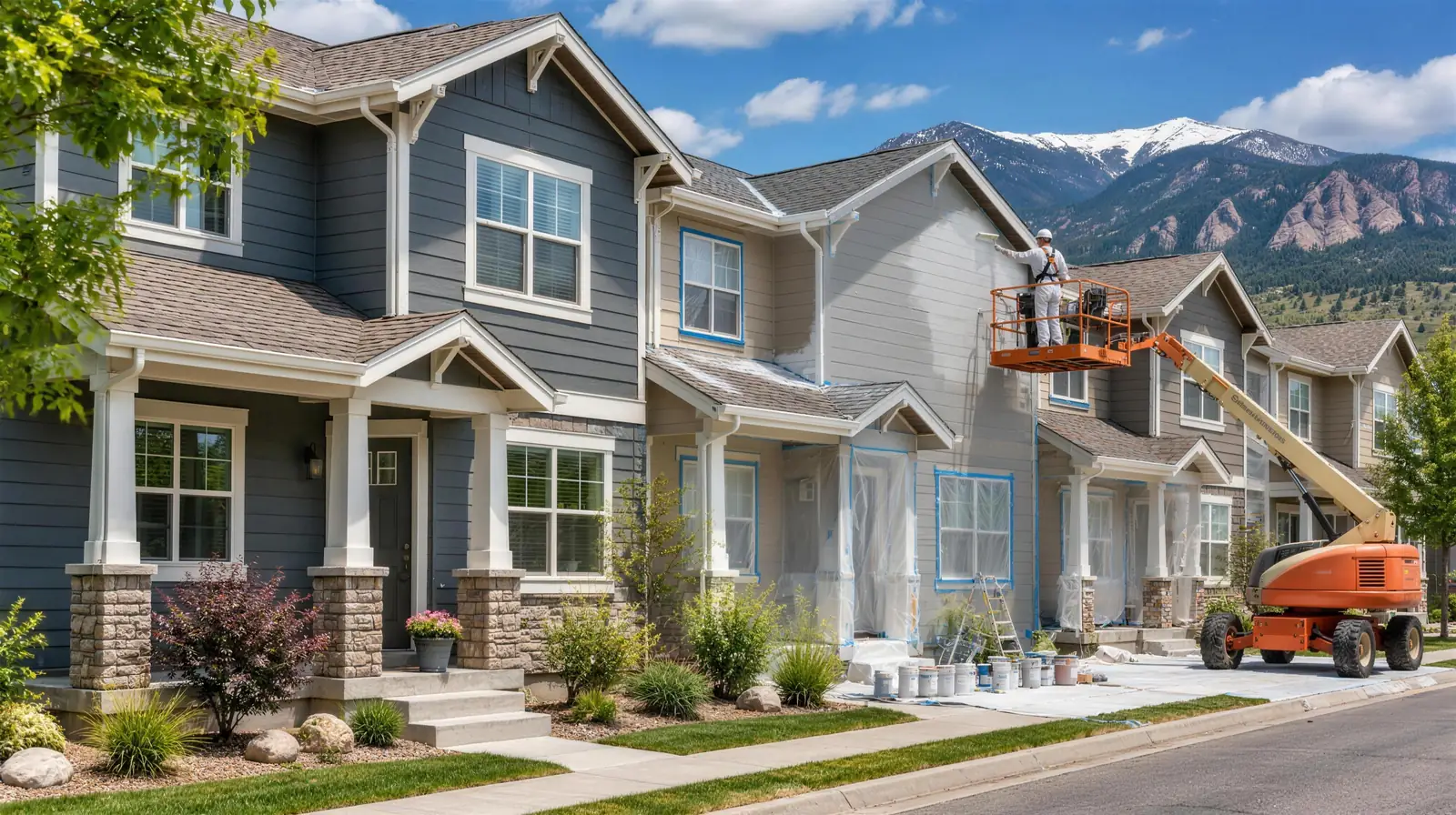
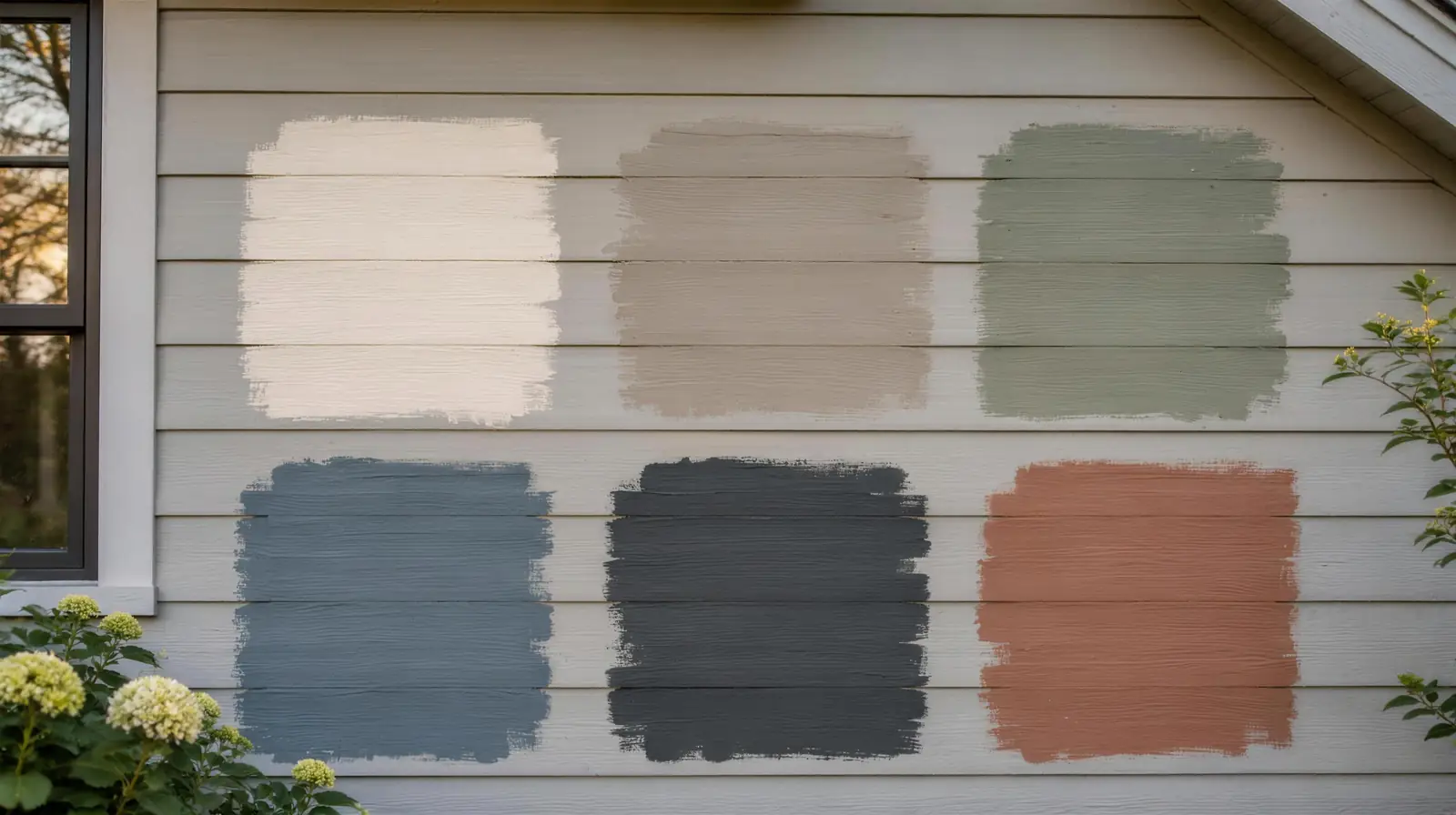
Changing exterior colors here generally means a submission to the Highlands Ranch Community Association's design review, and some neighborhoods also sit under a sub-association with its own requirements. Repainting in the existing colors is often treated differently, but confirm that in writing before assuming it. We give homeowners the product names, color names and codes, and which color goes on body, trim and accents, so the application matches what we'll actually apply.
More on the paperwork side is on our HOA and townhome painting page.
Hail Along the C-470 and I-25 Corridor
The south metro takes frequent spring and summer hail. On these houses it dents aluminum gutters and downspouts, cracks paint on hardboard edges, and knocks small chips out of stucco. A wall can look fine from the driveway and still have dozens of fresh breaks in the film that let water into the substrate.
If a roof or siding claim is open, ask the adjuster what's covered before anyone paints. Painting over damage that hasn't been documented can make a claim harder to settle. Once the claim is settled, we repair and prime the damaged areas before the full repaint.
Summer afternoon storms also set our daily rhythm. We start early, keep sprayed sections small enough to tool before clouds build, and stop when a cell is close.
Why Back Walls Facing Open Space Wear Out First
At this elevation the sun carries more UV than it does at sea level, and lots that back onto open space or a greenbelt often have nothing shading the rear wall. South and west sides chalk, fade and lose their sheen years ahead of the north side. Rub a dark cloth on the rear wall: if it comes away coated in pigment, the paint is breaking down even if it hasn't peeled yet.
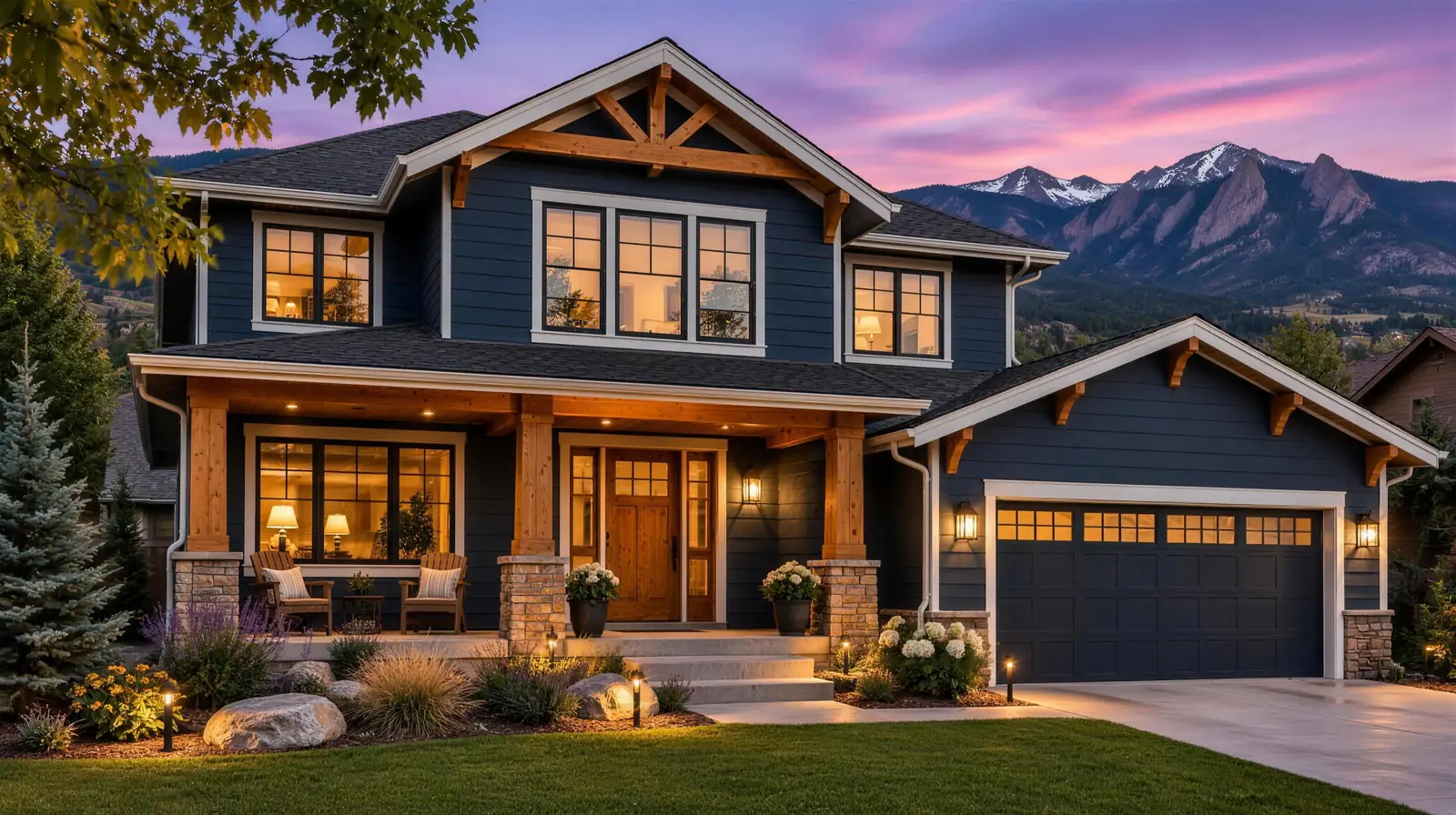
Darker body colors also run hotter in direct sun, which works hardboard and wood trim harder through daily expansion. That doesn't rule dark colors out. It does mean the edges and joints need to be sealed properly underneath.
Winter adds its own wear. Snow sits against the lowest courses of siding on north walls and around deck ledgers, then melts and refreezes for weeks. That is why the bottom row of hardboard on the shady side of a house can be the worst board on an otherwise healthy wall.
What to Ask Before You Sign
Ask whether soft hardboard will be replaced or painted over, and who handles the design review submission. Ask which product goes on stucco versus siding versus trim, and whether hail-dented gutters are part of the scope or excluded. If a neighbor in Lone Tree or Littleton had different advice, the difference is usually the siding, so bring photos of the worst wall.
Request an estimate and we'll walk every elevation with you before writing a scope.