Two communities with similar names
The city of Castle Pines and the gated Village at Castle Pines next to it are separate communities, each with its own associations and design guidelines. Within them, individual neighborhoods can add another layer of rules. Before anyone picks a color, find out which body reviews exterior changes on your street, whether a color change needs a submission, and whether a repaint in the same colors does too.
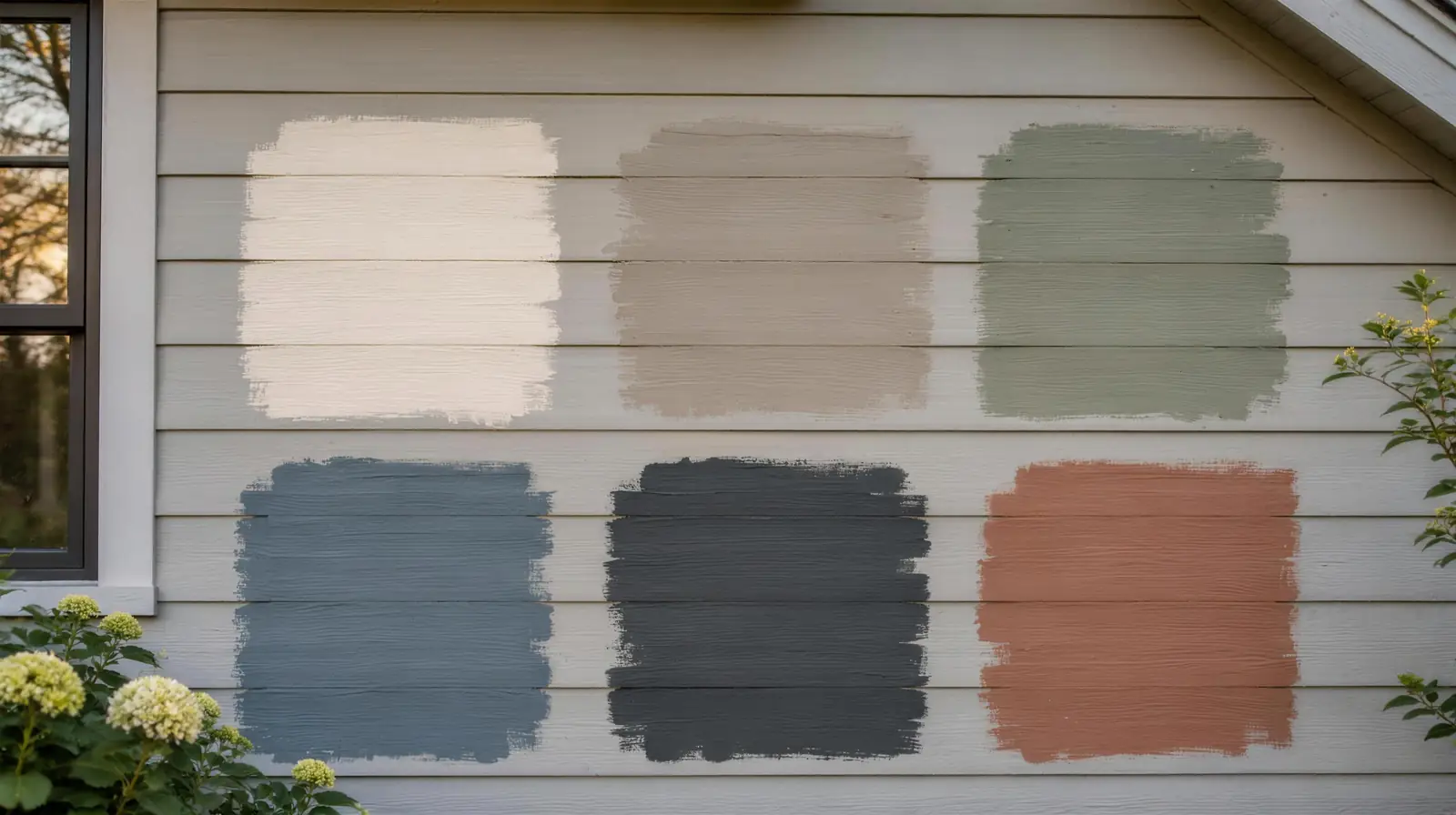
We provide product names, colors and codes for each surface on the house, and we can brush sample patches for a committee to see in daylight.
Sample patches matter more here than on most houses. A color chip held against warm stone and a cool stucco field can look like a different color on each, and the strong light at this elevation washes out pale tones. We brush patches on the stucco, the trim and next to the stone, on both a sunny and a shaded wall, and ask you to look at them in the morning and late afternoon before you submit anything.
One wall, four materials
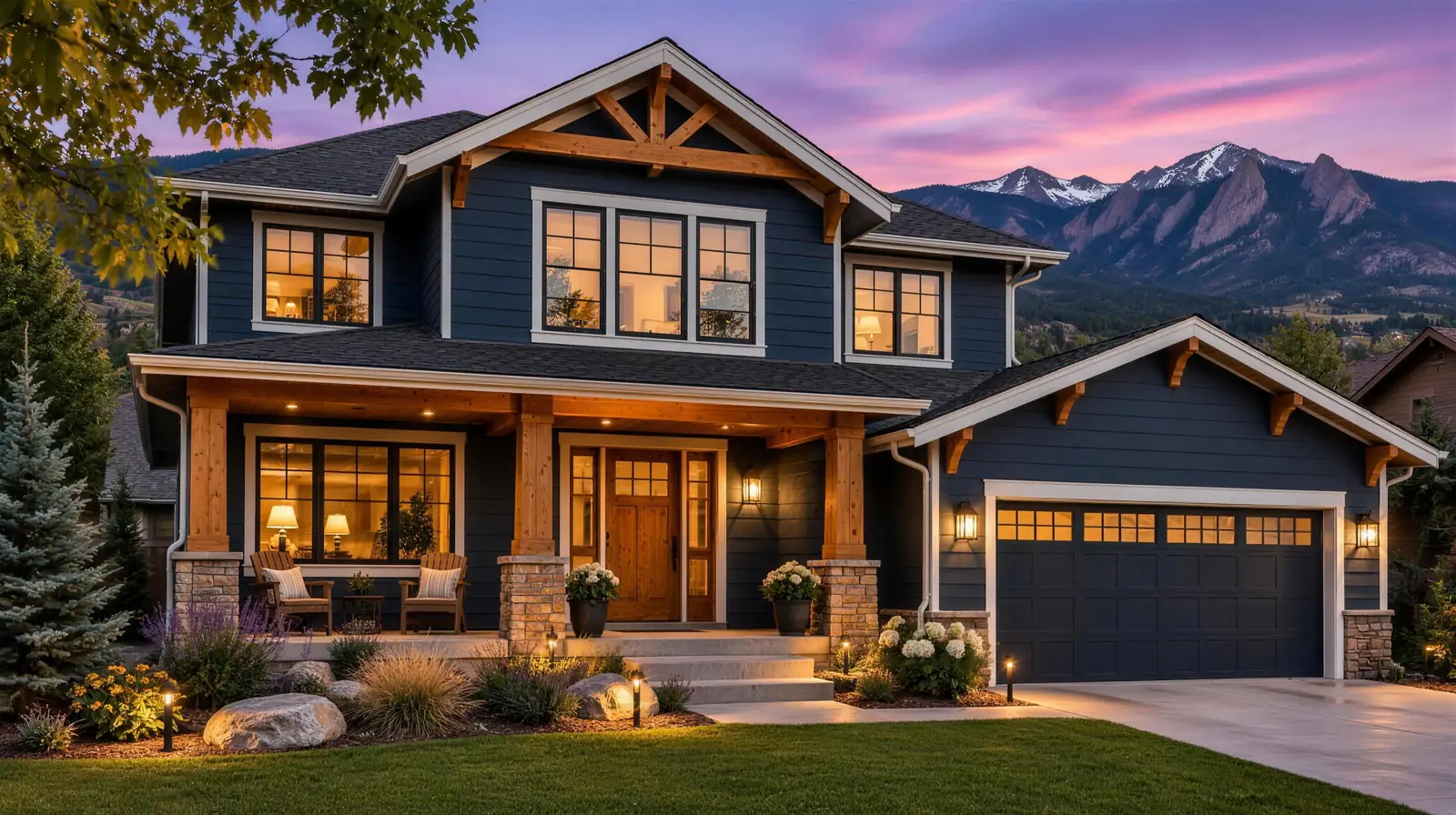
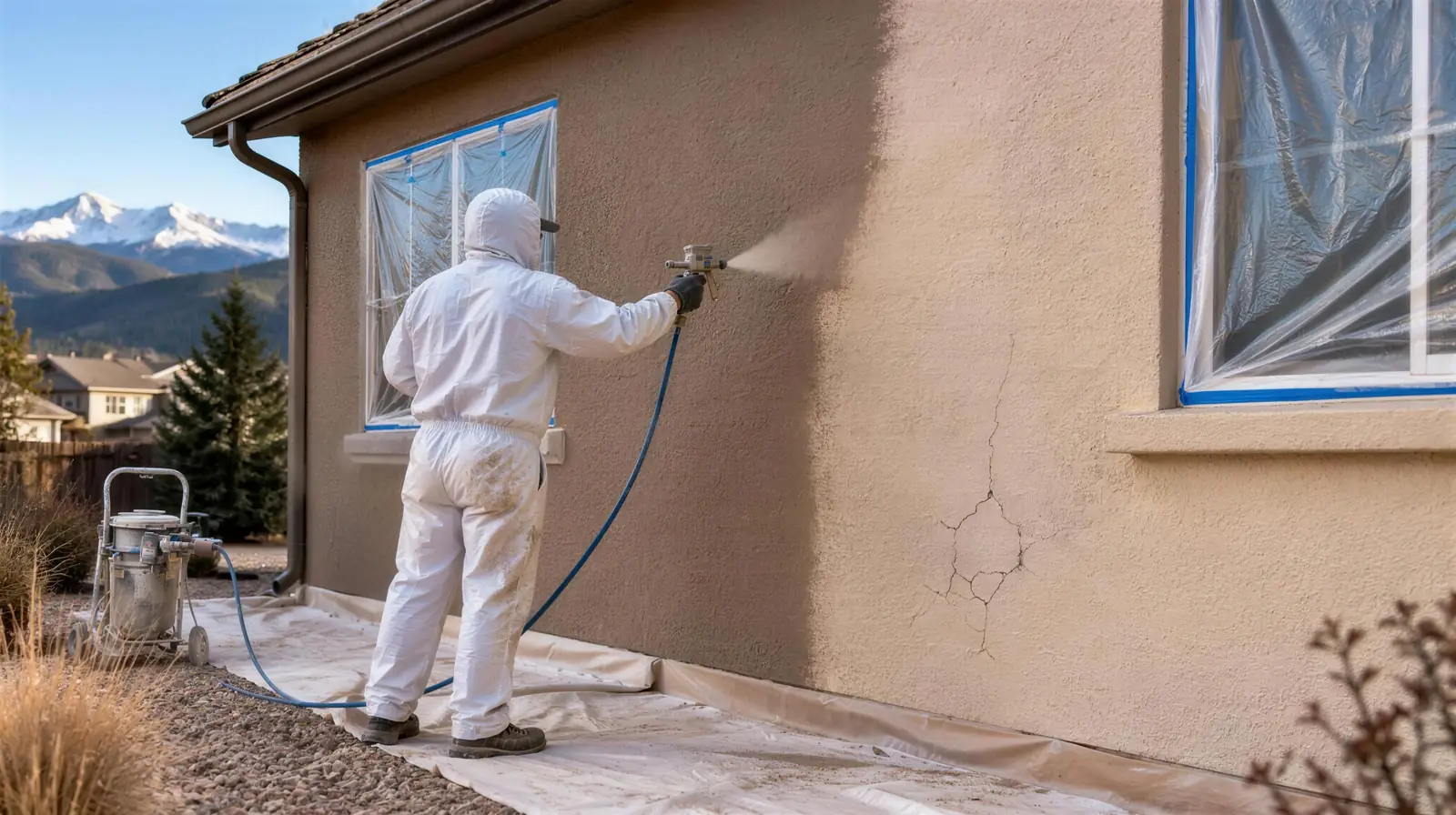
Many homes here were built with a stucco field, a stone wainscot or columns, wood fascia and trim, and sometimes fiber cement or wood siding on a gable or bump-out. Each of those surfaces wants a different product, and the joints between them are where water gets in.
More about stucco products and crack repair is on our stucco painting page.
Tall walkouts and steep yards
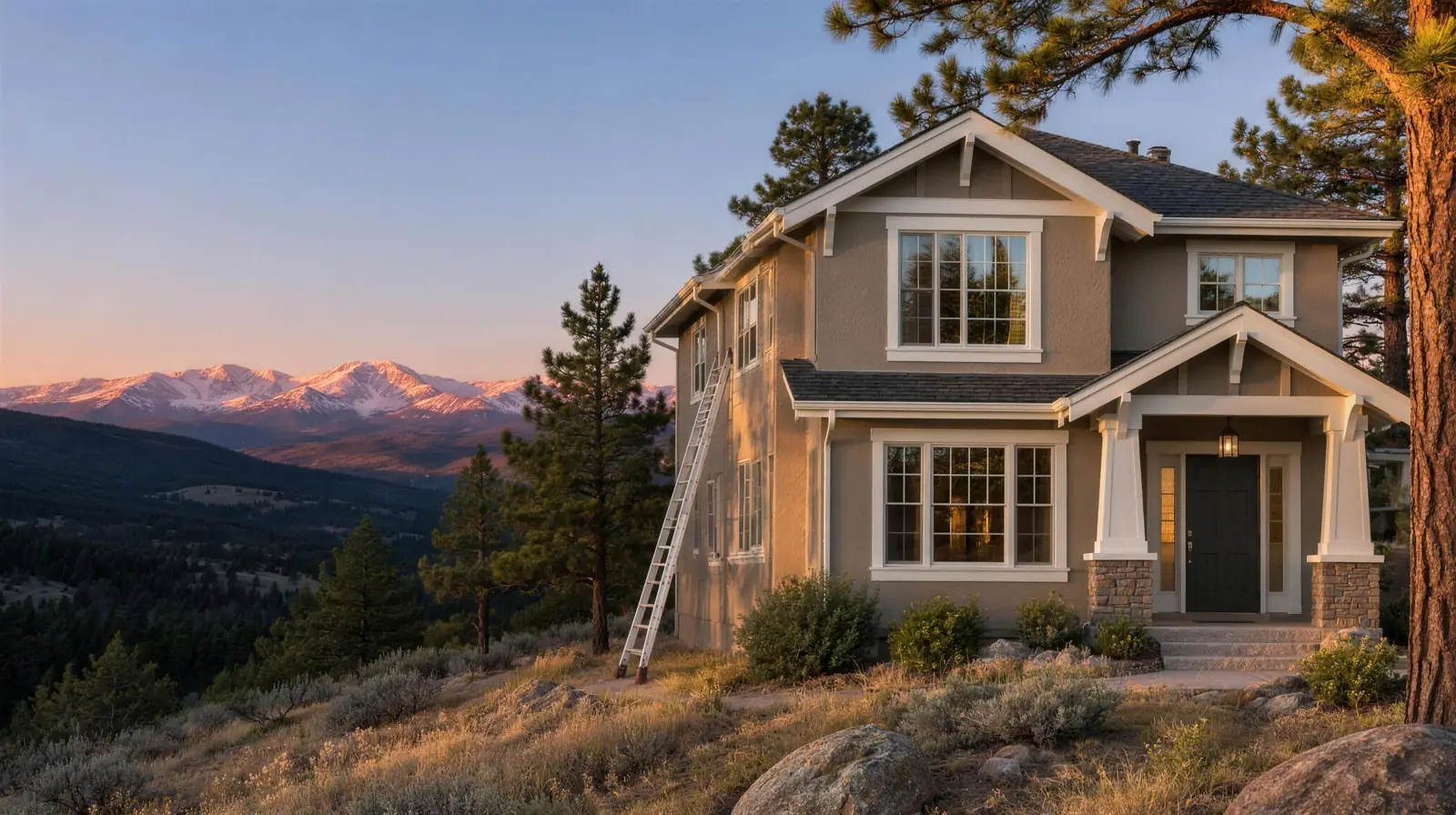
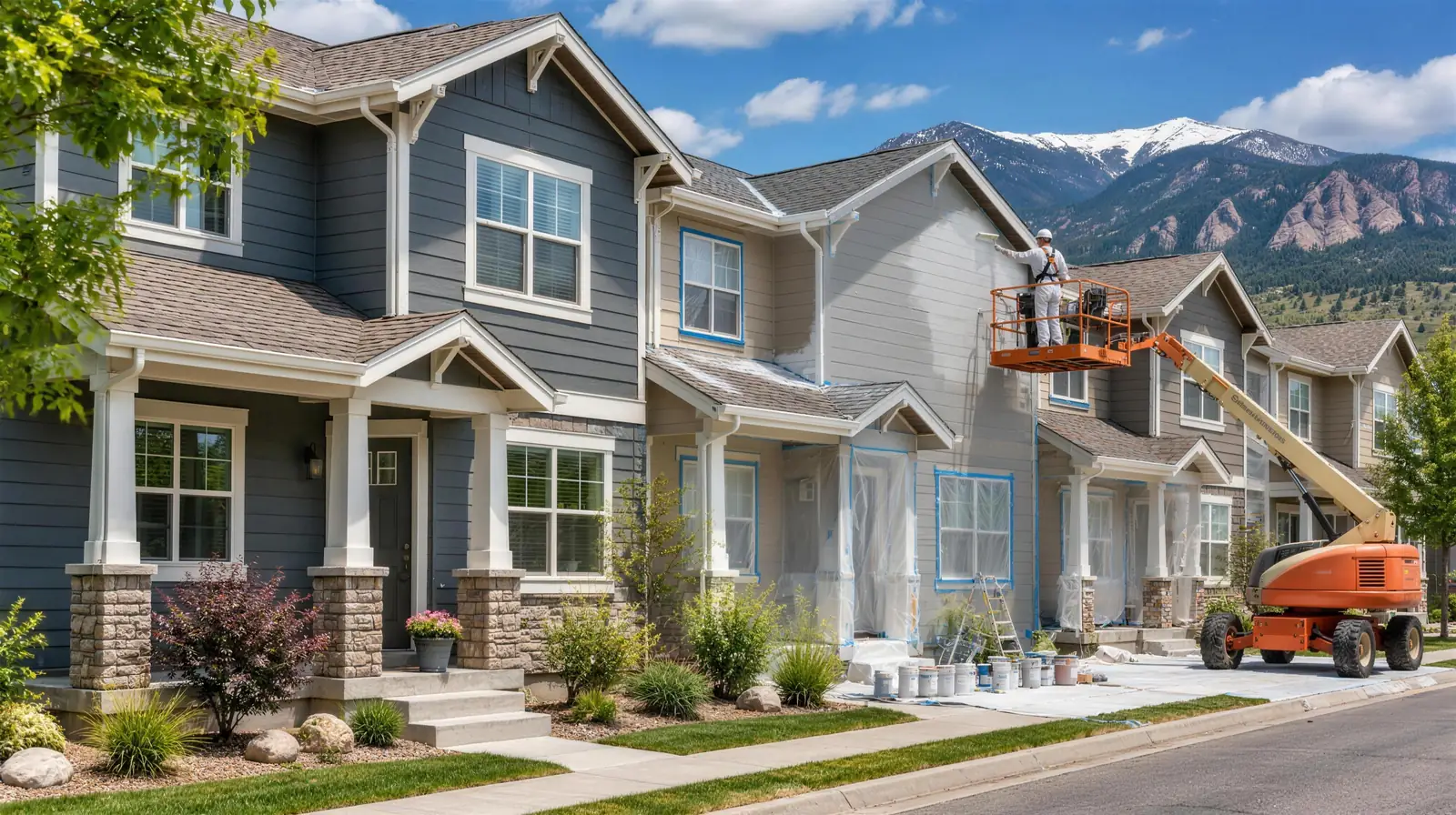
Castle Pines sits on rolling, wooded hills, and the back of many homes drops away to a walkout basement. That can mean three stories of wall above a sloped yard, with decks, patios and planting beds in the way. We plan access before we price the job: where a lift can stand without damaging irrigation or landscaping, where ladders need leveling, and whether a deck can carry equipment safely.
Those rear walls often face the view, which in many cases means south or west, and that's where the sun does the most damage. We check fascia and soffit on those sides closely, since end grain and joints on high trim fail early and are hard to see from the ground. Our trim and fascia painting page covers that work.
Sun on the view side, shade on the other
The same house can have two very different weather sides. The open side chalks and fades, and darker body colors heat up and work the trim joints harder. The shaded side, under ponderosa pine and scrub oak, stays damp longer after snow and can grow mildew, while needles and leaves clog gutters and spill water onto fascia.
Hail is the other variable. Storms moving off the foothills drop hail on this stretch of Douglas County in late spring and summer, chipping stucco and cracking paint on the edges of trim. If a claim is open, we wait until the adjuster has documented the damage before we patch or paint anything.
Before painting, we look at each elevation separately:
- Chalk test on the sunny walls with a dark cloth
- Hairline cracks in stucco, mapped so they can be filled and blended
- Mildew and moisture on shaded walls
- Caulk and sealant at every place two materials meet
- Branches touching the house, which need trimming back
Before your estimate
Have your association's current guidelines handy, and tell us if you plan a color change. Mention any hail damage or open claims. If you're comparing notes with neighbors in Lone Tree, expect differences: their homes are often smaller and on flatter lots.
Request an estimate and we'll plan access and products wall by wall.