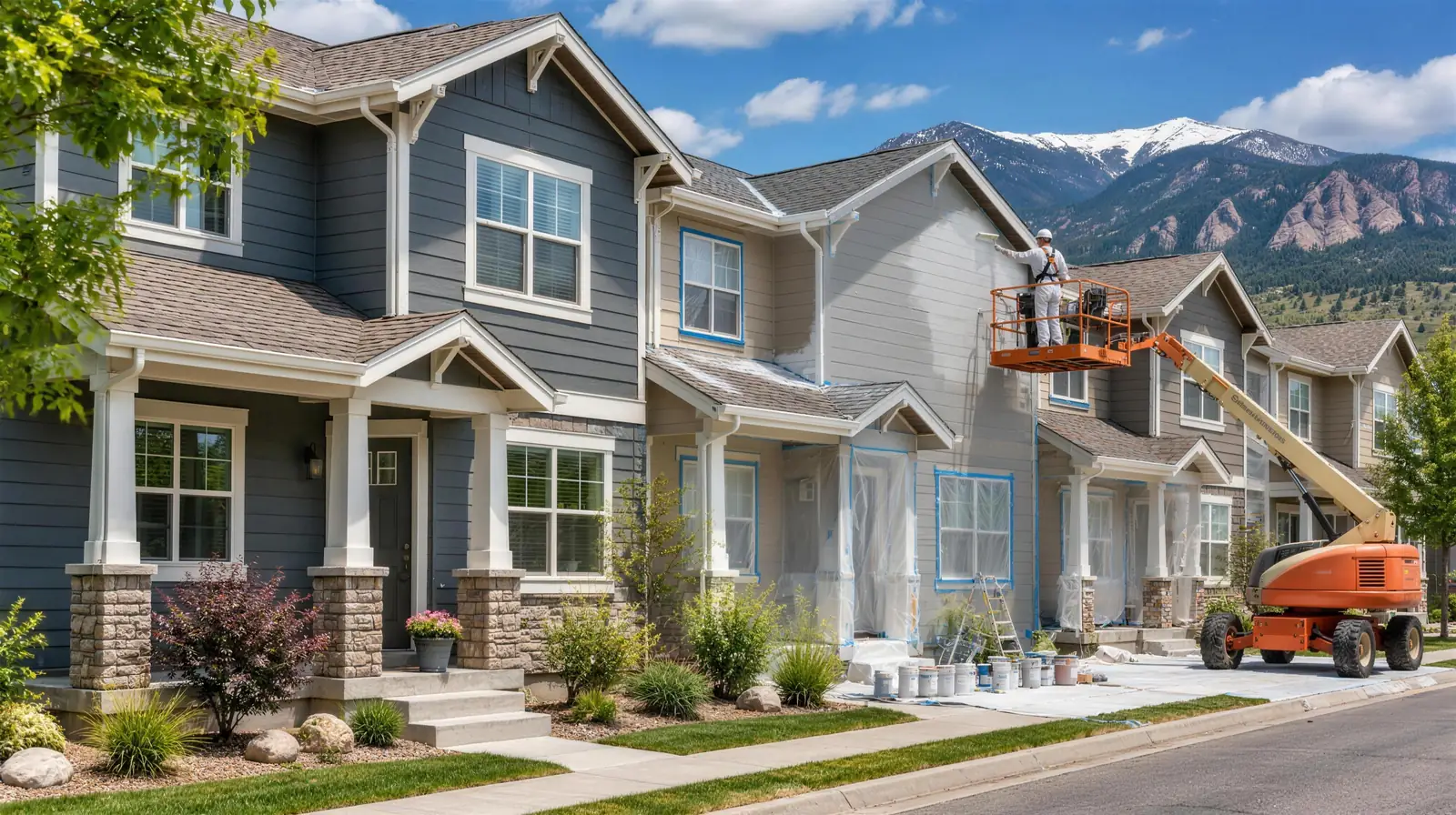
Single-family HOA homes: getting colors approved
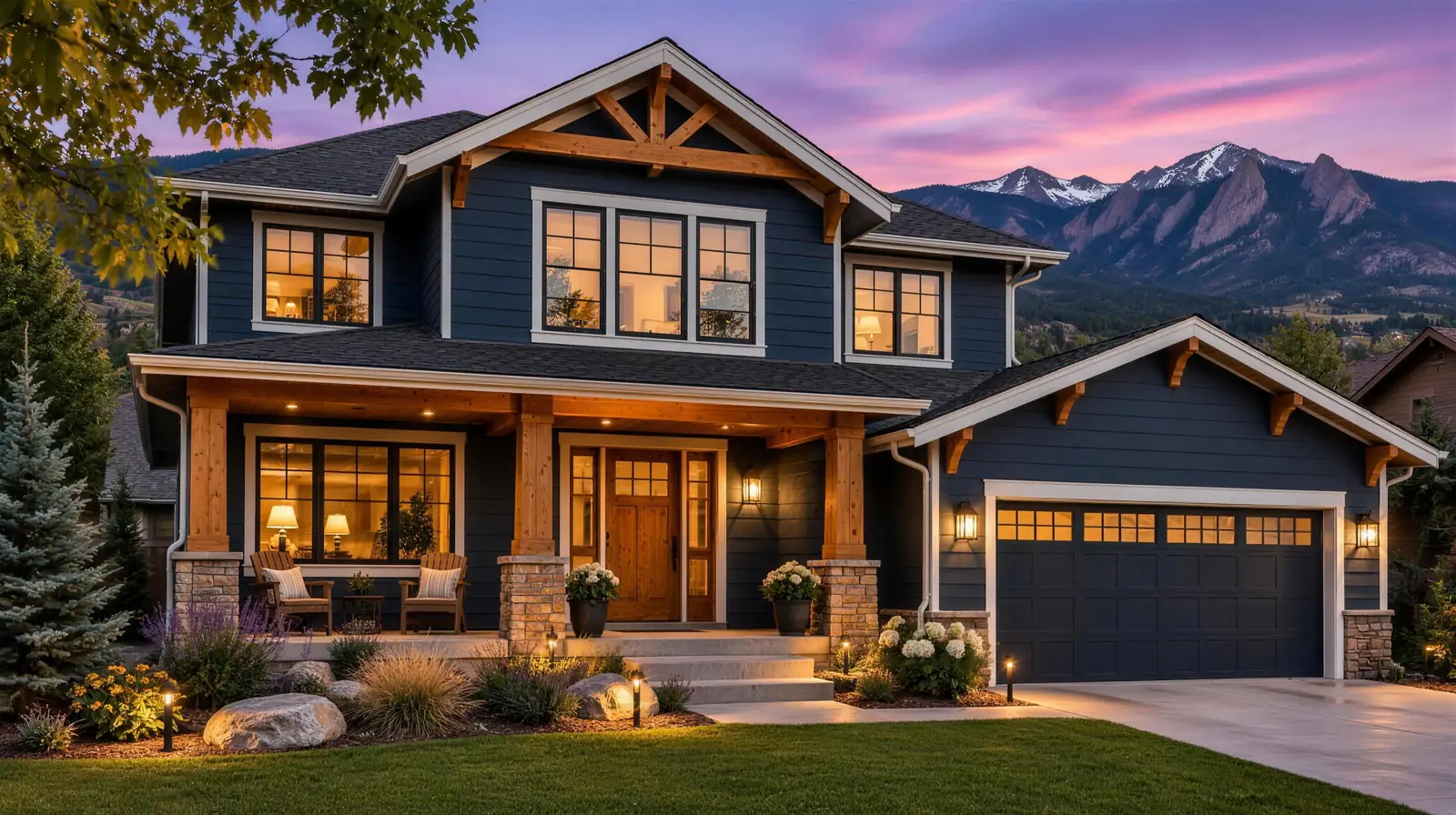
Most master-planned neighborhoods on the Front Range, including large ones like Highlands Ranch and Castle Pines, have covenants that cover exterior colors. Repainting in the existing colors may or may not need a submission. Changing colors usually does. The rules sit in the community's design guidelines, and an architectural or design review committee makes the call. Many communities publish a pre-approved palette, and choosing from it usually makes approval simpler.
A color approval packet usually includes:
- The color name, code and paint maker for each surface: body, trim, accent, front door and garage door.
- The sheen for each surface.
- Physical chips or brushed samples, if the committee asks for them.
- Photos of the house, and often of the homes on either side and across the street.
- Which surfaces get which color, marked on a photo.
- Any change in fence stain color, if the HOA regulates it.
We put the color and product details together in the format the committee asks for. Approval timing follows the committee's meeting calendar, so the submission should go in well ahead of the painting date. Starting work before approval risks a violation notice and a second repaint.
Townhome and condo repaints: what the board needs
In attached communities, from Lone Tree to Broomfield, the association usually maintains the exteriors and plans repaints in its reserve study. The board's job is to compare bids, and that only works when every painter is pricing the same scope. A written spec settles that.
| Spec item | What it should say |
|---|---|
| Surfaces | Body, trim, fascia, soffit, doors, garage doors, railings, fences; what's in and what's out |
| Prep | Washing method, scraping and sanding standard, caulking, lead-safe practices on pre-1978 buildings |
| Wood repair | How rot is found, photographed and approved before replacement |
| Products | Coating category and sheen for each surface, primers for bare and patched areas |
| Coats | Number of coats per surface, with film build per the data sheet |
| Colors | Approved scheme for each building, with codes |
| Sequence | Building order, notice period and daily work hours |
Wood rot is where community budgets get surprised. Fascia, trim and deck parts across dozens of units hide rot under old paint, and the full count isn't known until prep starts. A spec that defines how rot is documented and approved keeps that from turning into an argument mid-project.
Scheduling a community repaint around residents
People live in these buildings while they're being painted. Managing that is the hard part of a townhome job, more than the painting itself.
- Residents get written notice ahead of each building's start, with dates, what to move and what to expect.
- Patio furniture, grills, planters and decorations come away from the walls, and cars move out of driveways on spray days for that building.
- Irrigation zones near the work get shut off or adjusted with the landscaper so fresh paint stays dry.
- Windows stay closed during spraying, and masking comes off as soon as the coating allows.
- Pets and kids stay clear of lifts, ladders and wet surfaces.
- Front doors and garage doors are painted on a set schedule so every resident can still get in and out.
Weather sets the outer limits. The Front Range season can end with an early cold snap in fall, so a multi-building schedule needs slack at the end, and spring starts depend on overnight lows meeting the data sheet minimums. Afternoon storms and hail in summer shift spray days, which is another reason notices should give residents a date range.
Products and colors across a community
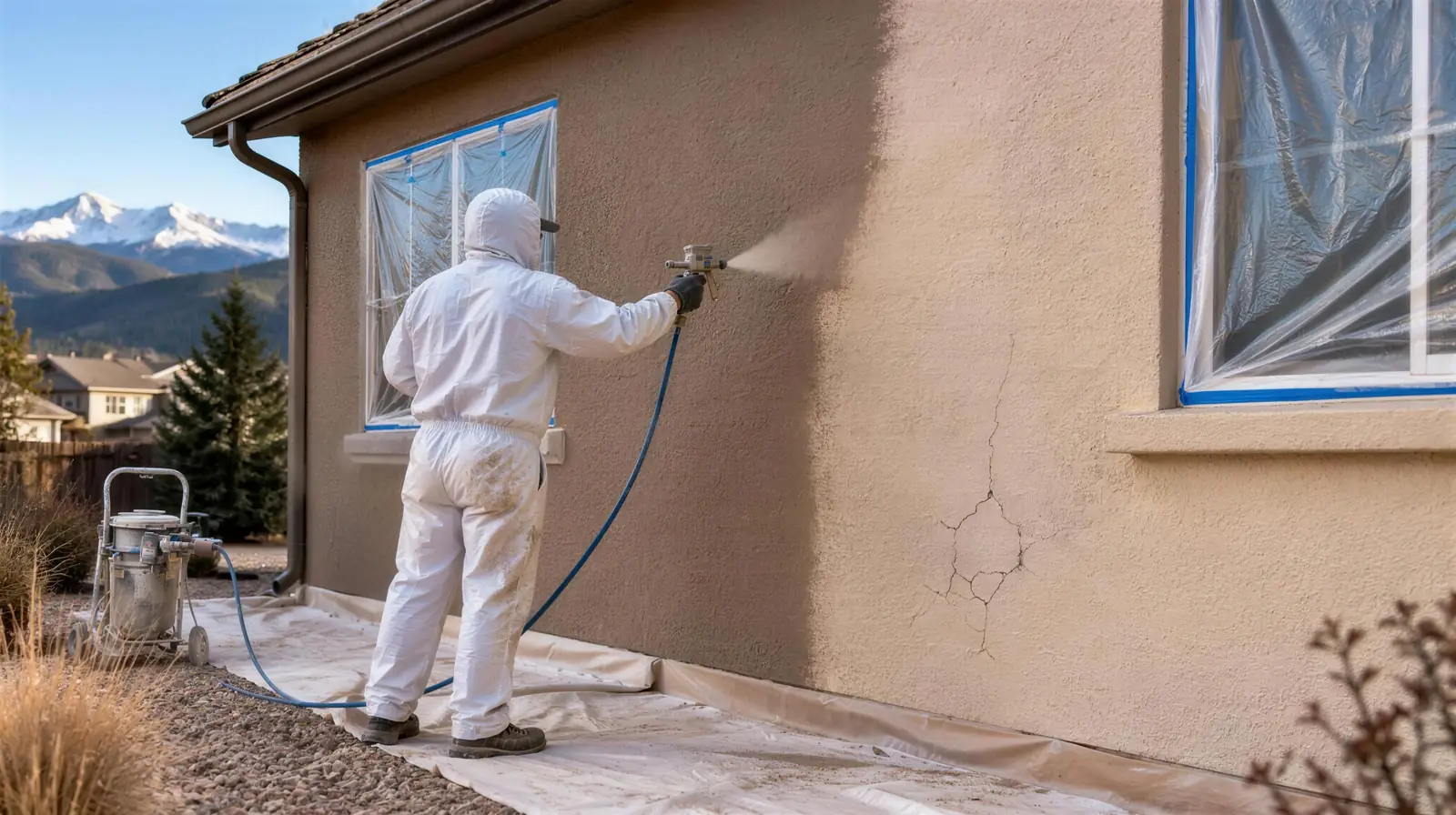
Community repaints usually standardize on a small set of colors and one product line per surface type, which keeps touch-ups simple for years. Stucco buildings need the breathable masonry coatings and crack repair covered on stucco painting, and lap-sided buildings follow the primer and topcoat logic on siding painting. Shared fences and wood stair rails are their own stain-or-paint decision.
A body-color change across a whole community deserves sample areas on a real building, looked at in morning and afternoon light, before the board votes. Colors read lighter outdoors in strong sun than they do on a small chip indoors, and a color that looks right on one unit can feel heavy across a long row of buildings.
Why some elevations need paint sooner
Buildings in the same community don't wear evenly. South and west walls take the most UV, and UV at altitude is stronger than at sea level, so those elevations chalk, fade and crack at the trim joints well before the north and east sides. Walls behind sprinklers, along drive lanes where snow is piled, and under roof valleys add moisture damage to the mix.
Some associations handle this by repainting only the worst-exposed elevations between full repaints. It can work, with two catches: the new paint won't match faded walls exactly, so breaks should fall at inside corners, and trim and fascia on those walls usually need the same attention. A walk-around at the start of planning, noting the condition of each elevation, gives the board a realistic picture before choosing between a full and a partial cycle.
Questions boards and owners should ask a painter
- Will you work from our spec, or provide one we can use to compare bids?
- How is wood rot documented, and who approves repairs?
- Which products go on each surface, and how many coats?
- How and when are residents notified?
- What's the building sequence, and how do weather delays shift it?
- How is daily cleanup handled in shared walkways and parking areas?
- For single-family owners: who prepares the color submission, and who files it with the HOA?
Request an estimate for one HOA home or a whole community. Tell us the community name and whether colors are changing.