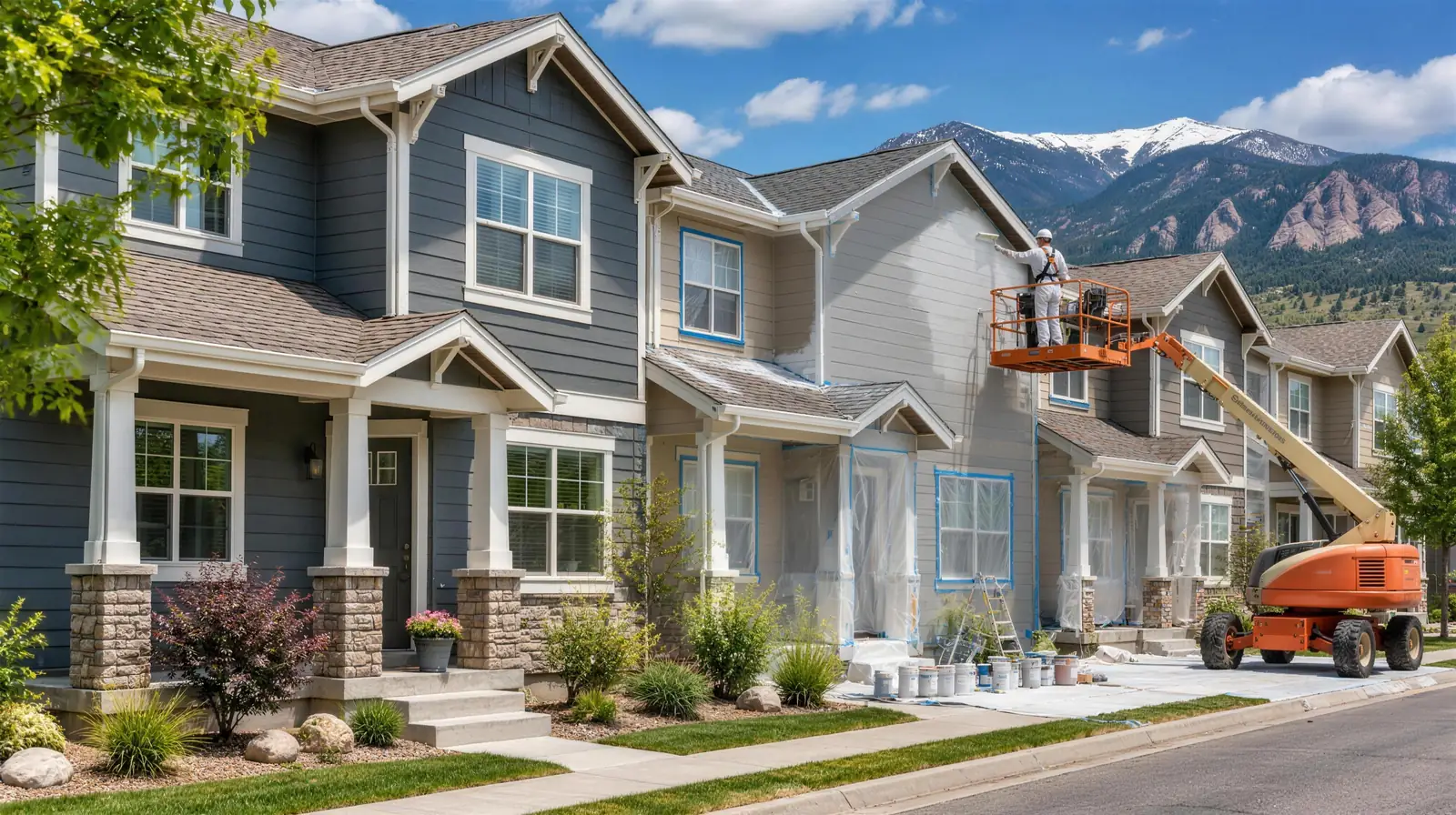
Who paints the outside: you or the association?
In a lot of attached-home communities, the association maintains the exterior and schedules repaints for whole buildings. In others, each owner is responsible for their own unit but has to follow the association's colors and timing. Single-family neighborhoods usually leave the work to the owner but review color changes. Your declaration and current rules say which applies, and it's worth reading them before collecting bids.
| Your situation | Who usually decides scope and color | What to check first |
|---|---|---|
| Single-family home in an HOA neighborhood | You, within the approved palette | Whether a repaint in existing colors needs a form |
| Townhome where the association maintains exteriors | The board and its manager | Whether owners can paint at all, or only report damage |
| Townhome where owners maintain their own unit | You, matching the building's colors | Exact product, color and sheen used on the rest of the building |
| Condo building | Almost always the association | The reserve schedule and when the building is due |
For boards and managers planning whole-building work, our HOA and townhome painting page covers how we bid and stage it.
Established neighborhoods west of I-25
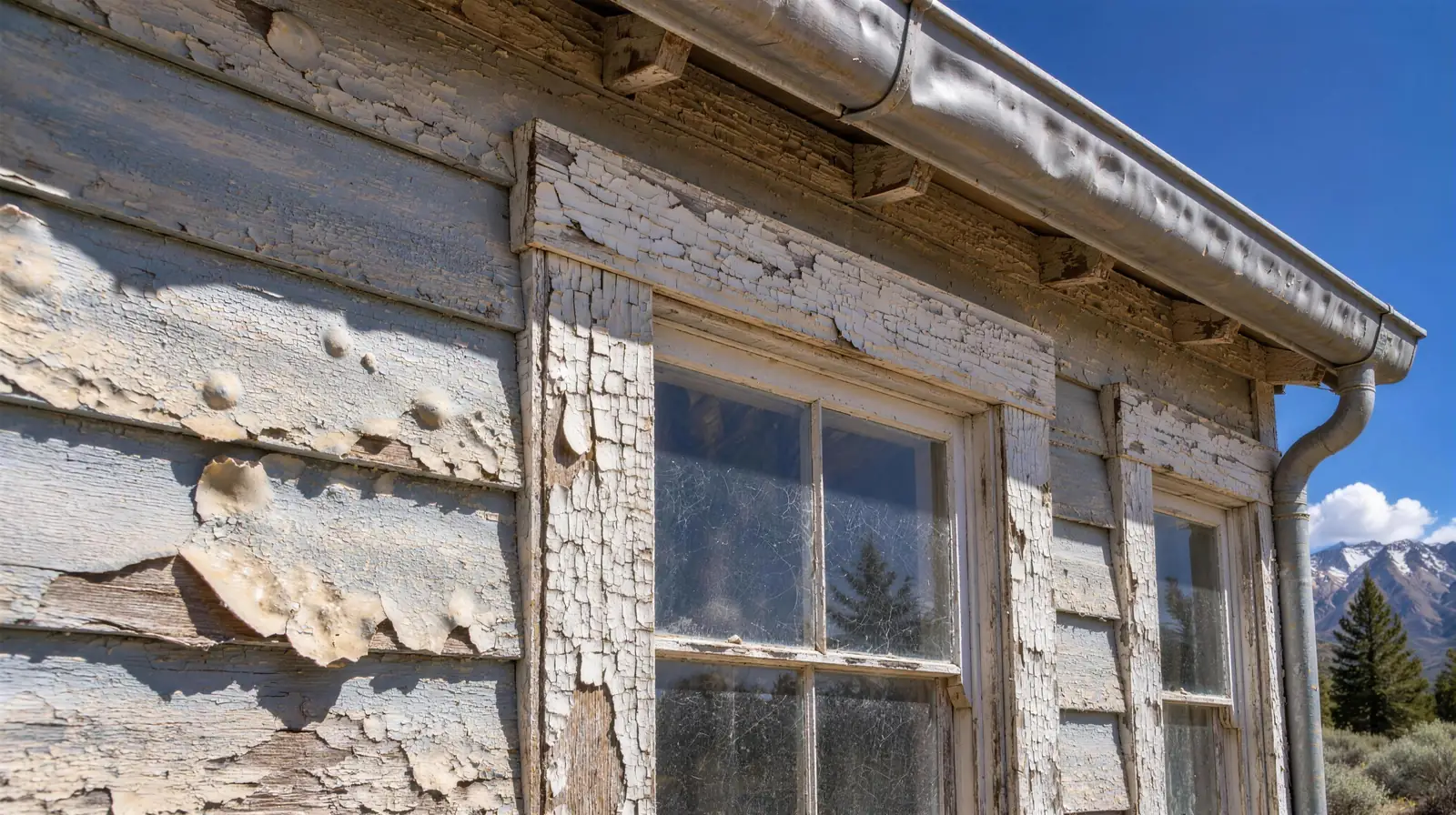
The older parts of Lone Tree were built mostly in the 1980s and 1990s, on rolling ground with views toward the mountains. Hardboard lap siding and painted wood trim are common on homes from that era, along with stucco on some houses and stone or brick at the front. Houses of that age often carry more than one generation of paint, and the prep has to deal with whatever went on last time, good or bad.
The trouble spots repeat. Hardboard swells along bottom edges and at joints near the ground. Wood fascia and window trim on the south and west sides crack and peel first. Caulk at corner boards dries out. We probe the siding, replace soft boards, and seal edges before any paint goes on. Our siding painting page explains why the edges matter so much on hardboard.
Newer construction east of the highway
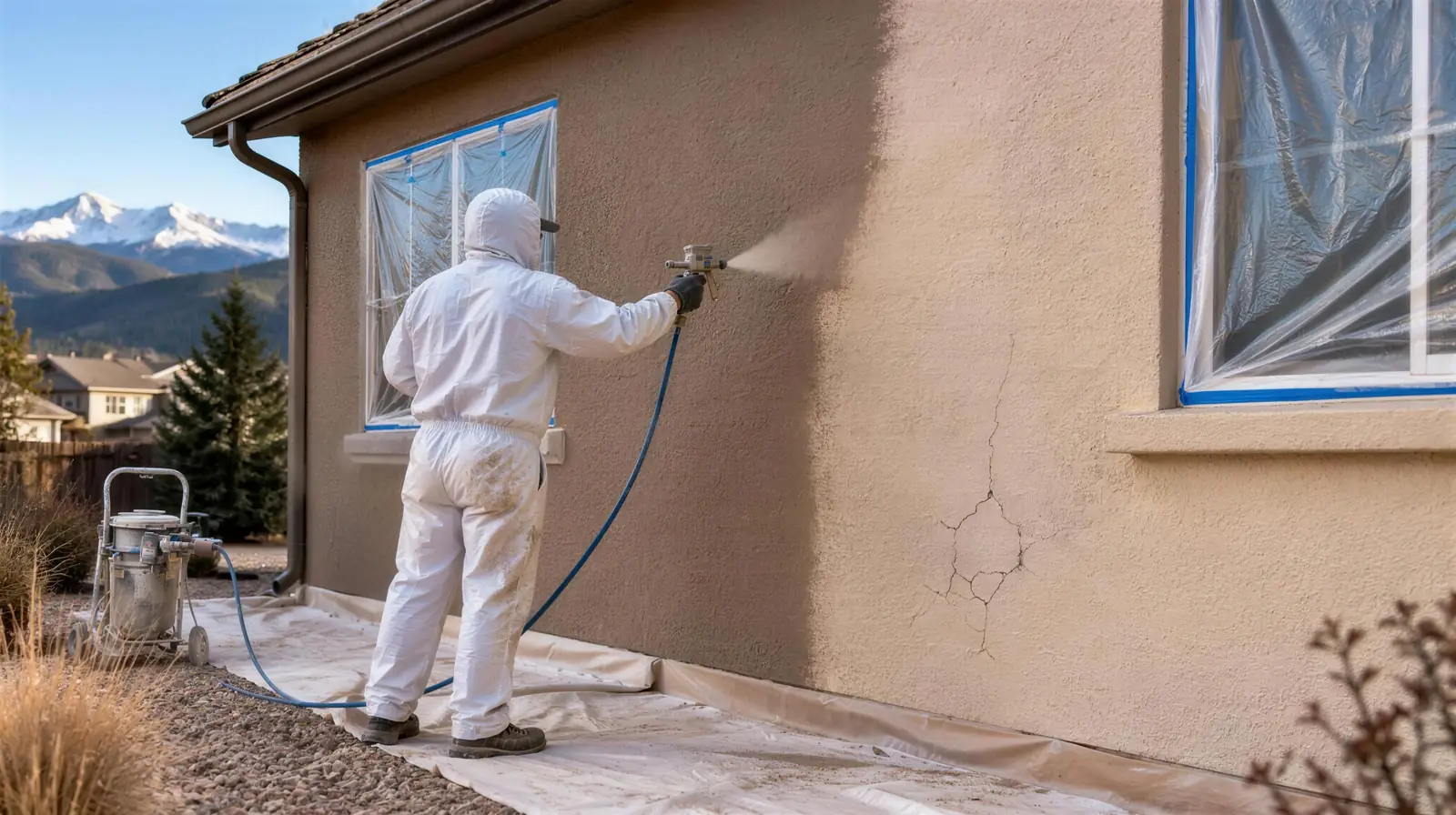
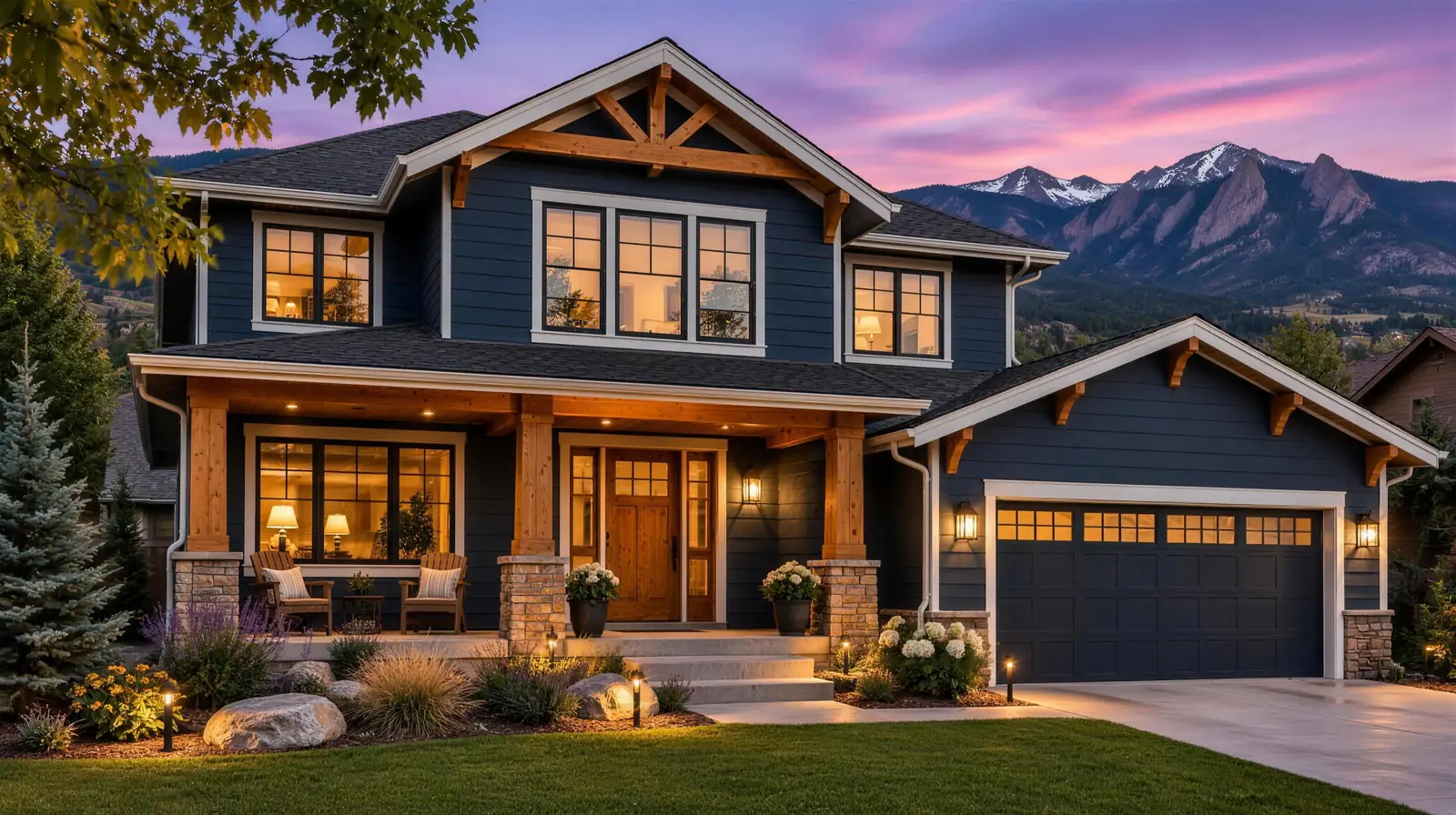
RidgeGate and the newer neighborhoods east of I-25 lean toward fiber cement, stucco and panel siding, sometimes with darker body colors and contrasting trim on more modern designs. Dark colors absorb more heat in direct sun, which puts more movement into joints and trim, so sealant choice and edge priming matter. Fiber cement holds paint well, but builder coats tend to be thin and chalk early on south and west walls.
Hilly lots also give many homes here a tall rear elevation, and townhome rows often have three-story walls facing a common area. Those usually need a lift and some planning with neighbors or the manager over where it can stand.
Stone veneer is common at the base and around entries on these homes. It stays unpainted, so we mask it tightly, cut in by hand where siding and trim meet it, and replace any sealant that has pulled away at that joint. Gaps there let water run behind both the stone and the siding, and the damage shows up later as staining or soft boards just above the stone.
Matching your unit to the rest of the row
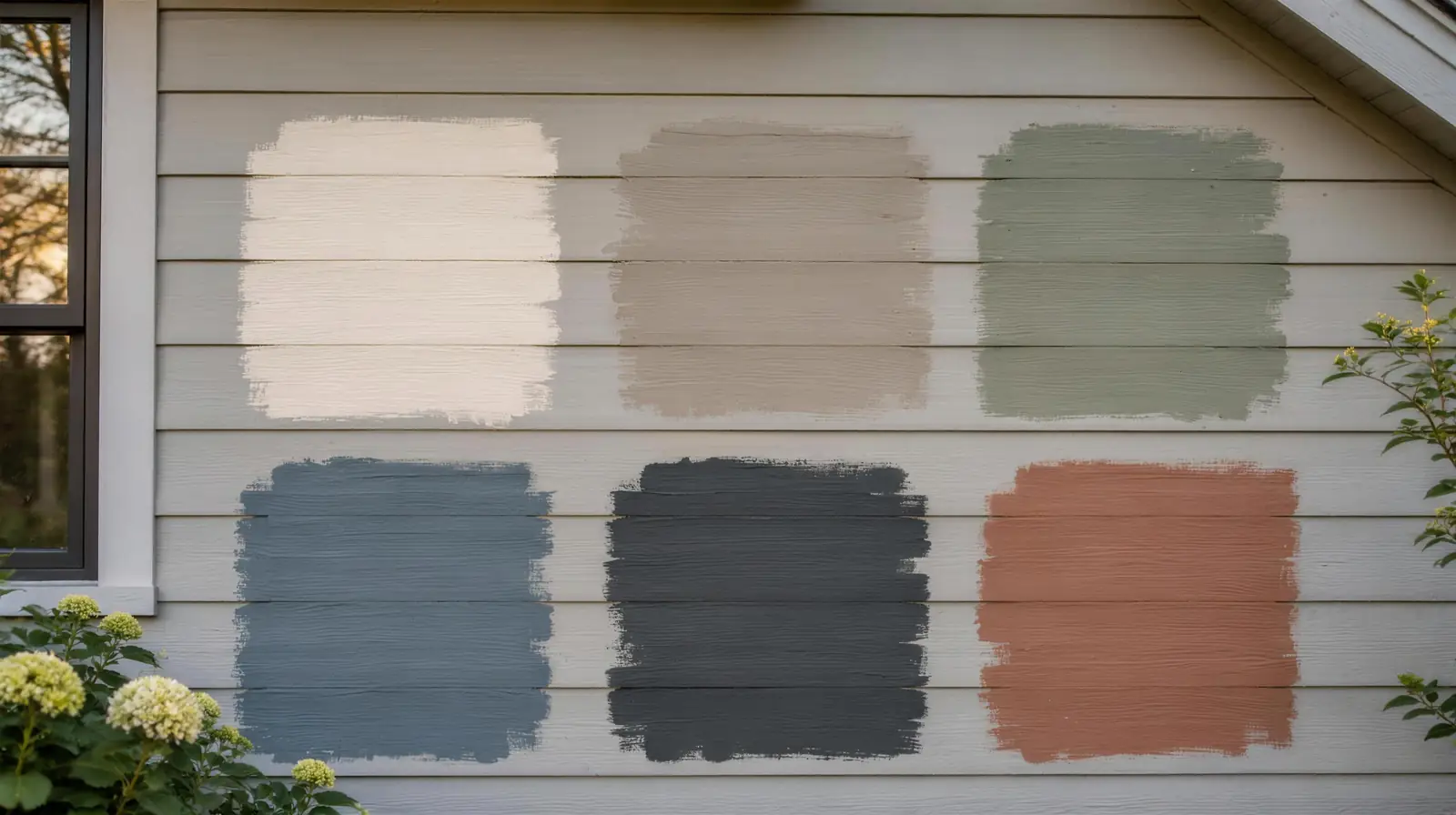
When an owner paints a single townhome on a shared building, the goal is for nobody to notice where one unit stops and the next begins. That's harder than it sounds. Paint fades in the sun, so the neighbor's wall is no longer the color on the original chip. Sheen differences show from across the street.
Season, hail and what to ask
The working season here runs from late spring into fall, with the start and end set by the product data sheet's minimum temperatures. Hail moves through the I-25 and C-470 corridor in late spring and summer, so ask whether hail-cracked trim and dented gutters are in scope. If you're near the line with Highlands Ranch, check which association actually governs your street.
Request an estimate and bring your association's rules to the walk-through.