Three Decades of Houses, Three Different Prep Jobs
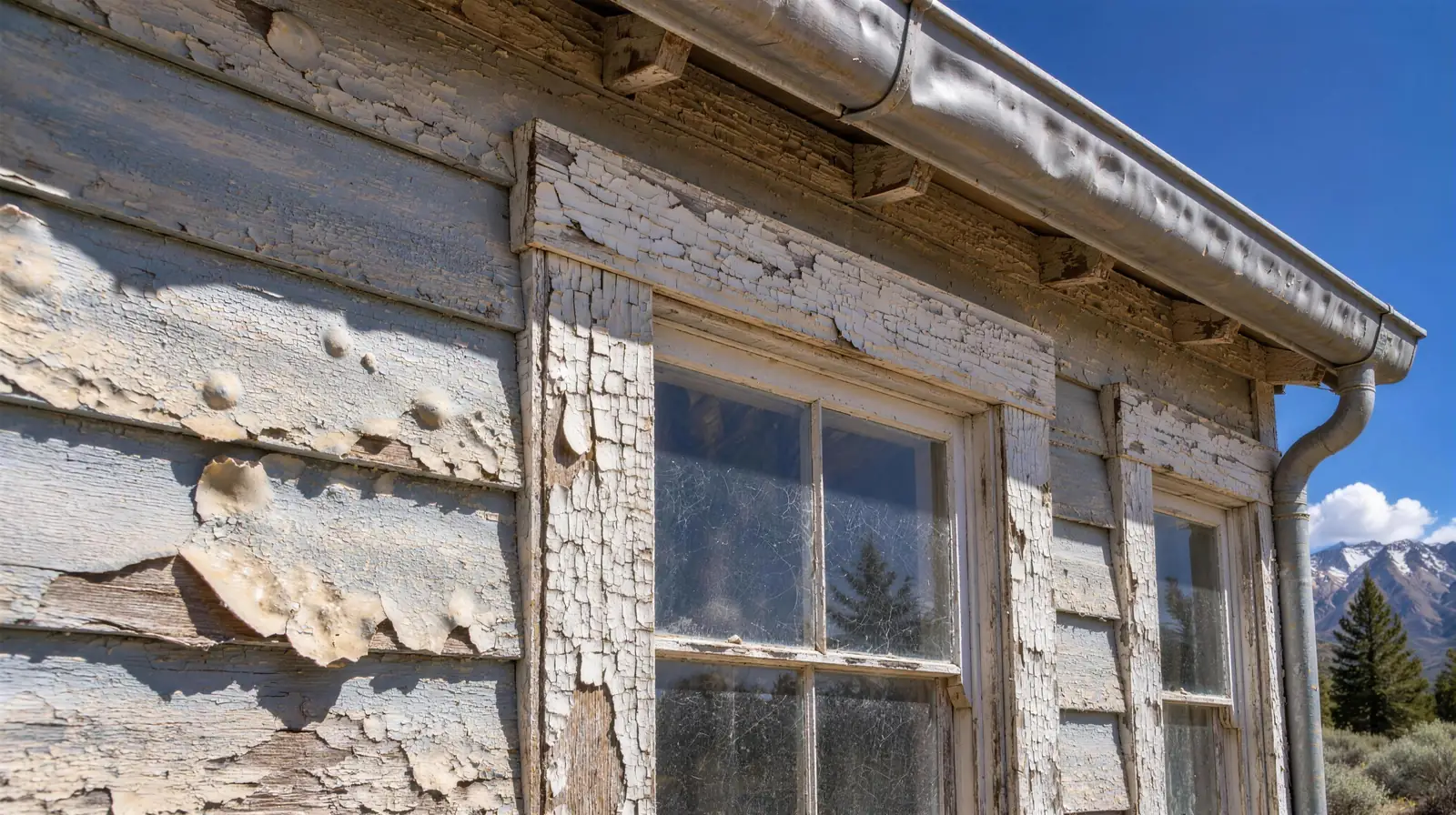
The house's decade tells us a lot before we get out of the truck. Homes from the 1970s often have wood lap or plywood panel siding, cedar accents and wide fascia, plus several decades of paint layers. A house built before 1978 may have lead in its older coats, so any scraping or sanding follows the EPA's Renovation, Repair and Painting rule.
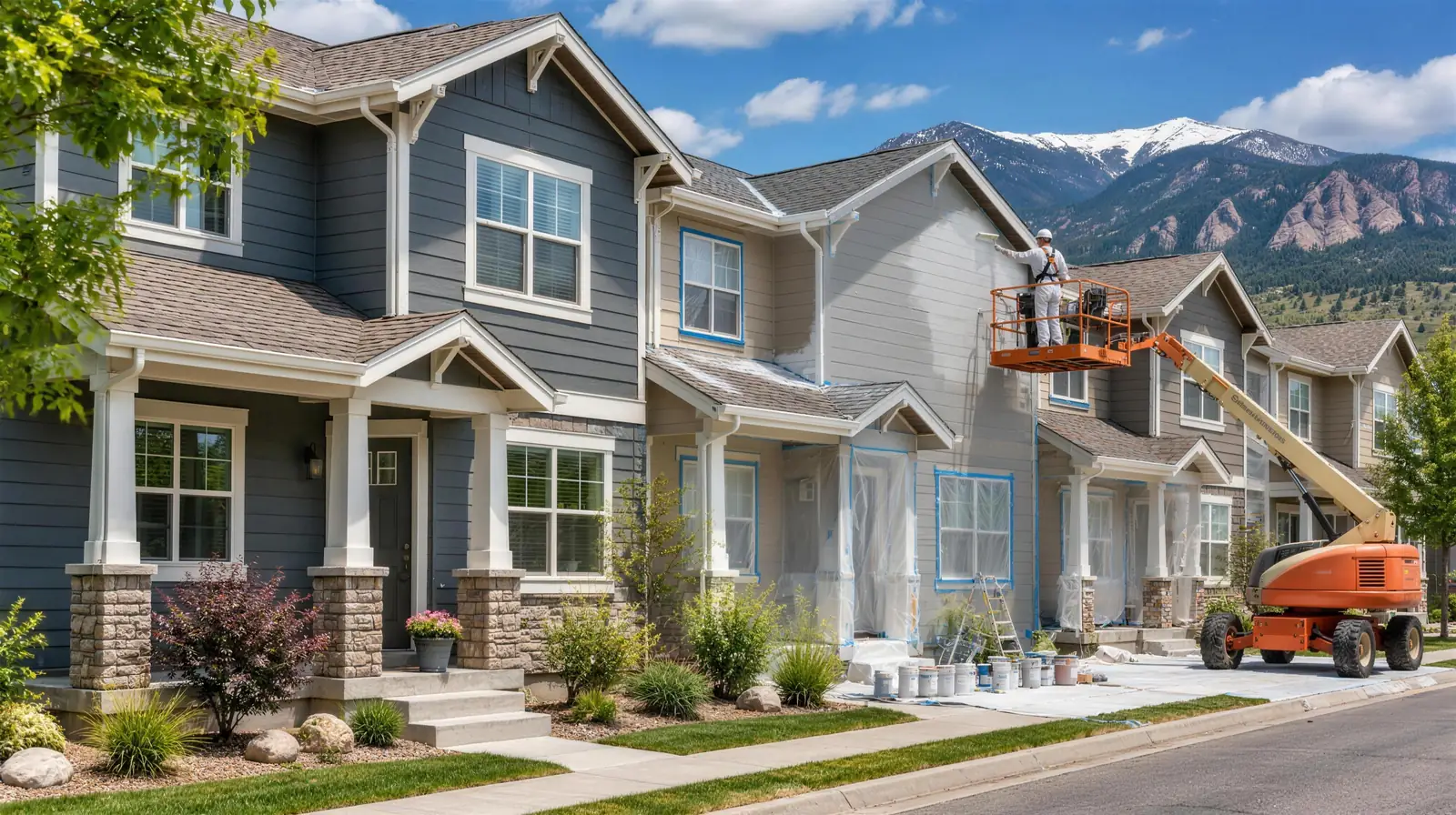
The 1980s brought a lot of hardboard lap siding with brick on the front elevation. Hardboard holds paint well while it's sealed, then swells quickly wherever water gets in at a bottom edge or a nail hole. Homes from the 1990s mix hardboard, some stucco and more vinyl windows, which change how we mask and caulk.
Prep is most of the work on all three. Our exterior prep and repair page explains each step.
How We Decide What Gets Repaired and What Gets Painted
Most Centennial houses don't need everything. They need the right things on the right walls.
If this, then that
- If the paint is chalky but still tight, then a thorough wash, spot priming and two topcoats is enough.
- If peeling is limited to the south and west walls, then those elevations get full scraping and priming, and the shaded sides get lighter prep.
- If hardboard is swollen or soft at the drip edge, then those boards are replaced, because paint will not hold on them.
- If plywood panel siding is delaminating at the bottom, then the damaged edge is cut back or the panel replaced, and the new edge is sealed before painting.
- If the house predates 1978 and old paint will be disturbed, then we set up lead-safe containment and cleanup first.
Fascia, Garage Doors and the Wood That Takes the Weather
The wide fascia boards on many 1970s and 1980s homes take direct sun all day on one side and snowmelt from the roof edge on the other. That combination opens end grain and pushes paint off at the miters. Garage doors are often the largest single painted surface facing the street, and a steel door that faces south fades and chalks faster than the siding around it.
Many of these houses also have a wood or hardboard garage door that has been painted several times. Panel edges and the bottom rail, which sits in snowmelt, are usually the first places to peel.
We treat these as their own scope on the estimate, with their own prep notes. Details are on our trim and fascia painting page.
HOA or No HOA: Check Before You Pick a Color
Centennial is a patchwork. Many subdivisions have active HOAs with covenants and an architectural committee, and some older areas have no association at all. If you're in one, ask for the current guidelines before choosing colors, since rules and approved palettes get updated. Neighbors across the line in Greenwood Village or Aurora may work under completely different rules, so their approval experience won't tell you much about yours.
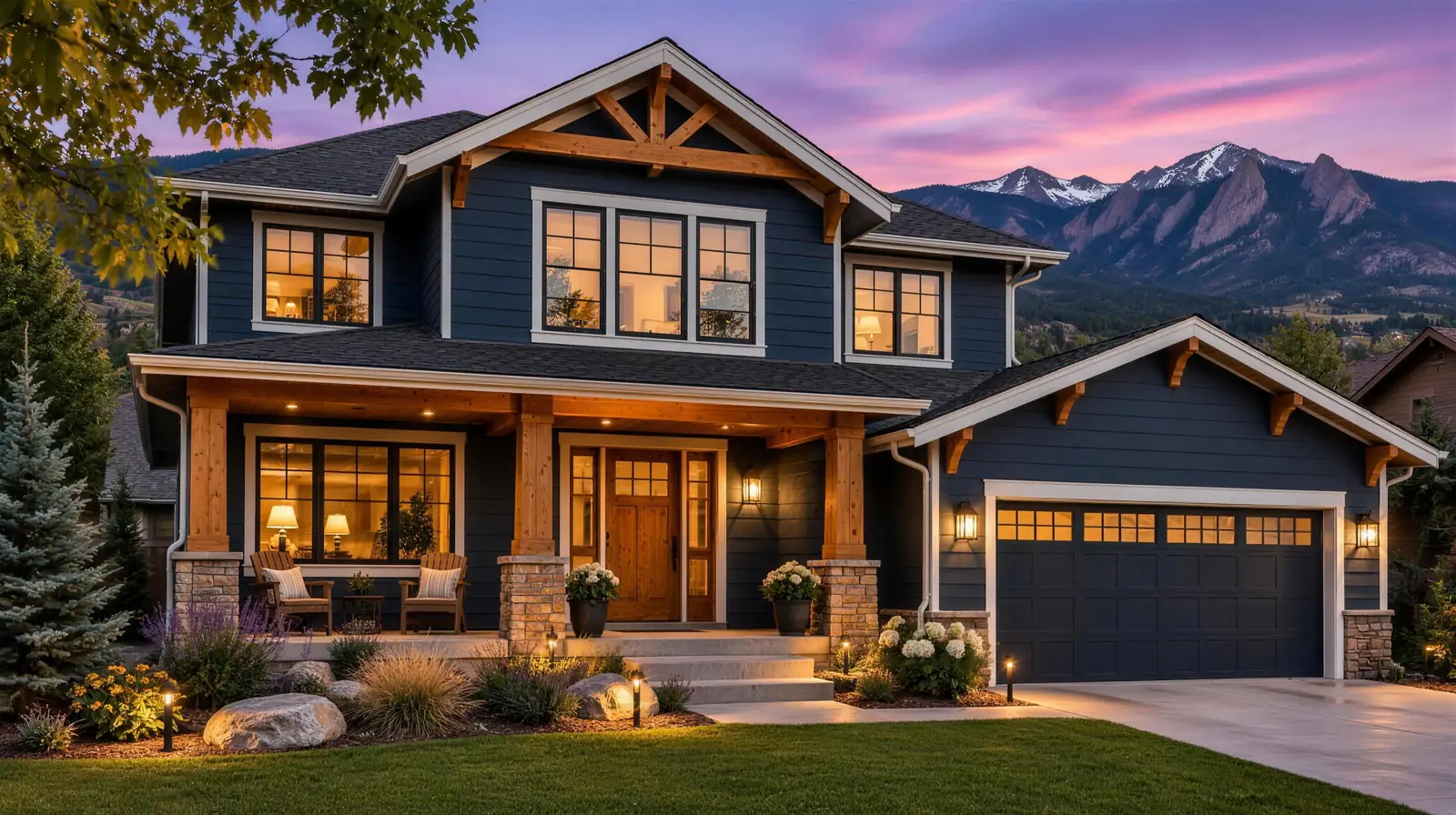
Where there's no association, color is entirely your call, but the house still has to work with what's fixed: the brick on the front, the roof color, and stone or vinyl windows that won't be painted. We usually suggest testing two or three body colors as large brushed samples on the sunny side and the shady side, then looking at them in morning and evening light. A color that reads warm gray in the shade can turn almost white on a west wall at this altitude.
Timing the Job Around Wind and Storms
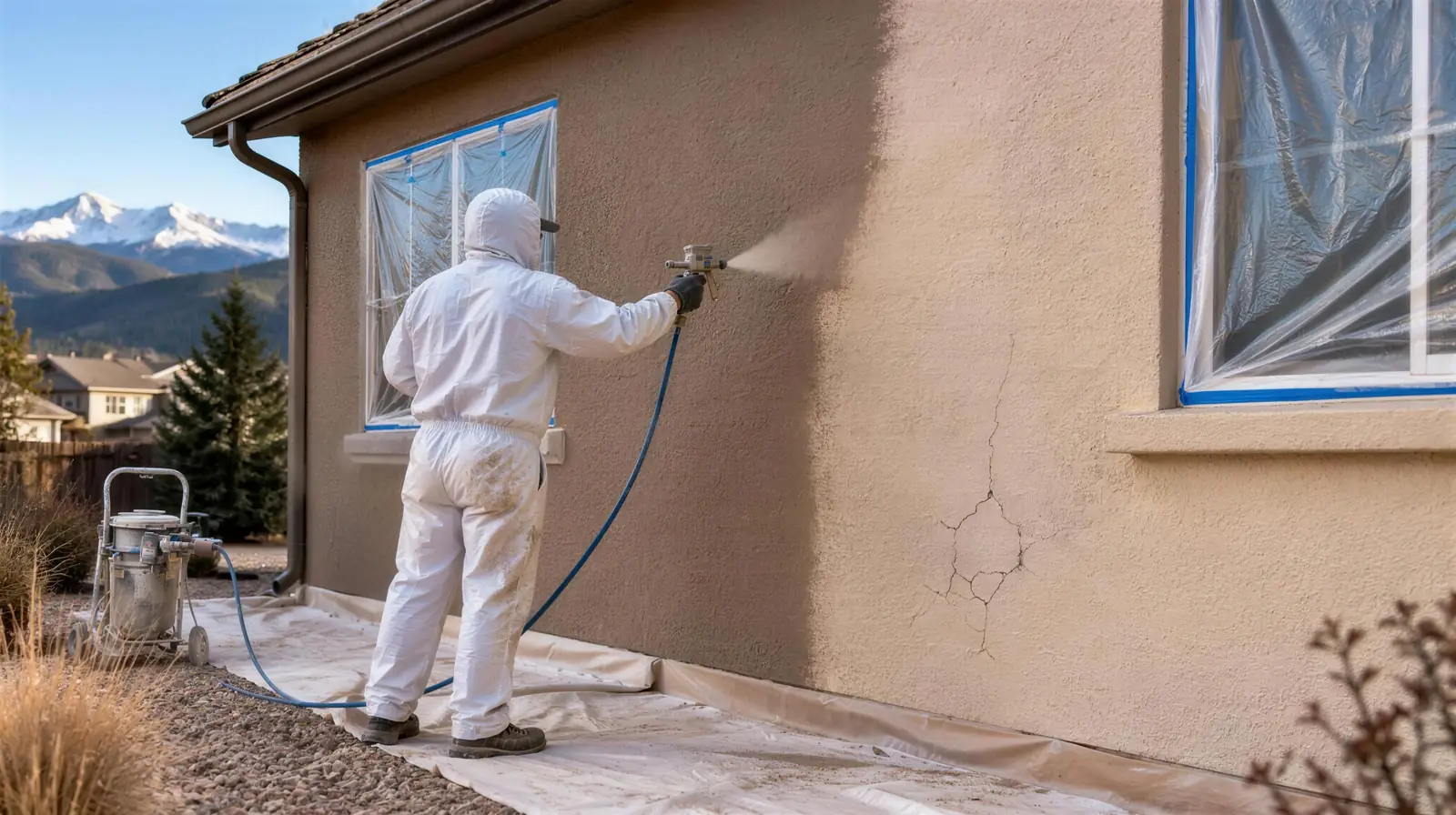
The painting season here runs from late spring into early fall, with the true limits set by the product data sheet's surface temperature minimum and by how cold the nights get. Spring brings gusty days, and the more open parts of the city catch plenty of wind. On those days we brush and roll instead of spraying, because overspray can carry a long way.
Summer means hail and afternoon thunderstorms. We schedule sprayed sections for the morning and watch radar through the afternoon. A wall that gets rained on before the coating sets can wash out or develop surfactant streaks that need cleaning before the next coat.