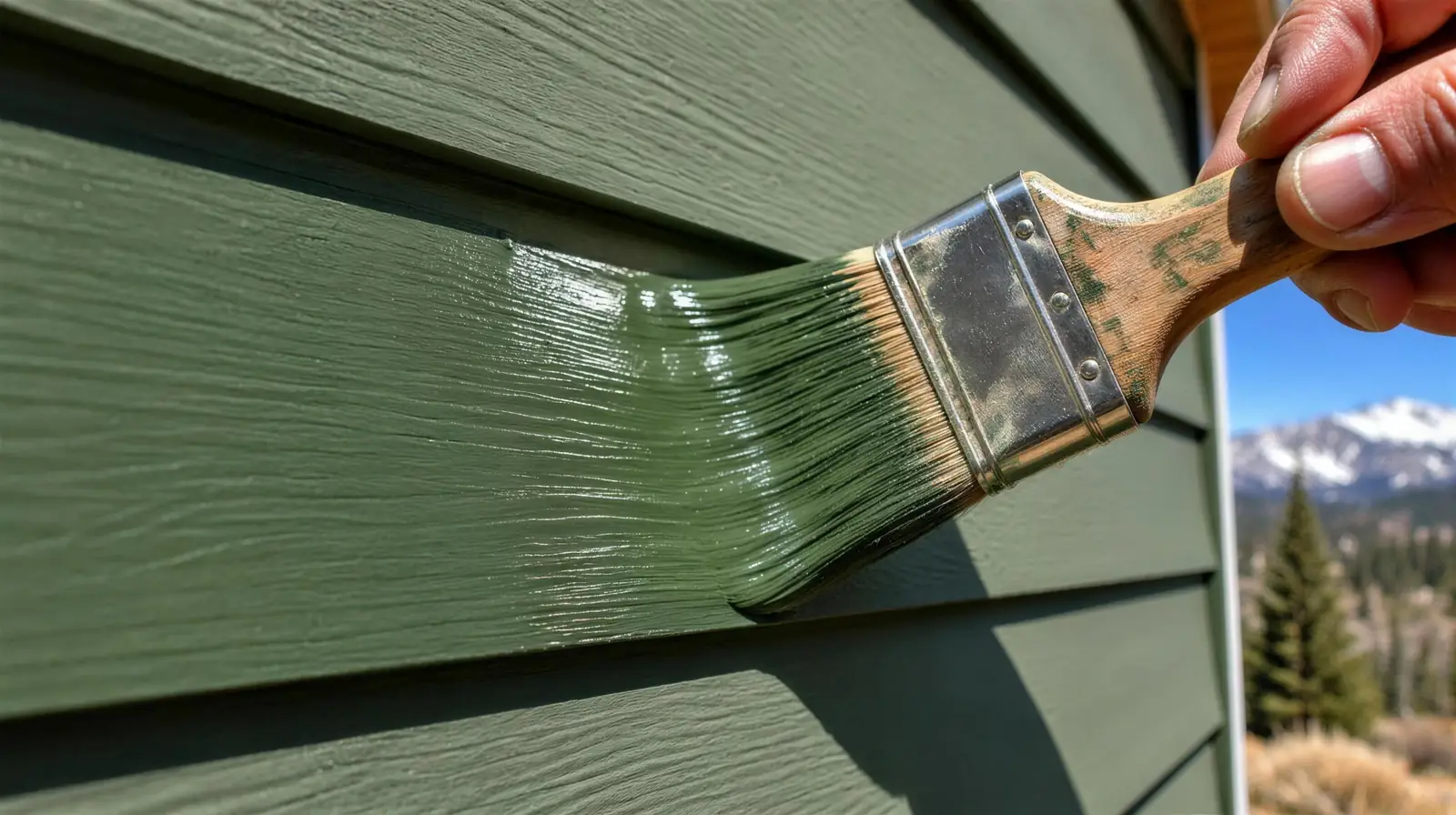
Match the primer to the siding
Most siding repaints on the Front Range finish with a 100% acrylic exterior topcoat. It stays flexible as boards move and holds up to UV better than cheaper vinyl-acrylic blends. Whether that topcoat lasts depends on what's underneath it.
| Siding | Common failure | Prep and primer |
|---|---|---|
| Wood (cedar, redwood, pine) | Peeling at board edges, tannin bleed, gray weathered wood | Scrape, sand weathered fibers, stain-blocking primer on bare wood and knots |
| Fiber cement | Chalky factory finish, failed caulk at butt joints and trim | Wash, chalk test, prime cut edges and bare spots per the siding maker |
| Engineered wood lap | Swelling at drip edges and cut ends, often near grade | Replace swollen boards, seal and prime every exposed edge |
| Hardboard | Swelling and soft spots where water got past the paint | Replace damaged boards, prime all edges before paint |
| Metal (aluminum, steel) | Heavy chalk, faded factory finish, rust at scratches | Wash and degrease, treat rust, bonding primer on bare or glossy metal |
Wood siding on older houses
Wood lap siding and clapboard turn up among the brick in Denver's older neighborhoods, in the historic parts of Boulder, and around the Old Town area of Fort Collins. Many of those houses carry decades of paint, and many were built before 1978, which brings lead-safe work practices into the scraping and sanding.
Bare wood left in the sun starts to degrade at the surface. The gray fibers look solid but won't hold primer, and research from the USDA Forest Products Laboratory has shown that even a few weeks of weathering weakens paint adhesion. So weathered wood gets sanded back to fresh fibers before priming. Cedar and redwood contain water-soluble tannins that bleed brown through latex paint, so knots and bare cedar get a stain-blocking primer.
Peeling on one wall only, or along the bottom edges of boards, often points to moisture pushing out from inside (a bathroom or laundry wall) or wicking up from below. New paint over that problem peels again.
Fiber cement and engineered wood siding
Newer subdivisions, including many around Windsor and other fast-growing northern Colorado towns, are sided with fiber cement or engineered wood lap. Both arrive factory primed or factory finished, and both have specific repaint rules.
Fiber cement
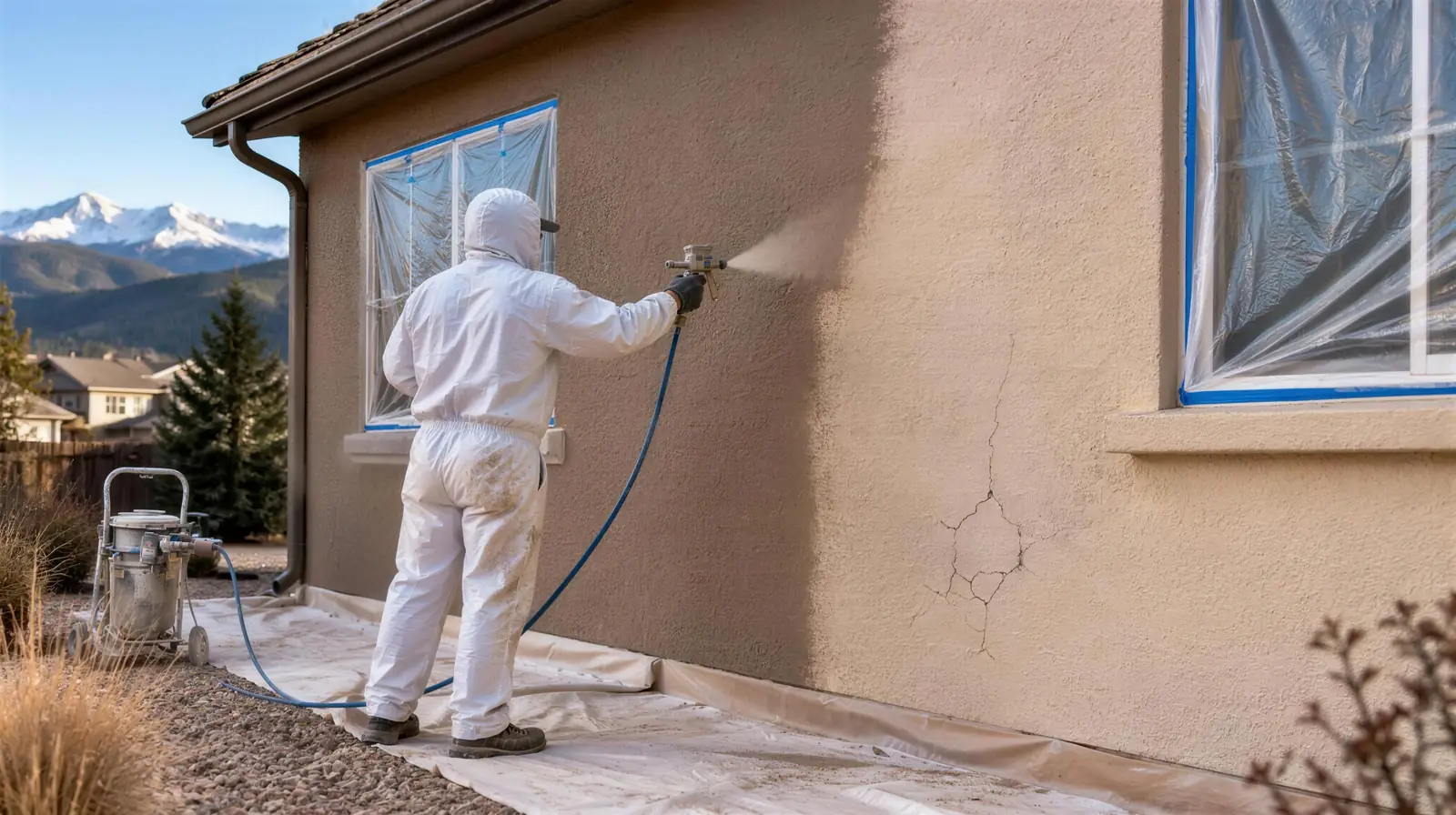
Fiber cement is stable and takes paint well. Factory finishes eventually chalk and fade, worst on south and west walls, so the first repaint is mostly about adhesion: wash off the chalk, make sure tape doesn't pull the finish, prime cut edges and bare spots, and topcoat with 100% acrylic. Caulk goes where the siding maker calls for it, at trim and penetrations.
Engineered wood
Engineered wood lap (LP SmartSide is the product most people know) is a resin-bonded wood strand board. Its weak point is any exposed edge. Cut ends at trim, the bottom drip edge, and nails driven too deep let water into the strands, and the board swells. Swollen edges don't shrink back. Those boards get replaced, and every exposed edge is sealed and primed before paint, following the siding maker's finishing instructions.
Metal siding and the chalk problem
Aluminum and steel siding come with baked factory finishes that slowly turn to powder. Painting over heavy chalk is the fastest route to peeling, because the new coat bonds to dust instead of metal. The fix is a thorough wash with a cleaner meant for chalky surfaces, a rinse, and a tape test once it's dry. Where chalk persists, a primer formulated for chalky surfaces binds it down.
Hail dents and scratches that break through the finish let steel rust and aluminum oxidize. Rust gets wire-brushed and primed with a rust-inhibiting metal primer. Bare galvanized steel needs a primer rated for galvanized metal, since oil-based alkyd paints react with zinc and let go. Dented panels take paint fine, though the dents stay.
Sun, freeze-thaw and the order of the walls
Siding moves more than masonry. Wood and engineered wood swell and shrink with moisture, and every siding type expands in afternoon heat. On the Front Range that cycle can run from below freezing at dawn to a hot afternoon on a south wall in April or October. Paint films that are too thin, or old and brittle, crack along board edges first, and the stronger UV at altitude chalks south and west elevations well ahead of the north side.
The paint maker's data sheet sets the minimum air and surface temperature, the dew point margin and the recoat window. We plan each day around those numbers: start on walls that have warmed past the minimum, stay ahead of direct afternoon sun on west walls in summer (fast drying leaves lap marks), and stop early enough that fresh paint isn't wet when evening dew forms. Latex that takes dew before it cures can show tan, sticky streaks called surfactant leaching.
If this, then that
- If the existing paint is sound with light chalk, then wash, spot prime and apply the topcoat.
- If paint is peeling to bare wood across a whole wall, then scrape, sand and prime that wall before painting.
- If boards are swollen, soft or delaminating, then replace them before any paint goes on.
- If the house was built before 1978, then plan for lead-safe prep under the EPA's Renovation, Repair and Painting rule.
Colors and sheen on siding
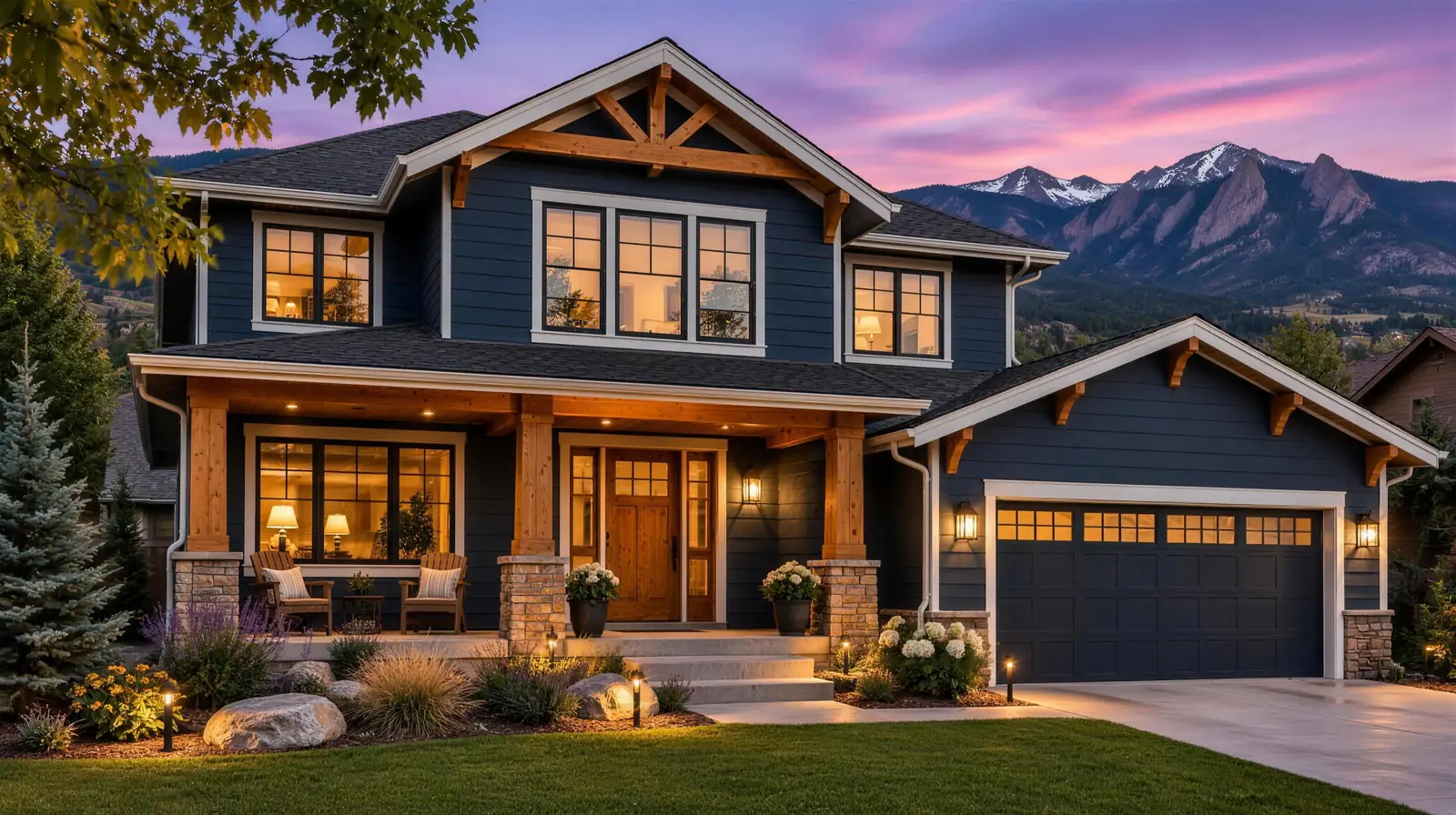
Flat and low-sheen finishes hide the dings and uneven surfaces of older wood siding. Satin sheds dirt a little better and is common on fiber cement. Very dark colors run hot in direct sun, and some siding makers publish guidance on dark colors, so check it before choosing a near-black body color for a west-facing wall. Sample patches brushed out on two sides of the house tell you more than a chip in the kitchen.
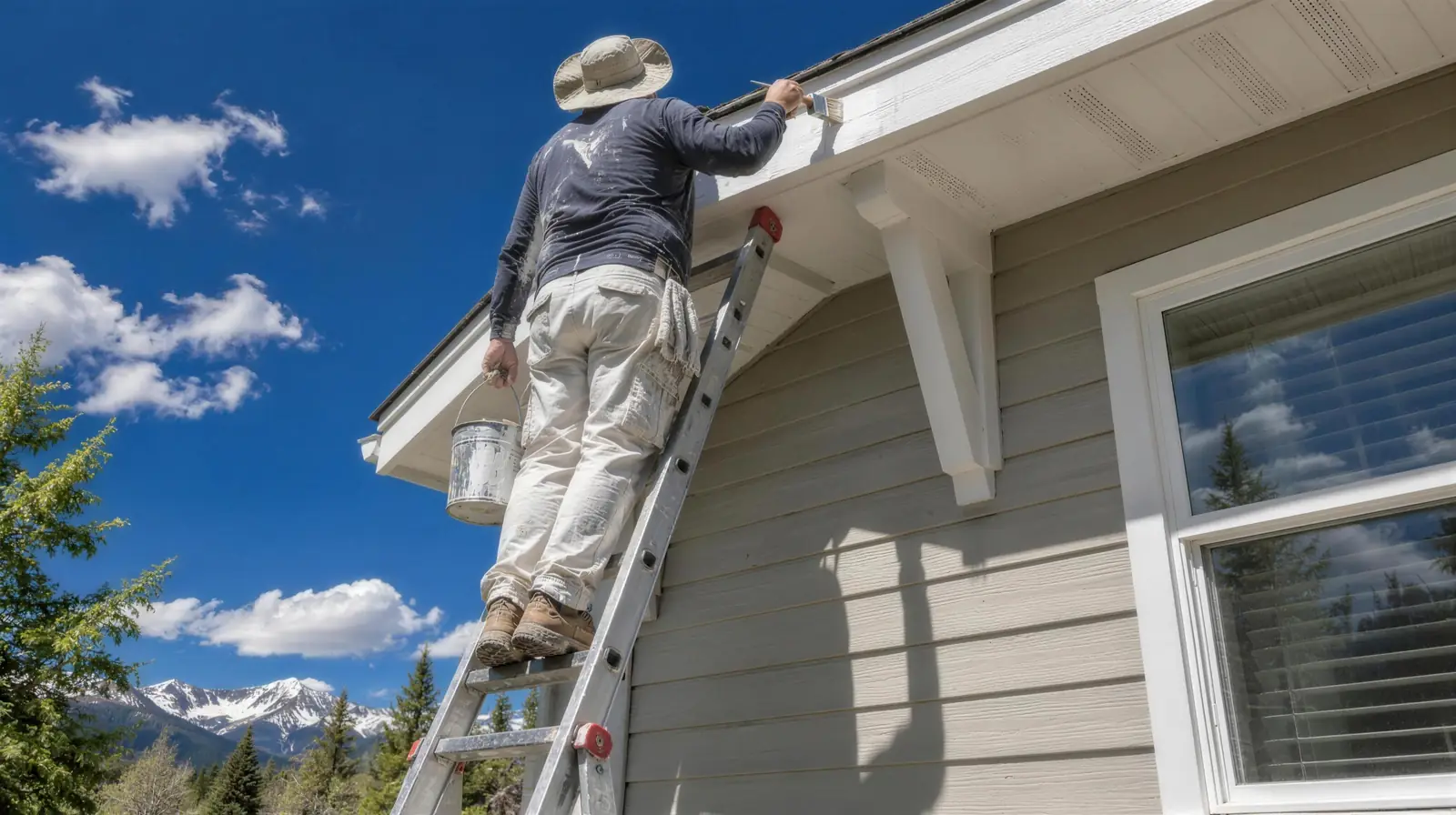
Siding is usually painted alongside trim, so trim and fascia painting covers the other half of the job, and the scraping, sanding and wood repair steps are laid out in exterior prep and repair.
Request an estimate and tell us what's on your walls. We'll confirm the siding type on site and write the primer and coat count into the scope.