Longmont's houses, era by era
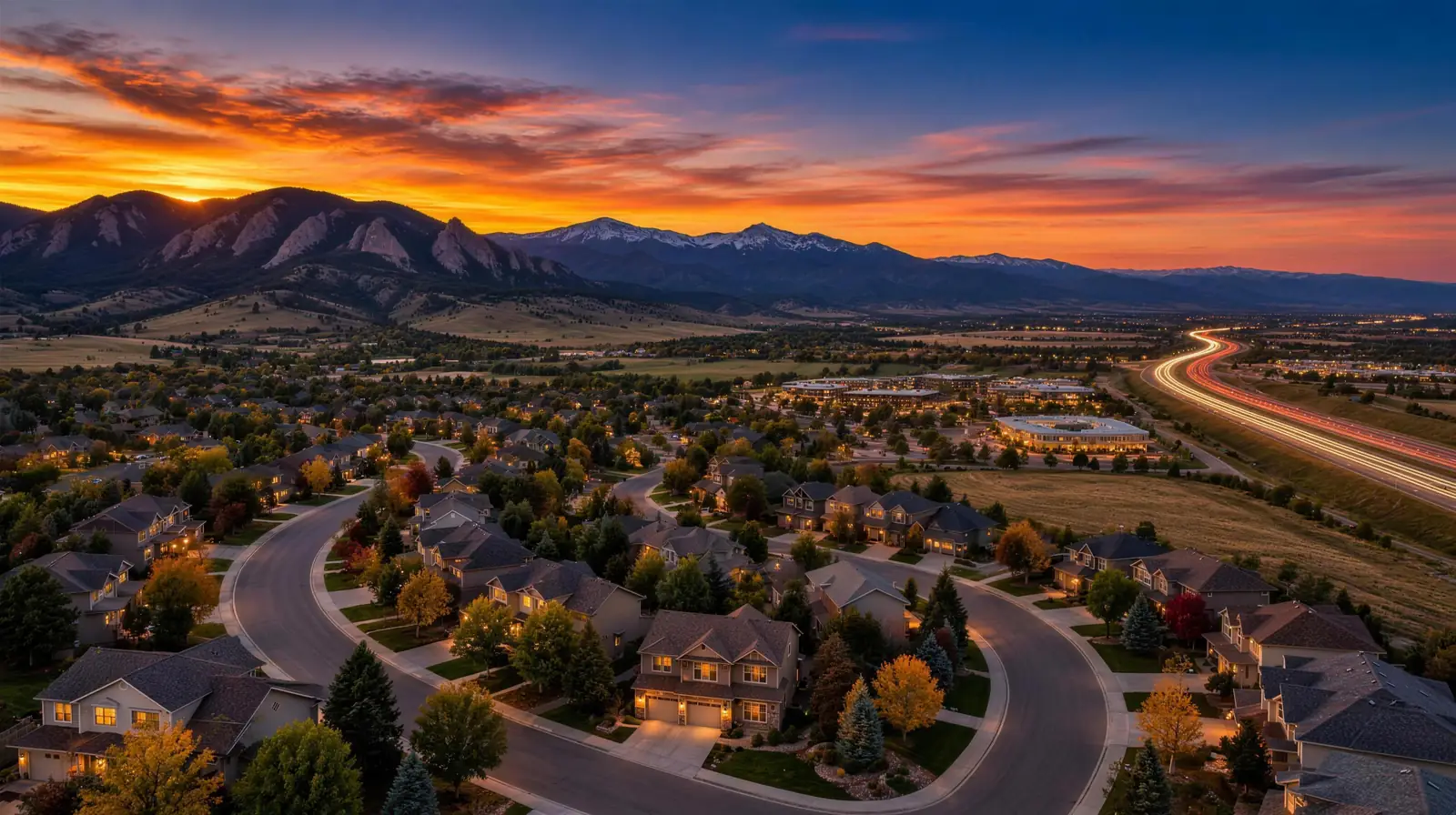
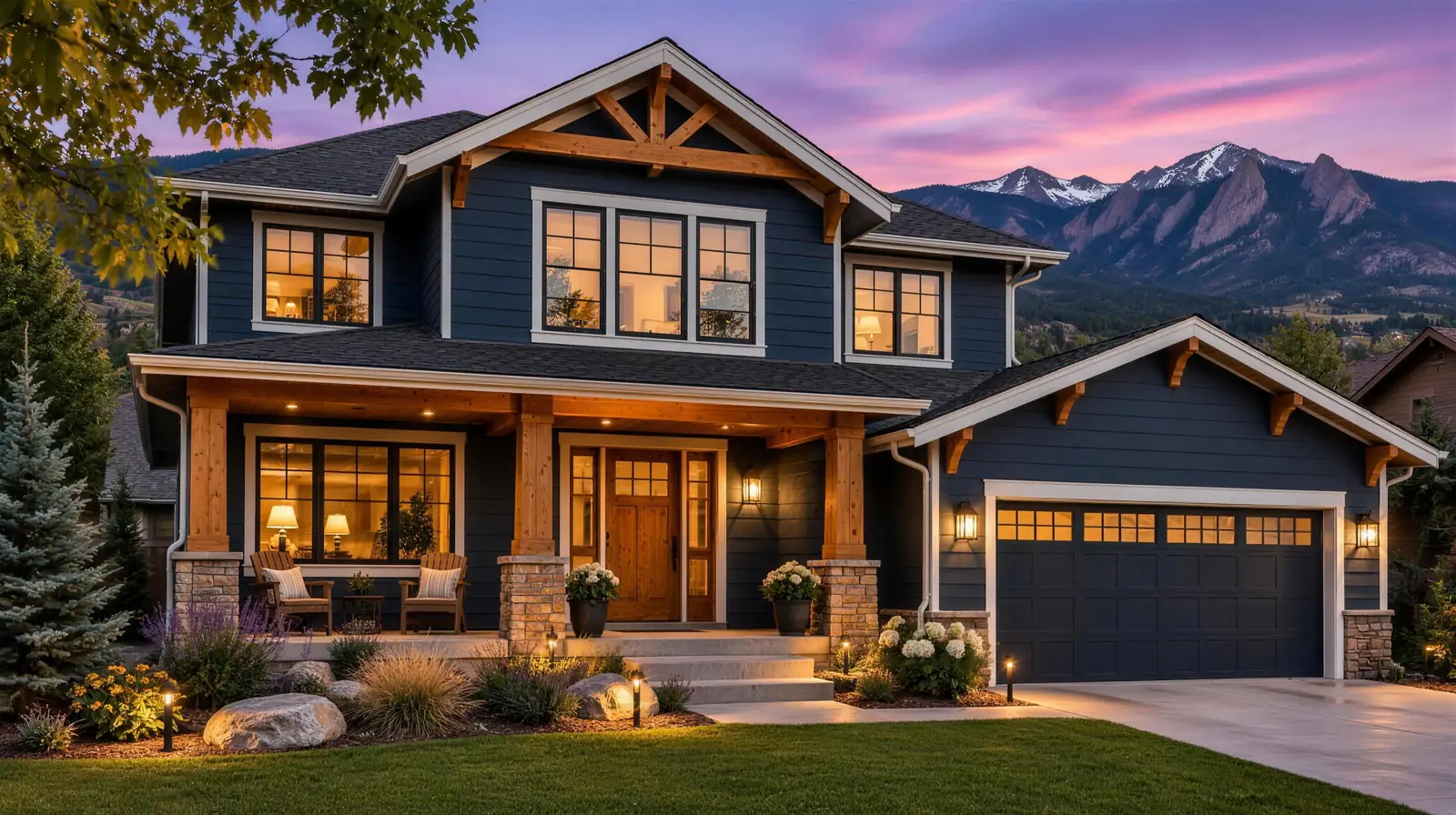
Longmont started as an agricultural colony town in the early 1870s, and the neighborhoods around Main Street still hold Victorian and early 1900s houses, brick bungalows and wood-sided cottages. Through the postwar decades the town spread out with ranches, bi-levels and tract homes, and from the 1990s on came larger subdivisions and planned neighborhoods such as Prospect New Town, known for its bold color schemes.
Saturated colors like deep reds, blues and greens fade faster under strong UV than softer mid-tones, and at this altitude the difference shows within a few seasons on south and west walls. If you love a strong color, ask about the paint's fade resistance on the product data sheet and plan for trim and doors to need attention first.
At about 5,000 feet and a bit farther from the mountains than Boulder, Longmont gets fewer of the extreme winter windstorms but just as much high-altitude sun, plus its share of plains hail.
Siding type sets the plan
| Siding | Where it's common | Main risk | What we do |
|---|---|---|---|
| Wood lap and clapboard | Older homes near downtown | Thick old paint layers, lead on pre-1978 homes, rot at sills | Lead-safe scraping, wood repair, primer on bare wood |
| Hardboard lap | Many 1970s to 1990s subdivisions | Swells and flakes where water reaches cut edges and nail holes | Replace soft boards, seal edges, prime, two coats |
| Brick | Bungalows and ranches | Painted brick can trap moisture | Leave bare brick bare; breathable coating on brick already painted |
| Fiber cement | Newer homes and replacements | Open caulk joints, thin builder paint | Recaulk, spot prime, two topcoats |
| Engineered wood | Newer subdivisions | Swelling at unsealed cuts and bottom edges | Seal every exposed edge before topcoats |
Hardboard deserves its own note. It holds paint well while its surface stays sealed, but once water gets into a board it swells, softens and won't hold paint again. We probe boards near the ground, around downspouts and under windows, and replace failed ones before painting. Painting over a swollen board buys a season or two at most. Our siding painting page covers each material in more depth.
Older homes near downtown
The older parts of Longmont have plenty of houses built well before 1978, so we plan prep under the EPA's Renovation, Repair and Painting rule: ground covers, wet methods where they help, no open-flame paint removal and thorough cleanup. If your home is designated as a local landmark, check with the city's planning staff before changing siding, windows or trim.
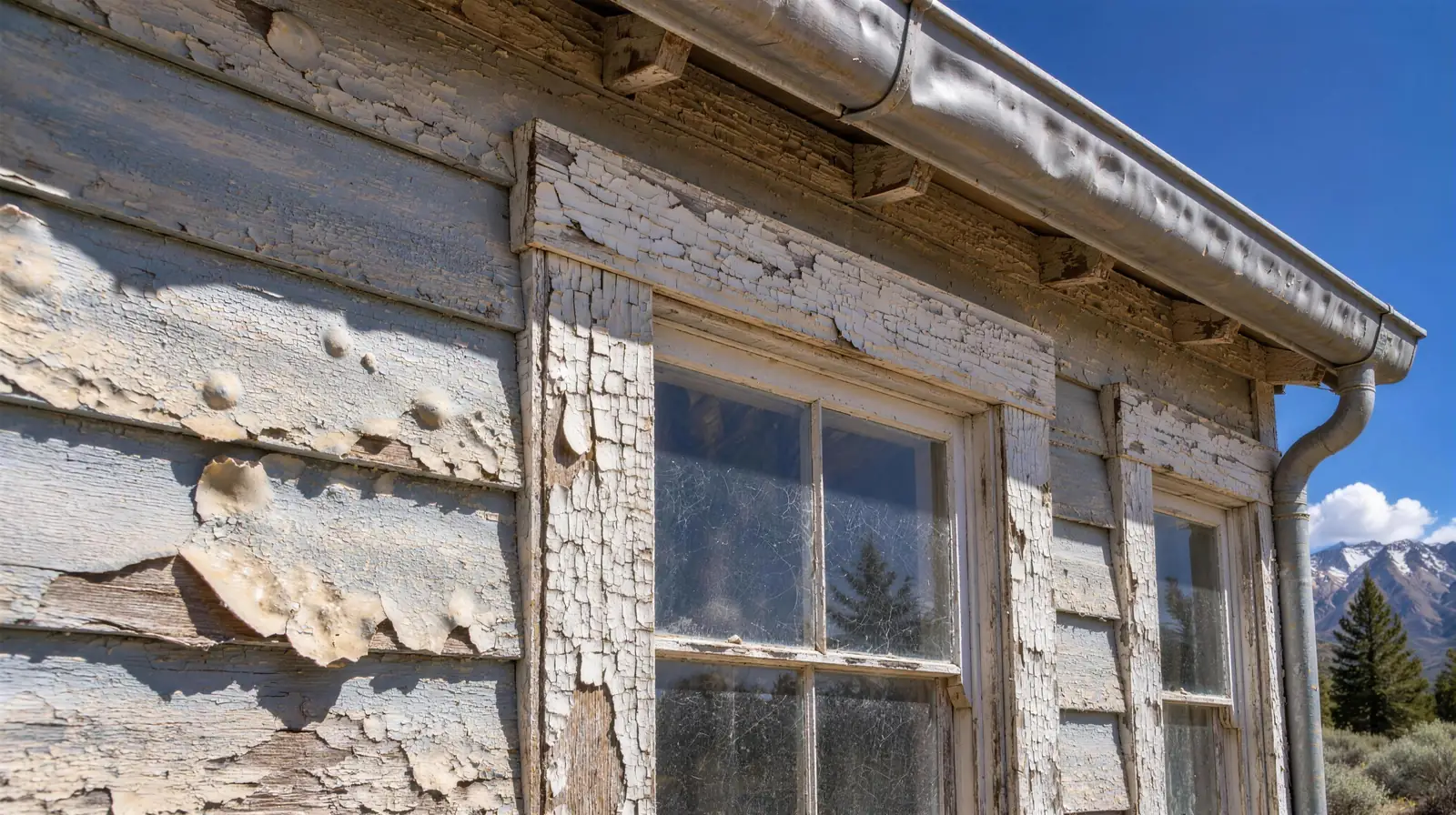
A frequent problem on these houses is paint that has built up in thick layers and now cracks in a checked, scaly pattern, sometimes called alligatoring. Topcoating over it doesn't fix anything. The loose material has to come off down to a sound layer, and sometimes that means stripping sections of trim or siding. It's slow work, and it's where a low bid usually cuts corners.
Scheduling around Longmont weather
Our season here usually runs from late spring into early fall. Daytime highs can look fine in April or late October, but nights drop below the minimum temperatures on most product data sheets, and paint that hasn't cured before dew or frost settles can fail early. Midsummer brings the opposite problem: a dark west wall in afternoon sun can be too hot to paint well, so we follow the shade around the house through the day.
Hail comes mostly with spring and summer thunderstorms. If a storm hits while a job is underway, we inspect fresh paint for pitting before the next coat goes on.
Getting a useful estimate
Ask each bidder to write down the siding type, how many boards they expect to replace, how bare wood will be primed and how many topcoats go on. If one bid is far lower than the rest, the missing piece is usually prep. We also work in nearby Firestone and Mead, where newer homes face the same sun and hail.
Request an estimate and we'll identify your siding on site.