Matching the prep to the age of the house
Arvada grew in waves, and the house usually tells us which wave it came from before we touch a scraper.
Olde Town and the older streets around it
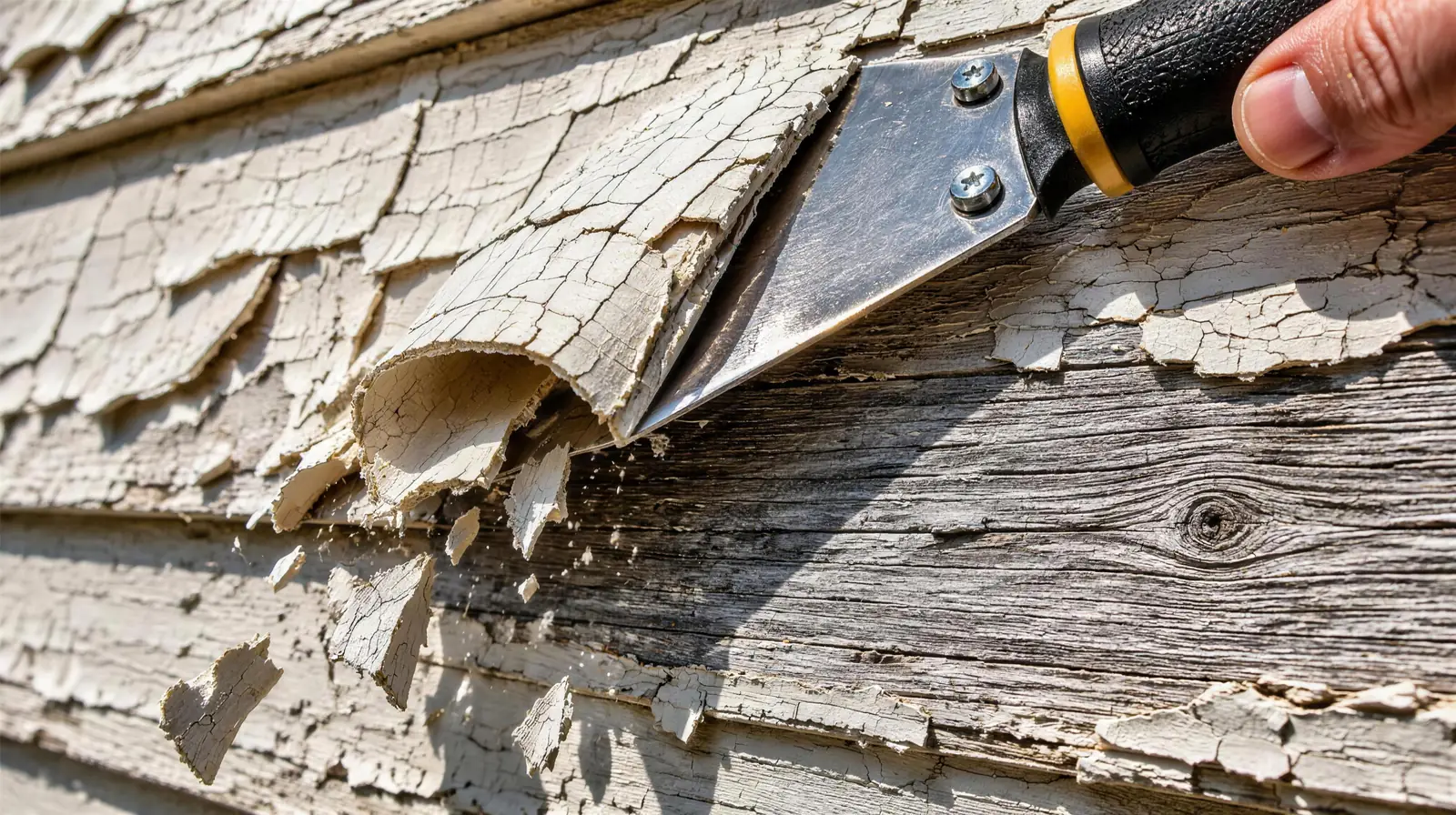
The blocks near Grandview Avenue hold some of the oldest homes in the city: wood clapboard, deep porches, original window casings and, often, five or six layers of paint. On these houses the visible paint is rarely the real problem. The problem is the bond between the old layers. When the bottom coat lets go, everything above it comes off in sheets, and no topcoat fixes that. We test adhesion in a few spots before quoting, because the result decides whether a scrape and spot-prime scope is honest or whether sections need to go back to a sound surface.
Postwar ranches and split-levels
Most of central and eastern Arvada was built between the 1950s and the 1970s. Typical combinations are brick on the lower wall with painted wood or hardboard above, painted aluminum siding, and long runs of fascia under low-pitched roofs. The fascia and the trim boards near grade usually fail first. How we handle rot repair, caulking and priming is laid out on our exterior prep and repair page.
West Arvada's newer subdivisions
Newer neighborhoods on the far west side, such as Candelas and Leyden Rock, lean on stucco, fiber cement and stone veneer, usually under HOA design guidelines. The first repaint there is mostly about color approval, caulk joints and keeping paint off the stone.
Why west and south walls give out first here
Arvada sits around 5,300 feet in its core and rises as you head west. Thinner air means stronger ultraviolet exposure, and UV breaks down the resin in exterior paint. The result is chalking and fading that shows up first on south and west elevations. On the west side of town, those same walls also catch the wind that comes down off the foothills, which drives grit into fresh paint and dries out caulk faster than you'd expect.
Freeze-thaw does the rest. A small gap at a window corner lets water in during a winter afternoon thaw, the water freezes overnight, and the joint opens a little wider every season. By the time paint is peeling below a sill, the wood under it is often soft.
Lead-safe work on Arvada's pre-1978 homes
A large share of Arvada's houses were built before 1978, the cutoff the EPA's Renovation, Repair and Painting rule uses for homes that may contain lead-based paint. On those houses we plan prep around containment: sheeting on the ground, misting while scraping, no open dry sanding, and a cleanup aimed at leaving no chips in the beds or the lawn. A lead test kit or a certified inspector can tell you what's actually on the walls if you want to know before work starts.
What Arvada's common exteriors need
| Surface | Where you'll see it | What we watch for |
|---|---|---|
| Painted wood clapboard | Older homes near Olde Town | Failing bottom layers, rot at sills and porch skirts |
| Hardboard lap siding | Many 1970s to 1990s homes | Swollen bottom edges; damaged boards get replaced before paint |
| Painted aluminum siding | Postwar ranches | Heavy chalk; needs a full wash and a primer the paint maker approves for metal |
| Brick | Lower walls in older neighborhoods | Unpainted brick is usually best left alone; painted brick needs a breathable masonry coating |
| Stucco and fiber cement | West-side newer builds | Hairline cracks, caulk at trim joints, HOA color approval |
Questions worth asking before you book
Arvada's painting season usually runs from late spring into early fall, with workable days on either side when daytime temperatures and the paint's data sheet allow. Afternoon thunderstorms in July and August are the main schedule risk. Before you pick a painter, ask:
- Will they test for or presume lead on a pre-1978 house, and how will they contain chips?
- Which boards are being replaced, and which are only primed and painted?
- How many coats go on the south and west walls, and what product?
- What happens if a storm rolls in a few hours after a coat goes on?
If you live near the edge of town, our Westminster and Wheat Ridge pages cover the neighboring housing. When you're ready, request an estimate and we'll walk the house with you.