Large lots, old trees and the shade problem
Wheat Ridge grew from farms, orchards and greenhouses into a suburb, and it kept more of its open, irregular lots than most of the inner west metro. Many houses sit under mature cottonwoods, elms, maples and spruce. That's pleasant in July and hard on paint.
Shaded walls stay damp longer after rain and snow. North and east sides under heavy canopy grow mildew and algae, especially near sprinklers. Sap and honeydew from some trees spot siding and trim, and leaves pack gutters and keep fascia wet. Branches rubbing a roof edge wear through paint in a single season.
Before painting we wash every wall, treat mildew with a cleaner made for it, and let the house dry thoroughly before priming. We'll also suggest having branches trimmed back from the walls and roof by an arborist before we start. The space helps the paint dry and keeps it clean.
Cottonwoods add a seasonal problem. When they release their cotton in late spring, the fluff drifts onto anything wet, and a freshly coated wall under a big cottonwood can end up furred with it. We watch for that stretch and shift painting to the sides of the house away from the trees until it passes.
Siding types we see in Wheat Ridge and how each one gets prepped
Houses here were built over a long stretch of time, and owners have re-sided some of them along the way, so we see a wider mix of exterior materials than in a newer suburb.
| Surface | Typical problem | Our prep |
|---|---|---|
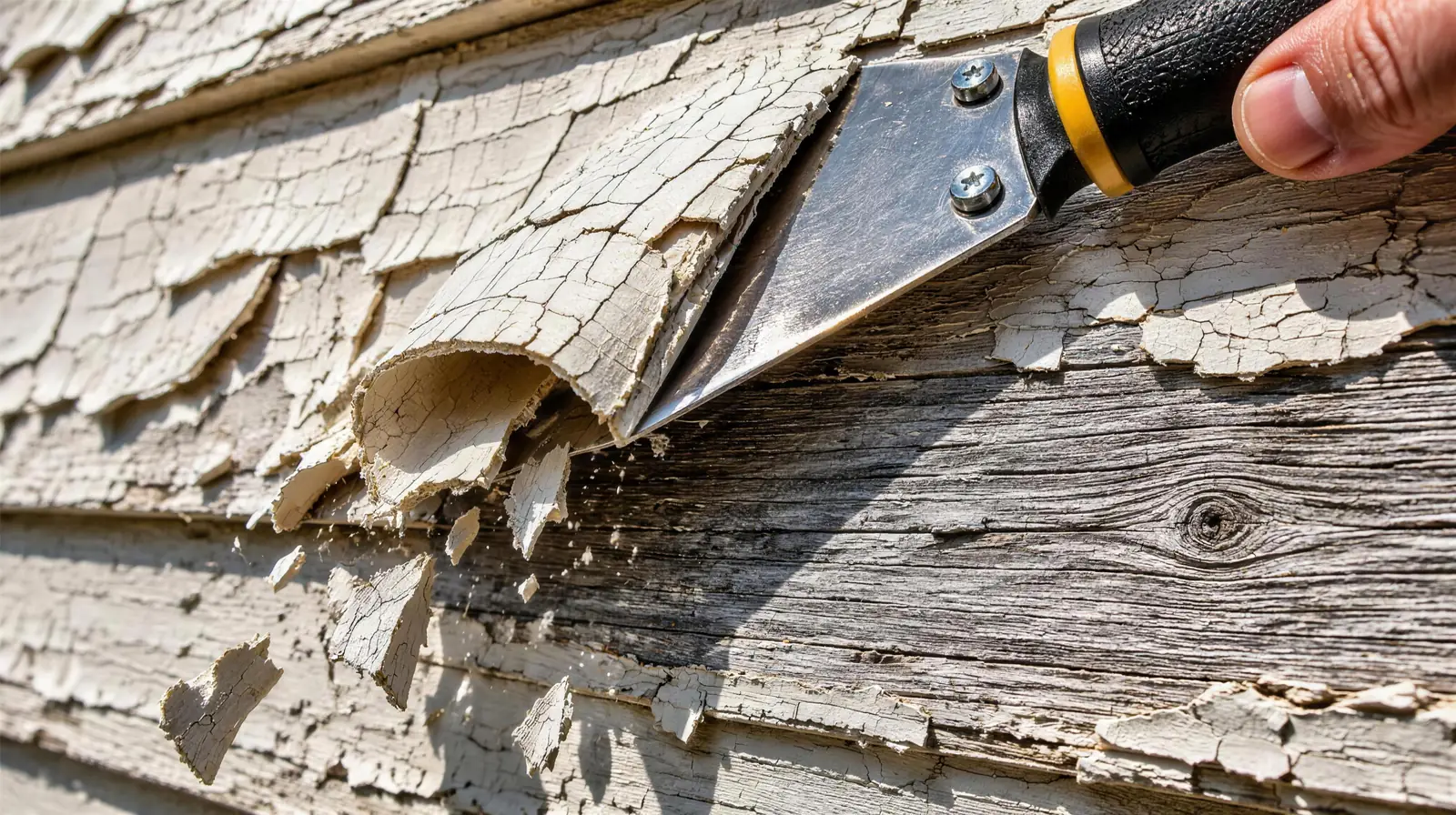
| Wood lap siding | Peeling on sunny sides, open joints, checked boards | Hand scrape, prime bare wood, fill joints, replace rotted boards |
| Brick (painted) | Peeling over damp spots, efflorescence | Find the water source, clean, breathable masonry coating |
| Aluminum siding | Chalky, faded factory finish, small dents | Wash off chalk completely, bonding primer where needed, acrylic topcoat |
| Cement-based shingles | Brittle, cracked corners, old paint failing | Treat as possibly containing asbestos: no sanding or aggressive pressure washing |
| T1-11 or plywood panels | Delaminating bottom edges, open grooves | Replace soft panels, seal bottom edges, stain or paint to suit |
Our exterior prep and repair page explains washing, scraping and lead-safe setup for pre-1978 houses, which covers most of the city.
Outbuildings, fences and the rest of the lot
Bigger lots come with more to maintain. Detached garages, sheds, old barns and long wood fences are common, and they often haven't been painted in the same cycle as the house. A shed or garage can usually go on the same schedule as the main repaint, since the crew and setup are already there. Fences and decks usually do better with a penetrating stain than with paint; our deck and fence staining page explains why.
Old barn and garage siding that has gone gray and fuzzy needs more than a quick wash. The loose fibers on the surface get scrubbed off, the wood gets a penetrating primer that soaks in and binds what's left, and then topcoat. Painting straight over weathered gray wood is one of the quickest ways to get peeling within a couple of seasons.
What we look at first on a Wheat Ridge walk-through
We start on the south and west walls, where the sun does the most damage, then go to the shaded sides to check for mildew and damp wood. We probe window sills, the lowest siding course and the fascia under any trees. We identify every siding type and ask the year the house was built. Then we decide whether a wall needs spot repairs and a full repaint, or just cleaning and touch-up.
The workable season runs from late spring into early fall. Shaded lots can lose morning hours to dew in spring and fall, so we often schedule the sunny sides first and save the shaded ones for midday. Many homes here are much like those in Lakewood and Arvada. Send us the basics through the estimate form and we'll set up a visit.