Wind changes how we schedule and what we fix
Strong downslope winds are a well-known feature of the Boulder and US 36 area, mostly from late fall through spring. For an exterior repaint, that wind matters in a few practical ways.
Spraying stops on gusty days, because overspray can carry well past the property line. Wet paint collects grit, so coats on west walls get timed around the forecast. The bigger issue is what wind does to the house itself: fascia lifts, trim loosens, gates and fence panels flex, and caulk joints on the west side pull apart sooner than on the sheltered sides.
From Broomfield Heights to Anthem
The original Broomfield Heights neighborhoods went up starting in the 1950s, soon after the Denver-Boulder Turnpike opened, and they're mostly ranch and split-level homes with brick, wood and some aluminum siding. Those houses predate 1978, so we prep them with lead-safe practices from the EPA's Renovation, Repair and Painting rule. On these houses the fascia and the wood above the garage door usually show the most wear, and painted aluminum needs a thorough wash to remove chalk before any primer goes on.
Later decades filled in the middle of the city with 1970s to 1990s subdivisions, often with hardboard or wood lap siding that needs its bottom edges checked for swelling. The northern neighborhoods, including Anthem and the Broadlands, are newer, with stucco, fiber cement, engineered wood and stone veneer, and they operate under HOA covenants.
Stucco and stone on the newer north side
Stucco bodies in the newer neighborhoods tend to show hairline cracking around windows and at corners, plus fading on the sun side. We wash gently, patch cracks with a compatible material, and choose between breathable acrylic masonry paint and an elastomeric coating based on the wall's moisture condition. Stone veneer gets fully masked, since paint or overspray on natural or manufactured stone is very hard to remove without leaving a mark.
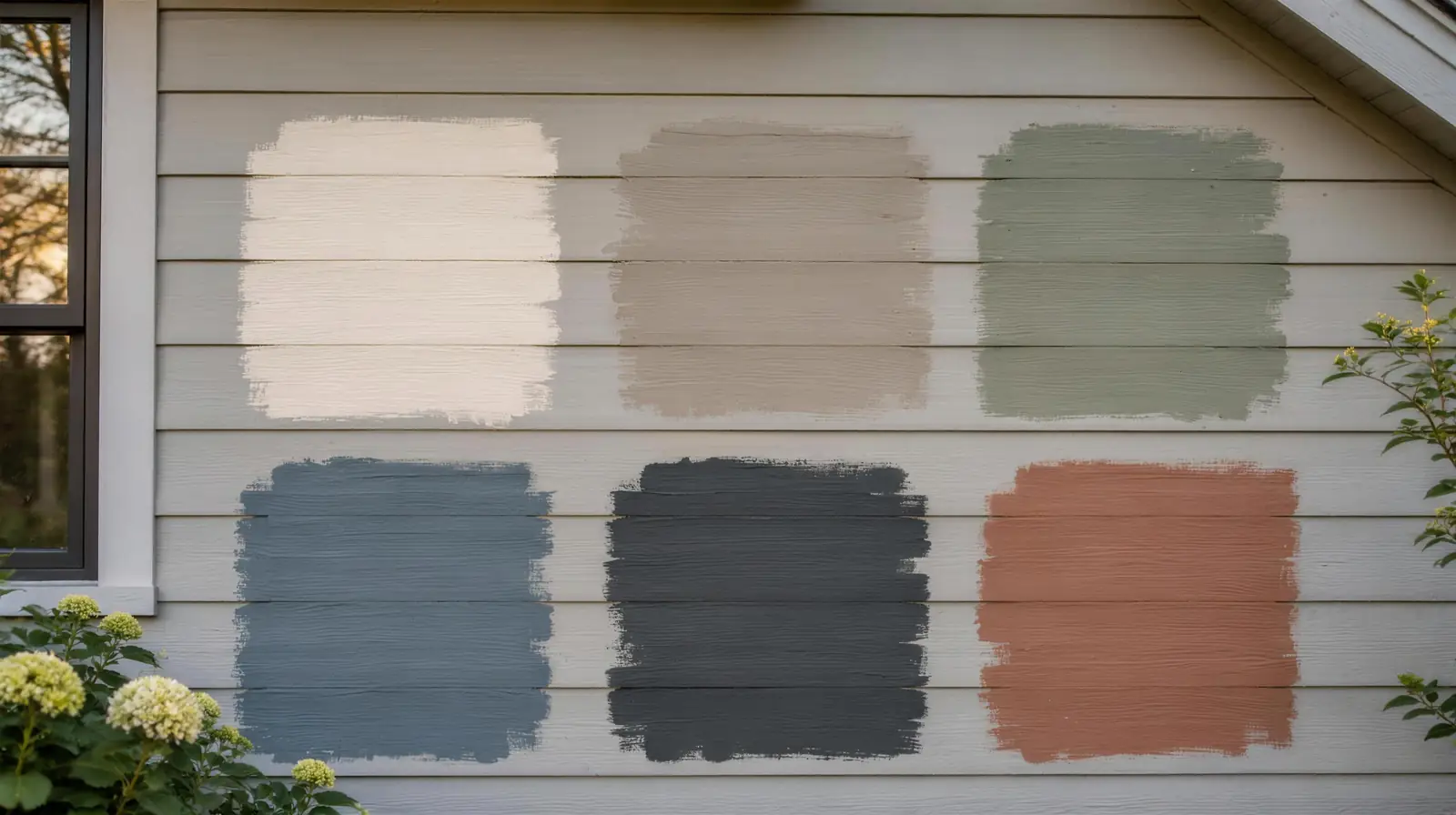
At roughly 5,400 feet, UV is strong, and colorants differ in how well they handle it. Some bright reds, yellows and deep accent colors fade noticeably faster than earth tones. If your approved palette puts a color like that on a sunny wall or the front door, ask the paint supplier about its exterior fade resistance before committing.
Fiber cement and engineered wood trim on these homes mostly need caulk renewed at joints and two finish coats. More detail on masonry surfaces is on our stucco painting page.
HOA review in Anthem, the Broadlands and similar neighborhoods
The rules belong to each association, and they differ. These are the situations we see most often and how to handle each one:
If this, then that
- If you're repainting in the existing approved colors, then check whether your association still wants notice; some do.
- If you're changing colors, then submit for architectural review before you book a start date.
- If the HOA keeps a preset palette, then choose from it and bring us the scheme name or number.
- If you're in an age-restricted community with its own design rules, then ask whether exterior painting is handled by the association or by the owner.
Our HOA and townhome painting page explains how we prepare color submittals and work with management companies.
Picking the right weeks
The long, dependable stretch for exterior paint here runs from late May into September. Spring brings warm days along with the tail end of the wind season, and fall often offers calm, dry weeks until overnight lows drop below what the paint's data sheet allows. July and August afternoons can turn stormy fast, and hail is a regular summer risk along the corridor, so coats on exposed walls go on in the morning. If you're near the line with Westminster, our Westminster page covers the housing just south.