A town that straddles two counties
Erie sits on both sides of the Boulder and Weld county line, about 5,100 feet up on rolling open ground east of the foothills. Historic Old Town Erie, around Briggs Street, has older homes from the town's coal-mining days, and those get the lead-safe treatment any pre-1978 house needs, along with the wood repair that comes with a century of Colorado weather. Most of Erie is far newer. Neighborhoods such as Vista Ridge, Erie Village and Colliers Hill went up from the late 1990s onward, and building continues at the edges of town.
That newer stock is mostly engineered wood or fiber cement lap and panel siding, often with stone veneer at the base and painted trim, fascia and garage doors.
HOA color approval, step by step
Many Erie neighborhoods have HOAs with architectural review, and plenty of them want to see colors before you paint, even when you keep the same scheme. Each HOA's rules are its own, but the process usually runs like this:
- Get the current approved palette or design guidelines from the HOA. Palettes change, and an old PDF in a drawer may be out of date.
- Choose body, trim and accent colors, and write down the paint maker and color names exactly as the HOA asks for them.
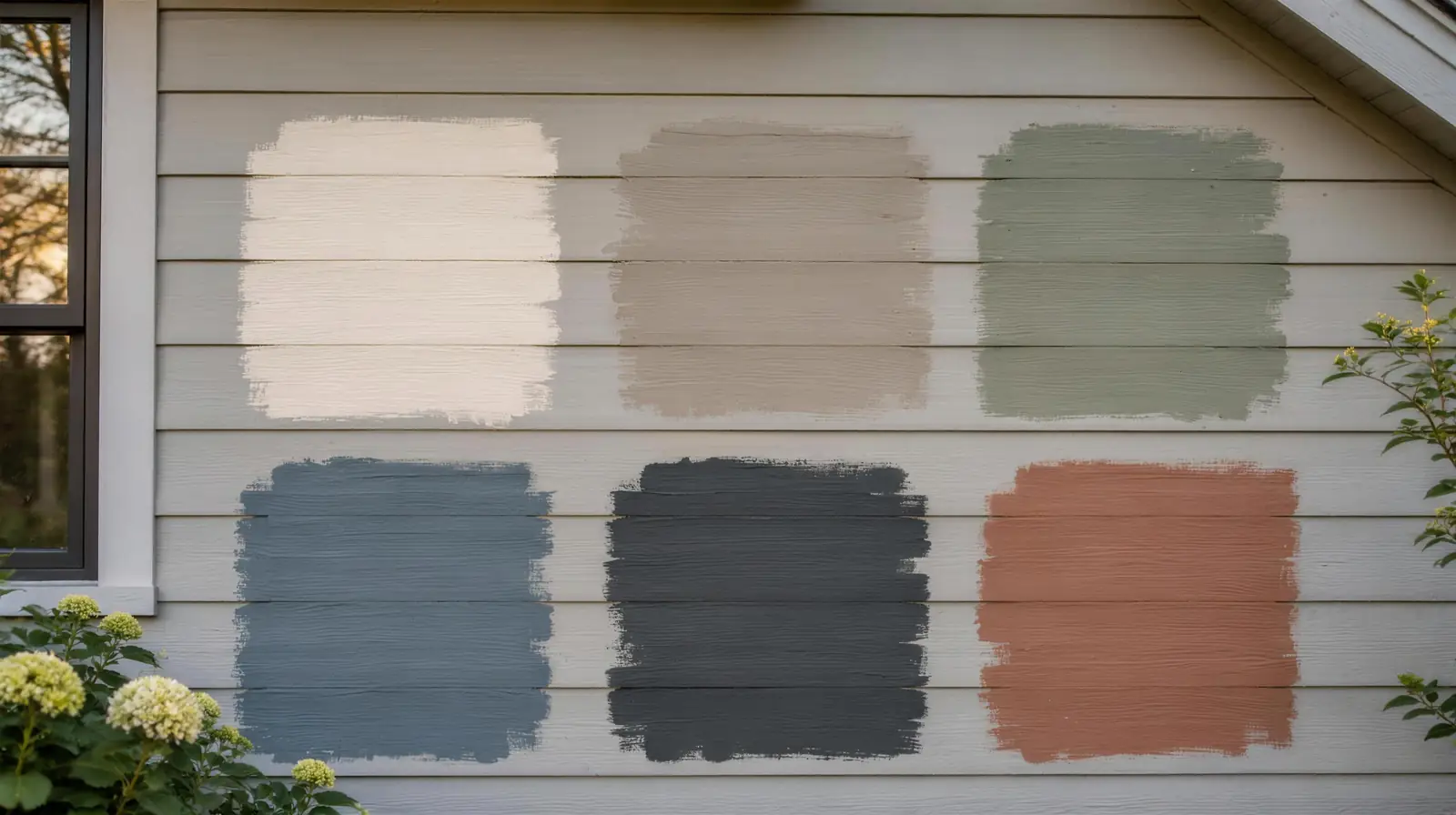
- Brush large samples on the house, on a sunny wall and a shaded one. Erie's clear, high light washes out some colors and deepens others.
- Submit the application with photos and samples, and wait for written approval before a crew is scheduled.
- Keep the approval letter with your paint records for the next repaint.
Our HOA and townhome painting page covers how we work with boards and managers on community-wide repaints too.
What builder paint does after years in the sun
Builder paint on new homes is usually a single coat chosen for speed. At this altitude, UV breaks it down quickly on south and west walls, and the first signs are chalking, faded color and caulk joints that have shrunk and opened. On engineered wood, opened joints and cut ends that lost their coating are the real risk, because that siding can swell once water gets in.
A typical first repaint for us in Erie runs like this: wash, recaulk every butt joint and trim gap, spot prime anything bare, then two topcoats. Engineered wood and fiber cement each have their own prep needs; see siding painting for details.
One more thing we check on almost every Erie house: sprinkler heads. Lawn irrigation that hits the lower courses of siding every summer morning leaves mineral spotting, keeps bottom edges wet and shortens the life of any paint down there. We wash those courses carefully before painting and ask you to adjust heads that spray the wall. It costs nothing and protects the most vulnerable boards on the house.
Wind and hail on open ground
Erie sees less of the violent downslope wind that hits Boulder, but open terrain brings steady afternoon breezes, and that's enough to rule out spraying on some days. Spring and summer hail is the bigger concern. After a storm, check gutters, garage door panels and trim edges on the side the storm came from. Chipped spots on fascia and trim let water in, and they're quick to prime and touch up if caught early.
The bottom line
On most Erie homes the painting itself is the easy part. HOA approval and weather set the calendar, so start the color process early in the year and book the work for late spring through early fall.
Questions worth asking on an Erie bid
Ask whether the bid includes help with the HOA submittal, how many coats go on body and trim, whether stone veneer will be masked and protected, and how garage doors are handled. If you live toward the Lafayette side of town, compare notes with neighbors in Lafayette, whose older homes call for a different prep plan.
Request an estimate and send your HOA's guidelines along if you have them.