Reading a Lafayette house before we quote it
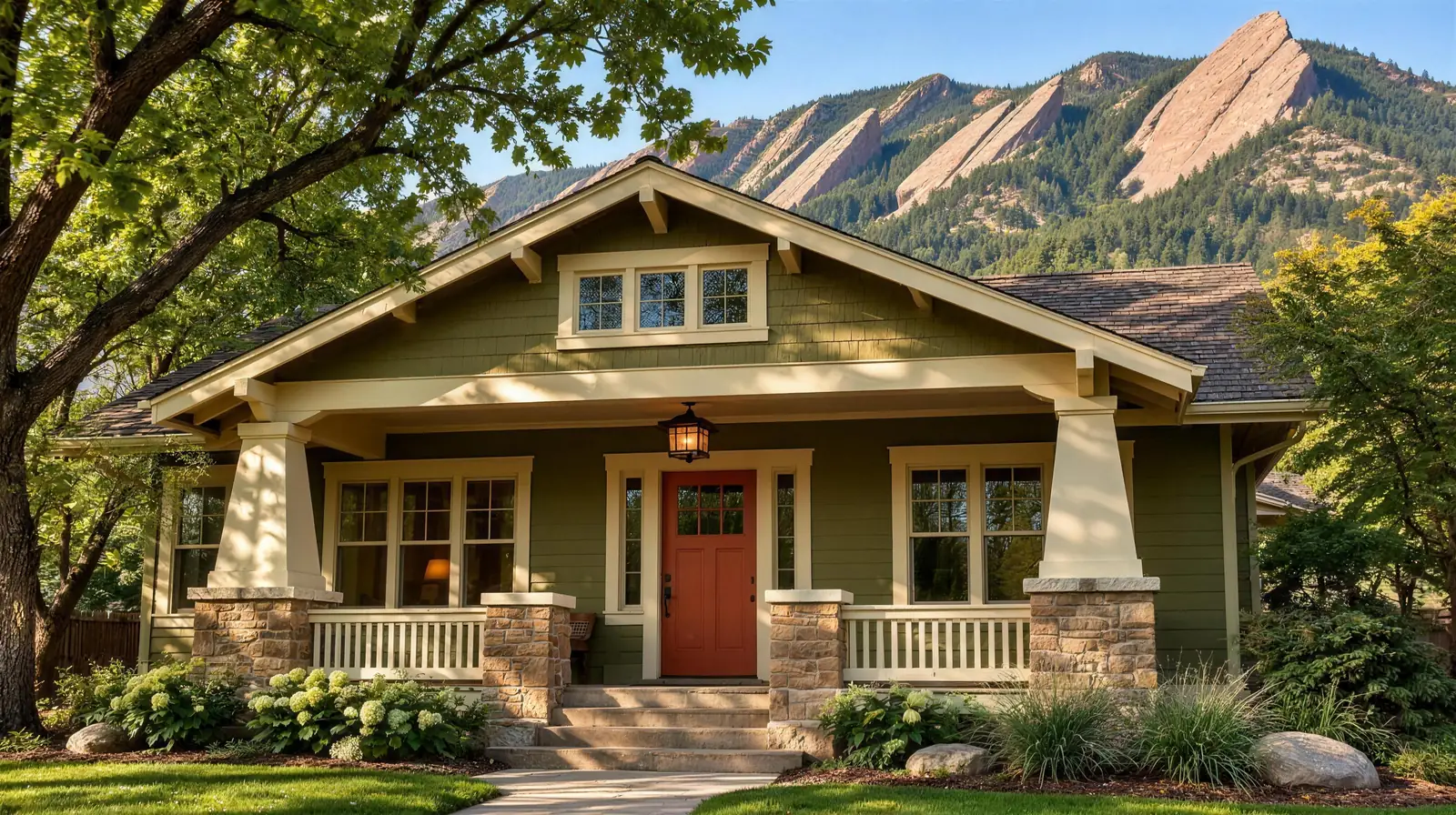
Lafayette grew up around coal mining in the late 1800s, and the older blocks near Public Road still have small frame houses from that period and the decades just after. Postwar ranches with brick fronts and wood or hardboard siding fill much of the town's middle. Newer neighborhoods lean toward engineered wood, fiber cement and some stucco.
The first thing we do on any bid is press on the siding near the ground and at the bottoms of trim boards. Soft, swollen or flaking edges tell us more about the real scope than any photo. Hardboard in particular soaks up water at cut edges and nail holes, swells, and can't be saved with paint alone.
On the newer stucco and fiber cement homes, we look elsewhere: the corners of window openings, where stucco cracks first, and the caulk lines along trim, which shrink and split after a few summers of high-altitude sun. Those small gaps are where water gets behind the finish, and fixing them is most of what separates a repaint that lasts from one that doesn't.
Repaint, repair or replace: making the call
If this, then that
- If the paint is chalky and faded but still tight to the wood, then a wash, spot prime and two topcoats is usually enough.
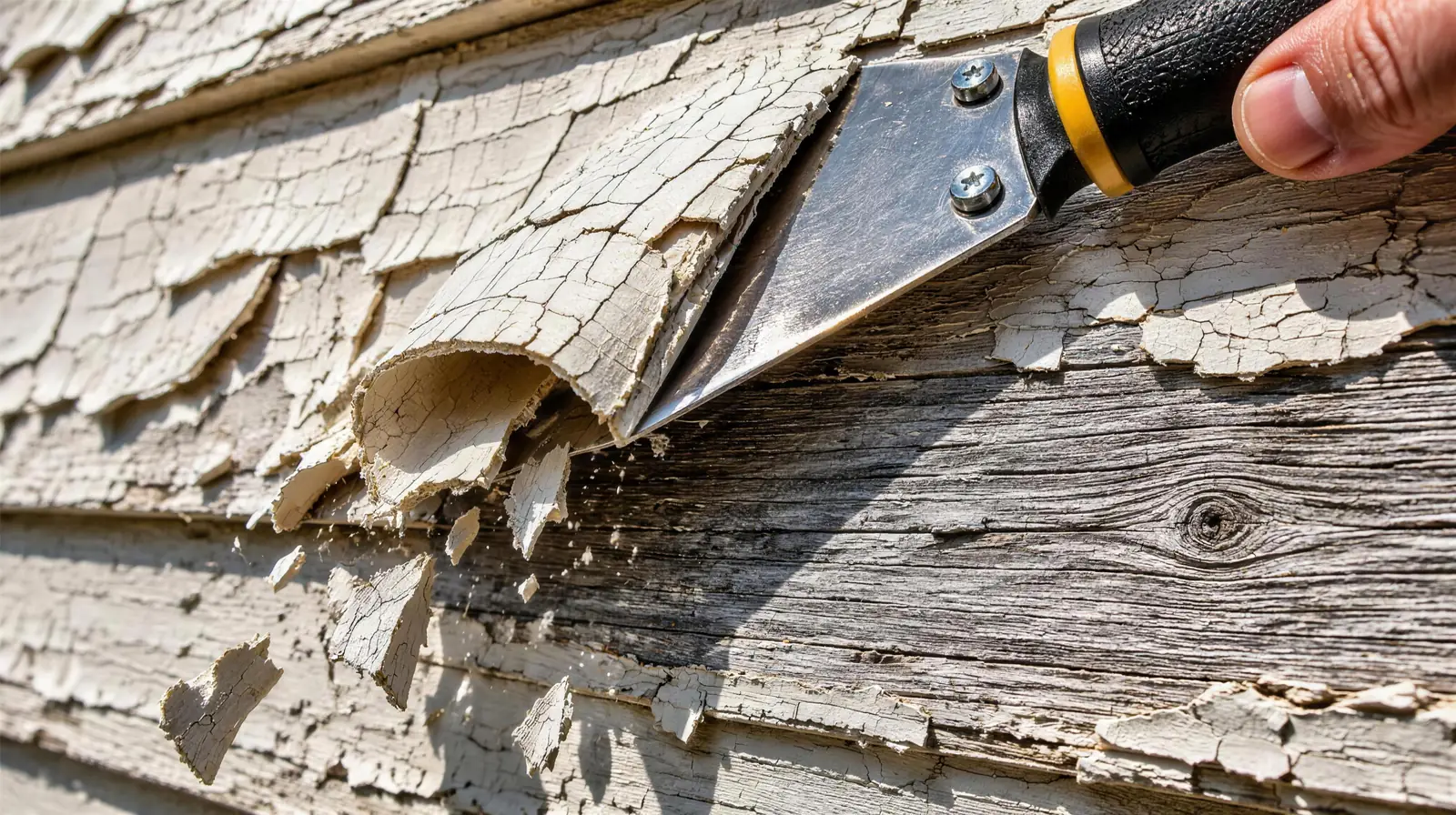
- If paint is peeling to bare wood in sheets, then we scrape back to a sound edge, prime every bare spot and plan more prep hours. On a pre-1978 house that prep follows lead-safe rules.
- If hardboard is swollen or soft at the bottom edge, then those boards get replaced before painting, because new paint won't hold on a board that's coming apart.
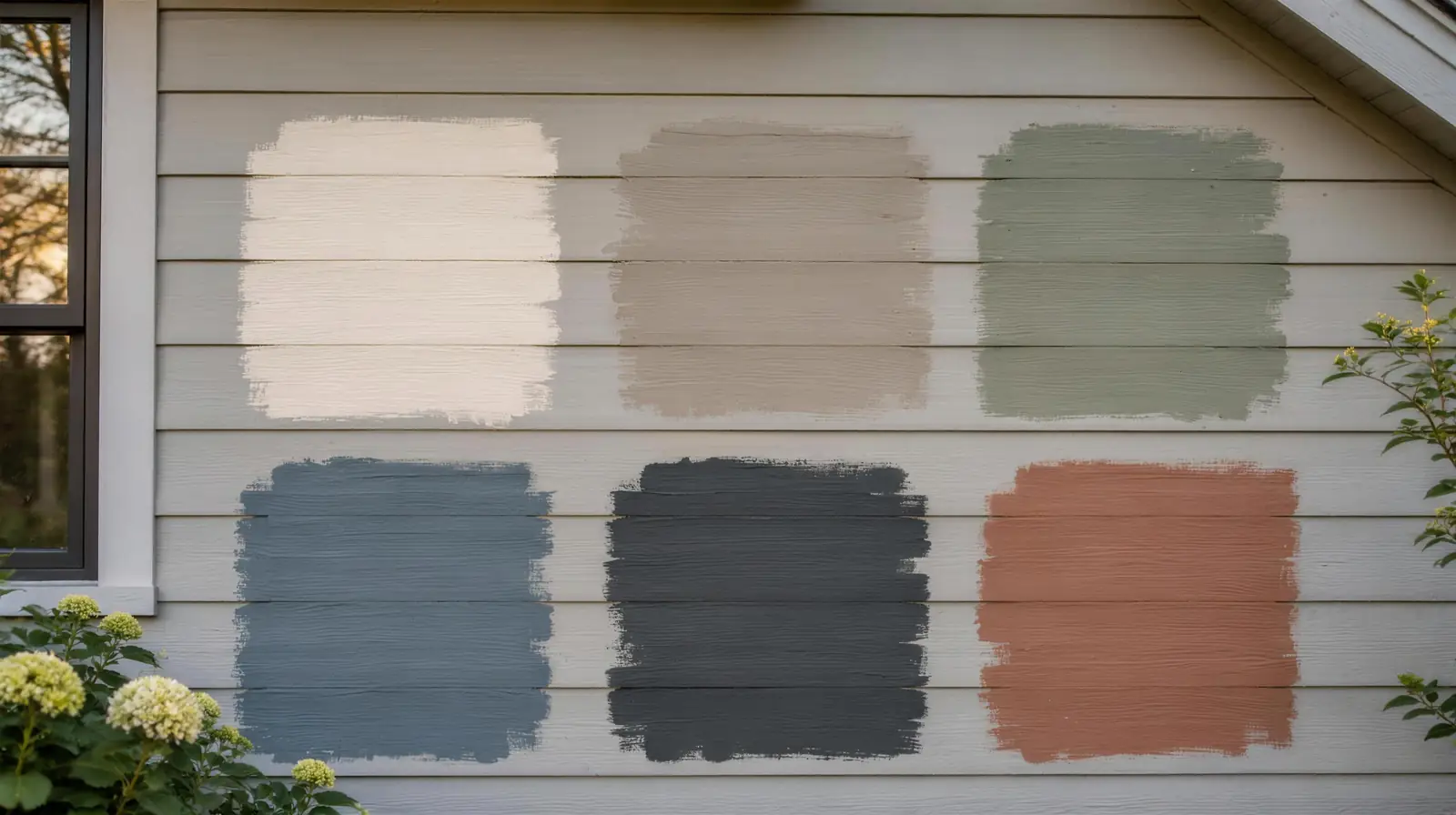
- If only the south and west walls look bad, then ask about painting those sides now and the shaded sides later. It works on some houses when the same product and color are used and corners separate the two ages of paint.
- If the brick has never been painted, then leave it that way.
Our siding painting page goes further into how wood, hardboard and fiber cement differ.
Weather on the east side of Boulder County
At around 5,200 feet, Lafayette sits a little farther from the mountain front than Boulder or Superior, but winter downslope winds still reach it, and spring and summer storms roll straight out across the plains. Hail is the bigger threat to finished paint. It chips trim edges, dents aluminum gutters and fascia wrap, and opens small wounds in the coating where water gets in.
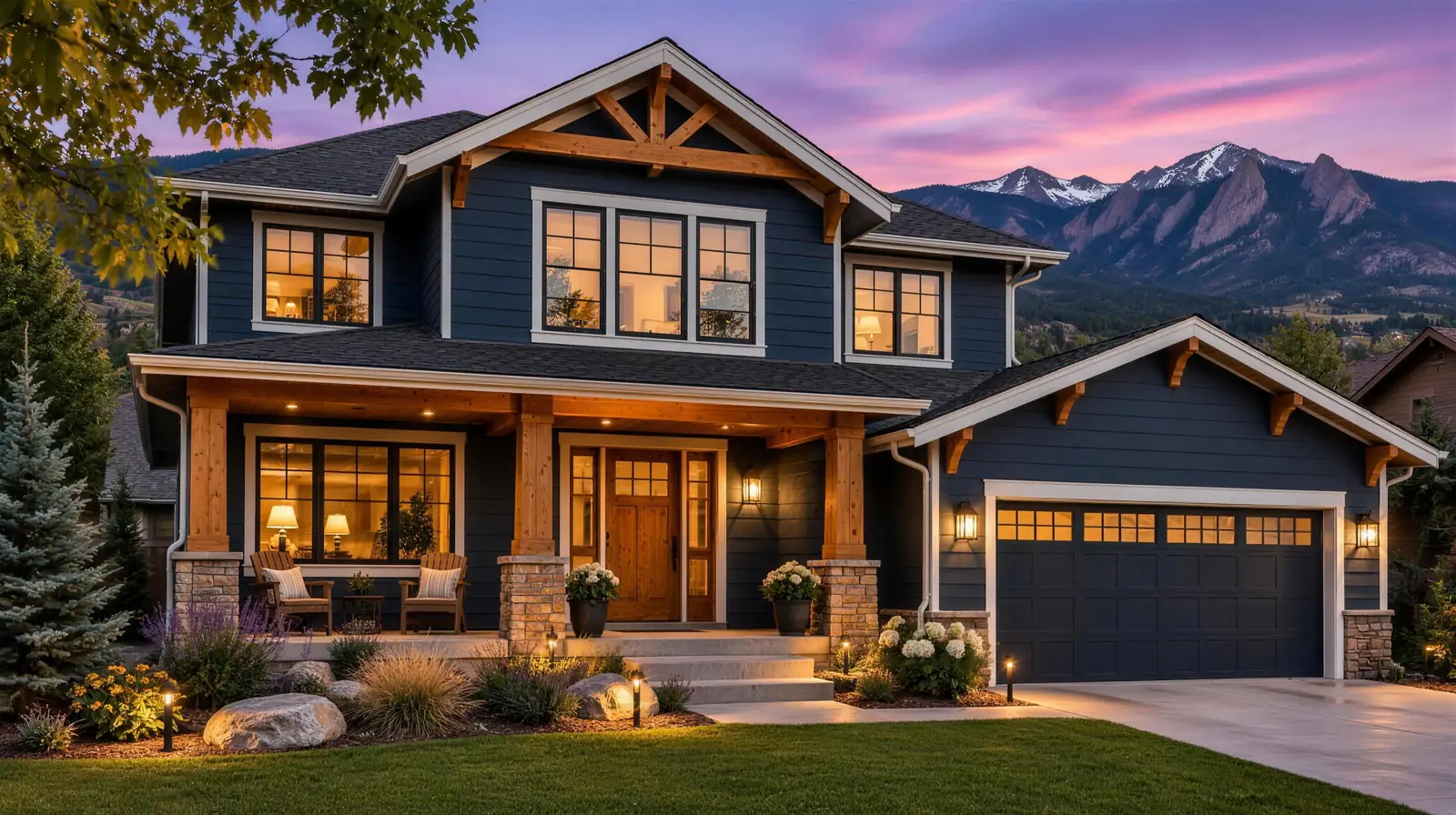
The sun at this altitude is constant. A dark color on a west wall gets hot enough on a summer afternoon that we won't paint it then; we work it in the morning and move to the shaded side after lunch. That rhythm sets our daily schedule from late spring into early fall.
Decks, fences and doors wear on their own clock
Plenty of Lafayette homes have wood decks and fences that weather faster than the house. Horizontal deck boards take direct sun and hold snow, so stain wears off a deck much sooner than paint wears off the walls around it. We usually put decks and fences on their own maintenance cycle; see deck and fence staining for how we handle prep and product choice.
What to ask before you sign anything
Ask how many coats are included and whether that means two full coats or one coat plus touch-up. Ask what happens if rot turns up mid-job and how it gets priced. Ask how they'll protect plants and soil on an older home. If you're in an HOA, ask who handles the color submittal. Homes near the town line often draw bids from crews that also work Erie and Louisville; compare the written prep notes, not only the bottom number.
Request an estimate and we'll put the prep plan in writing.