Start with the historic district question
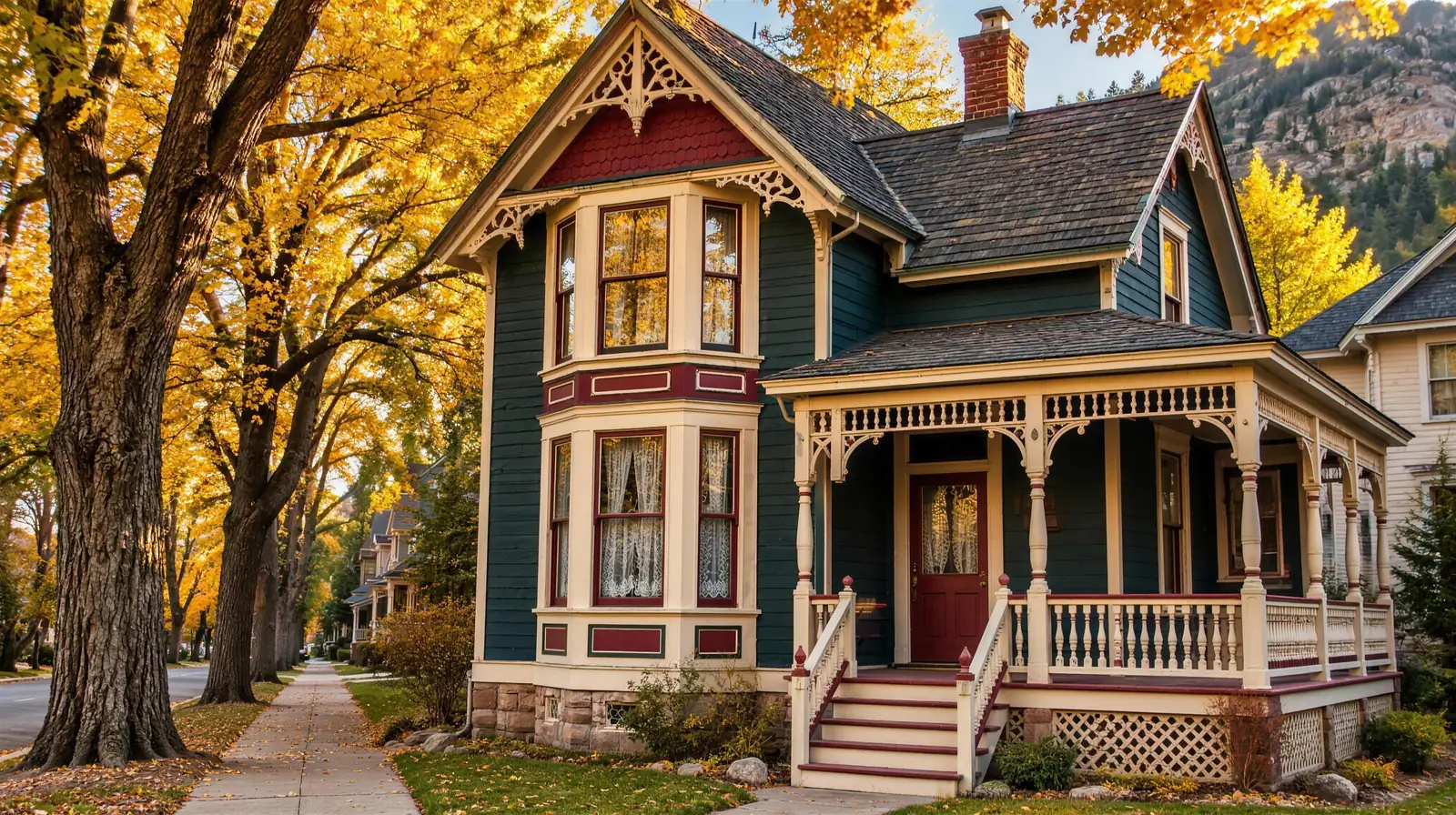
A large share of Manitou's older housing sits inside a designated historic district, and the city has a review process for certain exterior work there. Which changes need review (paint color, replacing trim or siding, swapping windows, painting masonry that was never painted) is the city's call, and the rules can change, so we ask owners to confirm with city planning staff before the scope is final. We'd rather adjust a plan early than repaint a porch twice.
It helps to arrive at that conversation with specifics:
- Photos of every side of the house as it looks now
- The proposed body, trim and accent colors, with manufacturer color names and codes
- A list of any trim, siding or porch parts that will be replaced, and with what material
- Whether any stone or brick that is currently bare would be coated
We supply the product and color details for that list once you've settled on a direction.
Steep lots and narrow streets set the pace
Plenty of Manitou houses sit above or below the street, reached by long stairs, with retaining walls and gardens pressed against the foundation. That changes everything about setup.
Close neighbors matter too. Many houses stand only a few feet apart, so we spray very little here. Most of the work is brush and roller, which also suits old clapboard and detailed trim better.
Old wood, many layers, and lead
Houses from the late 1800s and early 1900s can carry a century of paint. Somewhere in those layers there is almost always lead, so we follow the EPA's Renovation, Repair and Painting rule on every pre-1978 home: ground containment, wet scraping, no open-flame stripping, and daily cleanup. On a hillside lot, containment also means catching chips before they wash down the slope.
The wood underneath is often old-growth and stable once it's primed. The trouble spots are sills, porch floors and rails, brackets and the lower edges of clapboard where water collects. When layers have built up and crack in a checked pattern, scraping alone won't hold, and those areas need to come down further before priming. Our exterior prep and repair page covers that work, and the trim and fascia page covers detailed trim and multi-color schemes.
Canyon shade and full sun on the same house
The town sits in a narrow valley along Fountain Creek, with canyons and steep slopes on several sides. That makes exposure uneven in a way you don't see on the plains. One wall might get hard afternoon sun at altitude and chalk quickly, while the uphill wall a few feet from a slope barely dries after rain or snowmelt.
Those shaded walls grow mildew and hold moisture in the wood, so we wash them with a mildew treatment and let them dry thoroughly before priming. On a cool morning, dew on a shaded wall can linger well into the day. We start on whichever side has dried and sun-warmed, and leave the shaded side for the warmest part of the afternoon.
Stone foundations and walls are common. If they're bare, we leave them that way, since coating stone that was meant to breathe tends to trap moisture and peel.
Before we come to look at your house
Tell us about access: stairs, slope, where a vehicle can stop, and whether a neighbor's yard is the only way to reach one side. Mention any historic review you've already started. If you also own property down the hill in Colorado Springs, we can look at both on the same trip.
Request an estimate and we'll plan the setup with you on site.