Stain or Paint on Foothills Wood Siding
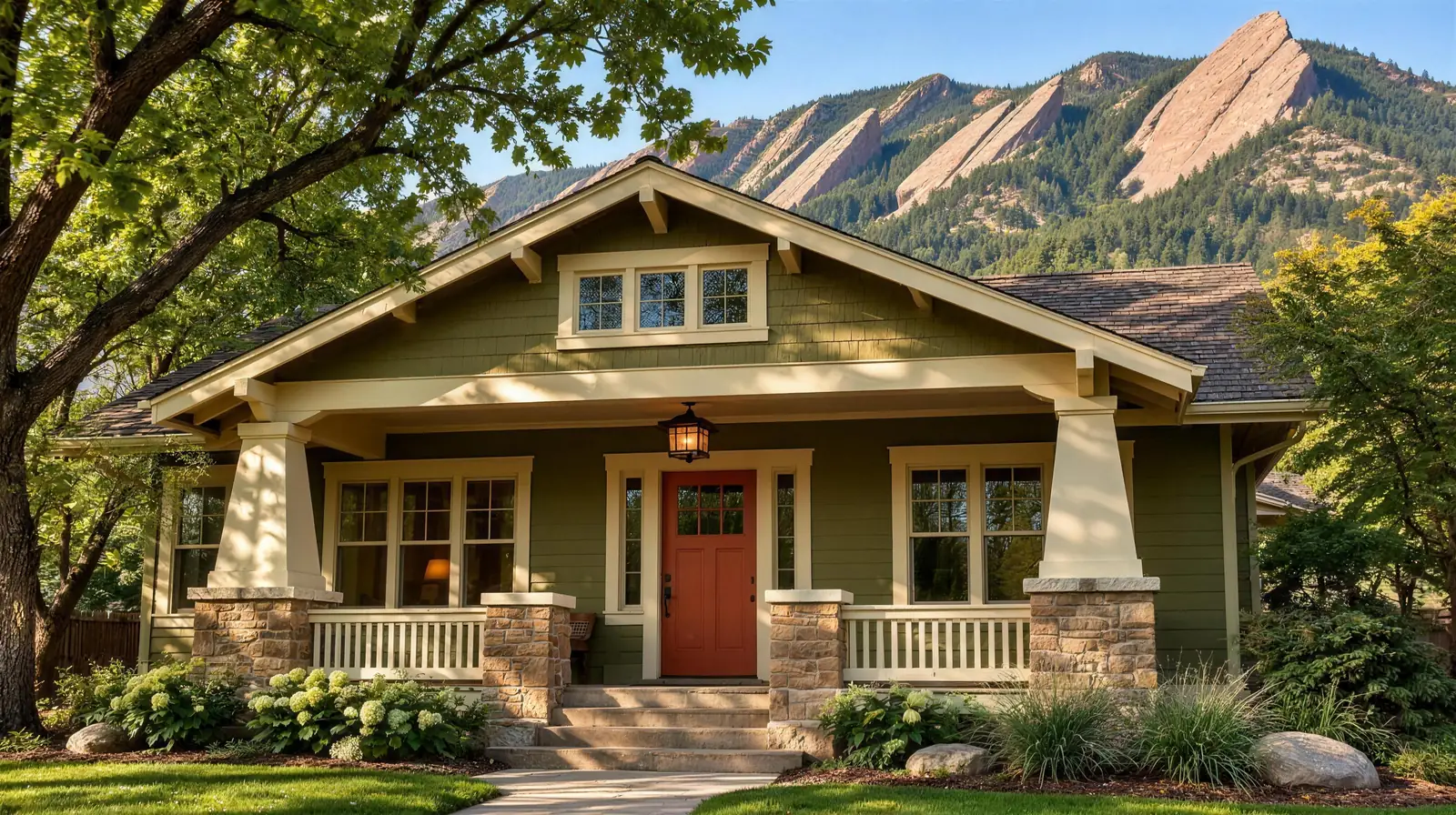
Ken Caryl started developing in the 1970s, and a lot of the early homes lean toward a mountain contemporary look: vertical boards, cedar lap, wood trim and big decks, often finished with stain. Later neighborhoods added more stucco and painted lap siding, but wood is still everywhere.
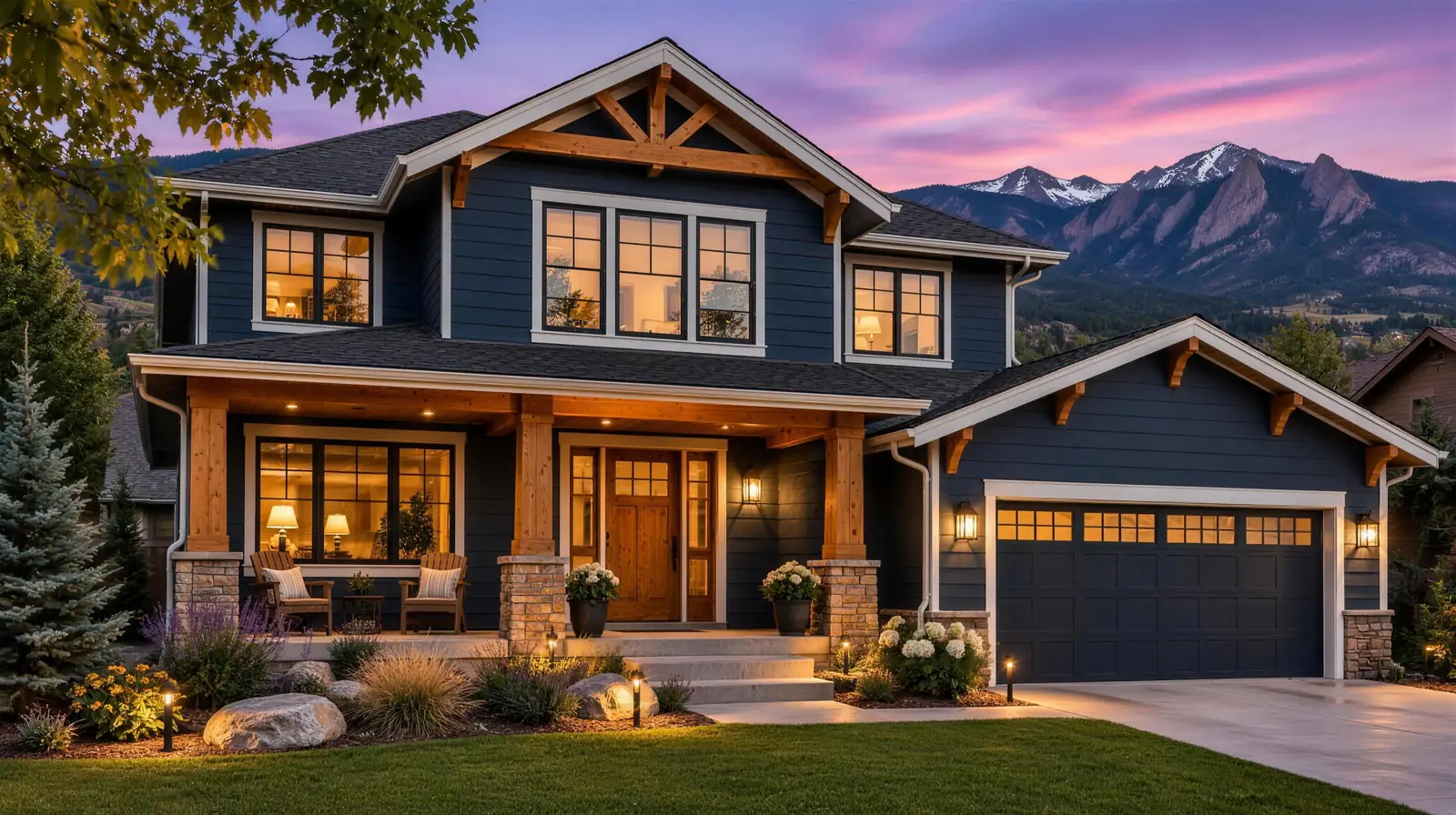
The first question on many of these houses is whether to stay with stain or switch to paint. A semi-transparent stain soaks in and wears away gradually, so it never peels, but it needs recoating more often in strong sun. Solid stain and paint form a film that lasts longer between coats but can peel once moisture gets behind it. Moving from stain to paint is a one-way door: you can't go back to a see-through finish without stripping the wood.
Our siding painting page goes deeper on wood, fiber cement and engineered siding.
Western Sun and Wind Off the Foothills
West elevations here face the mountains and take hard afternoon sun with nothing between them and the sky. Stain on those walls fades to gray first, and paint chalks and checks. North sides tucked toward a slope can stay cool and damp, so we often see sun damage and mildew on the same house.
Wind is the other constant. Strong gusts come down off the foothills, especially in the cooler months, and they shape how we work:
- No spraying on gusty days, since overspray can travel to roofs, vehicles and neighbors' houses.
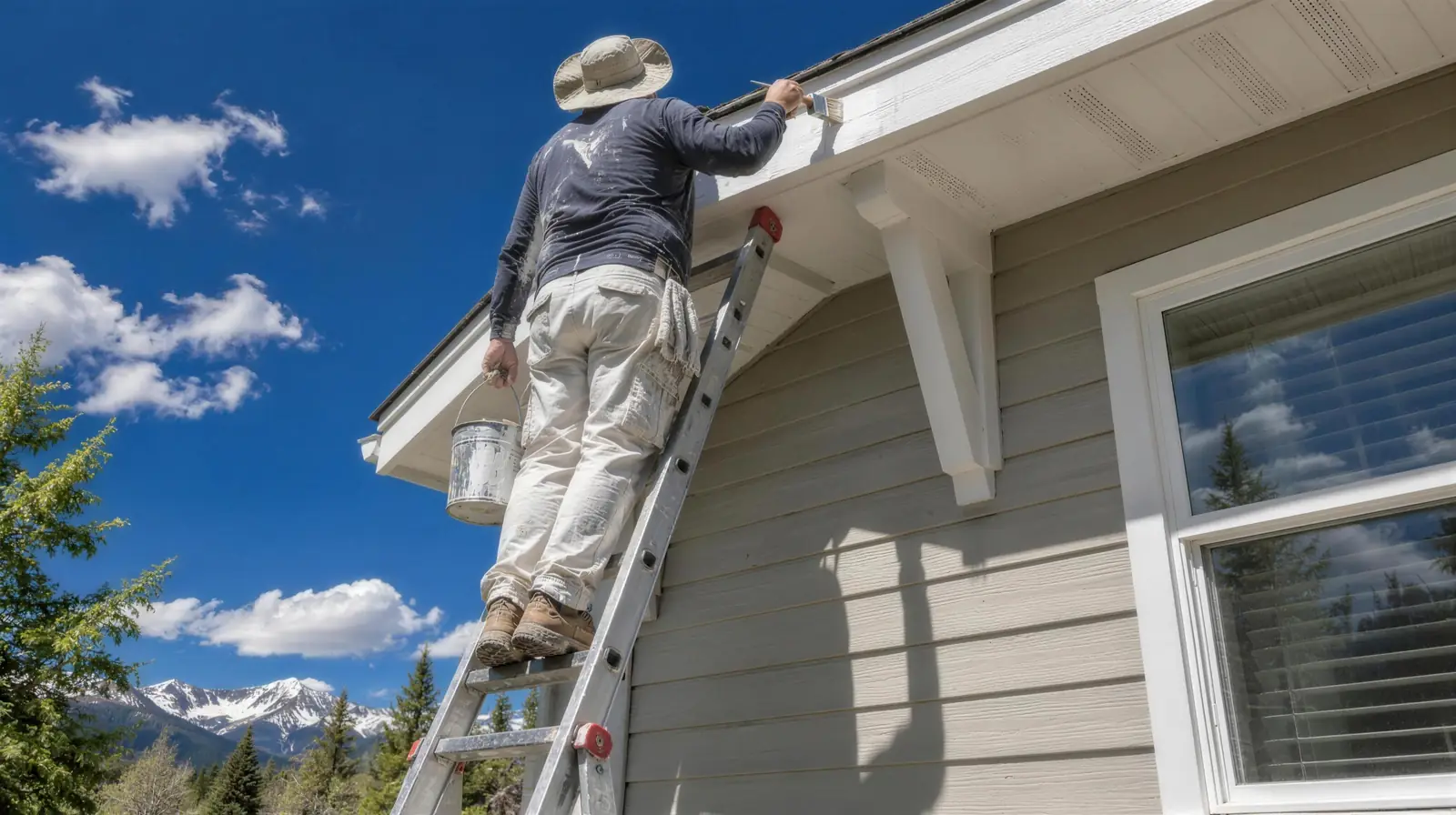
- Loose trim, shutters and fascia boards get refastened before they're painted.
- Drop cloths and ladders are secured at the end of every day.
- Fresh paint on windward walls is checked for dust and debris before the second coat.
Decks and Railings Take the Worst of It
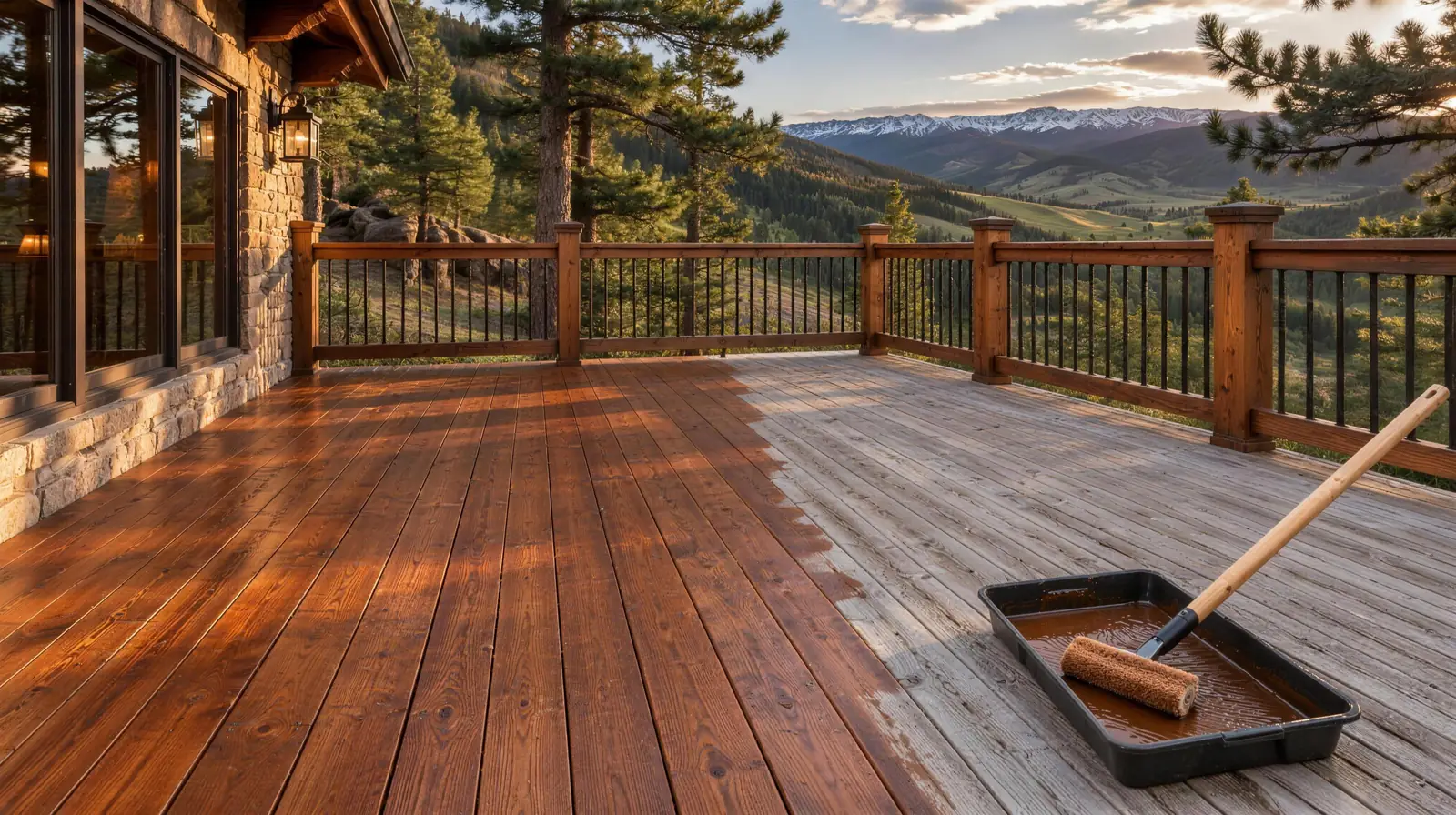
Horizontal wood ages much faster than walls. A deck surface takes sun, snow load and foot traffic, and the railing caps catch water on top. On many Ken Caryl homes the deck faces the view, which often means south or west into the strongest light.
We test old deck finishes by dripping water on them. If it soaks in and darkens the wood, the surface is ready for cleaning and a new coat. If some areas bead and others soak, the old finish is failing unevenly and needs to be stripped or sanded to even it out. Penetrating stains generally hold up better on deck surfaces than film-forming coatings, which tend to peel underfoot. More on that at deck and fence staining.
Color Review and Earth-Tone Palettes
Much of Ken Caryl is covered by the Ken-Caryl Ranch Master Association, which has an architectural review process, and some neighborhoods also have a sub-association. If you're planning a new color, or switching from stain to paint, treat that as a submission and get the answer before you schedule. Earth tones that sit well against the red rock are common here, and those mid-to-dark colors are exactly the ones that fade fastest on west walls, so we pay close attention to the product's pigment and sheen.
Before You Book
Ask how the painter will handle the wind, which walls get stain versus paint, and whether decks are in the same scope. If you're in a neighborhood closer to Morrison or Littleton, the questions are much the same. Request an estimate and we'll look at every wall and deck surface before writing anything up.