In town or in the hills: why it matters
The Town of Morrison itself is small, set in the gap where Bear Creek leaves the mountains, with Red Rocks Park right next door. Its older buildings include local stone and frame structures, and homes in town are closely spaced along narrow streets.
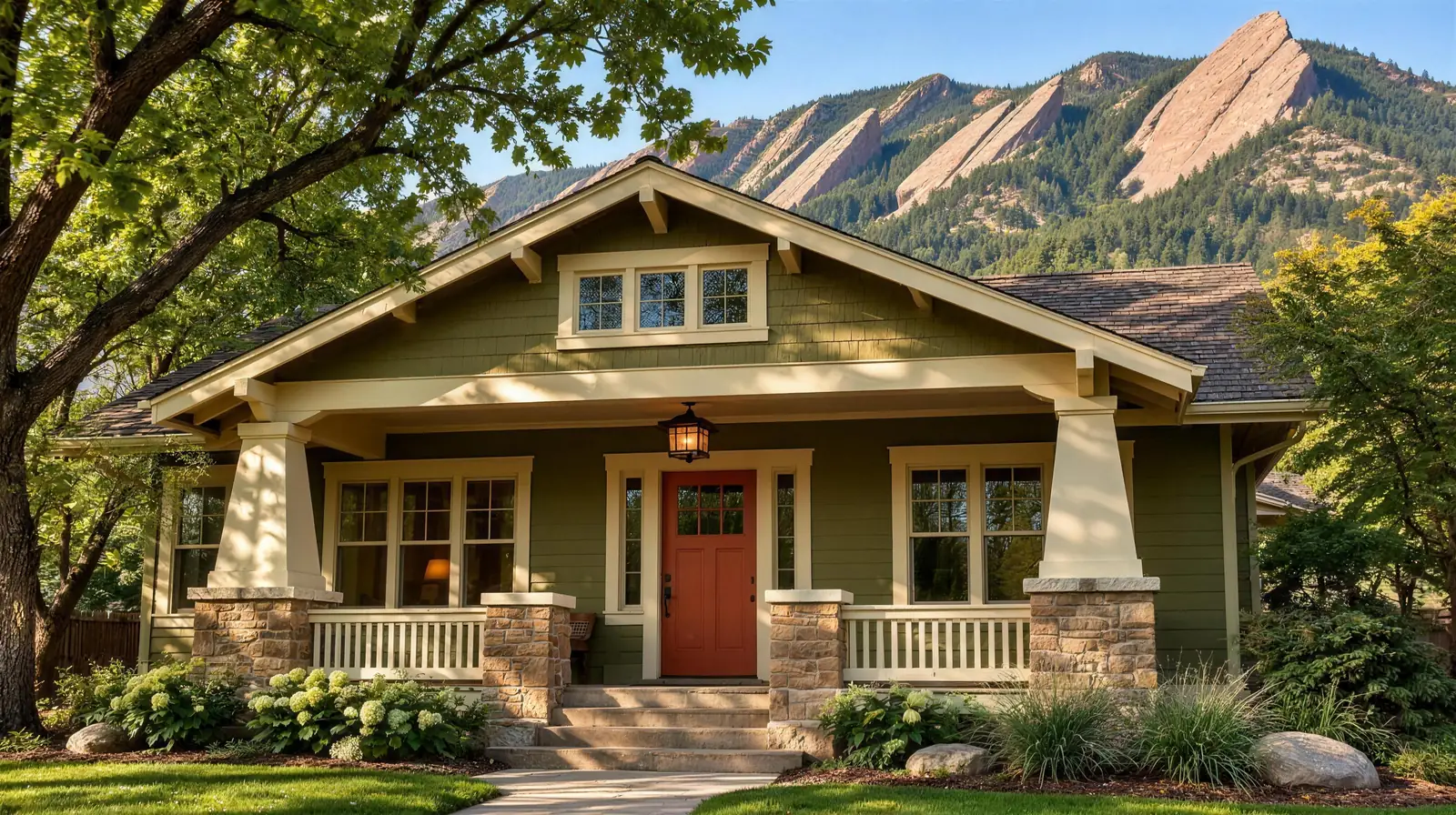
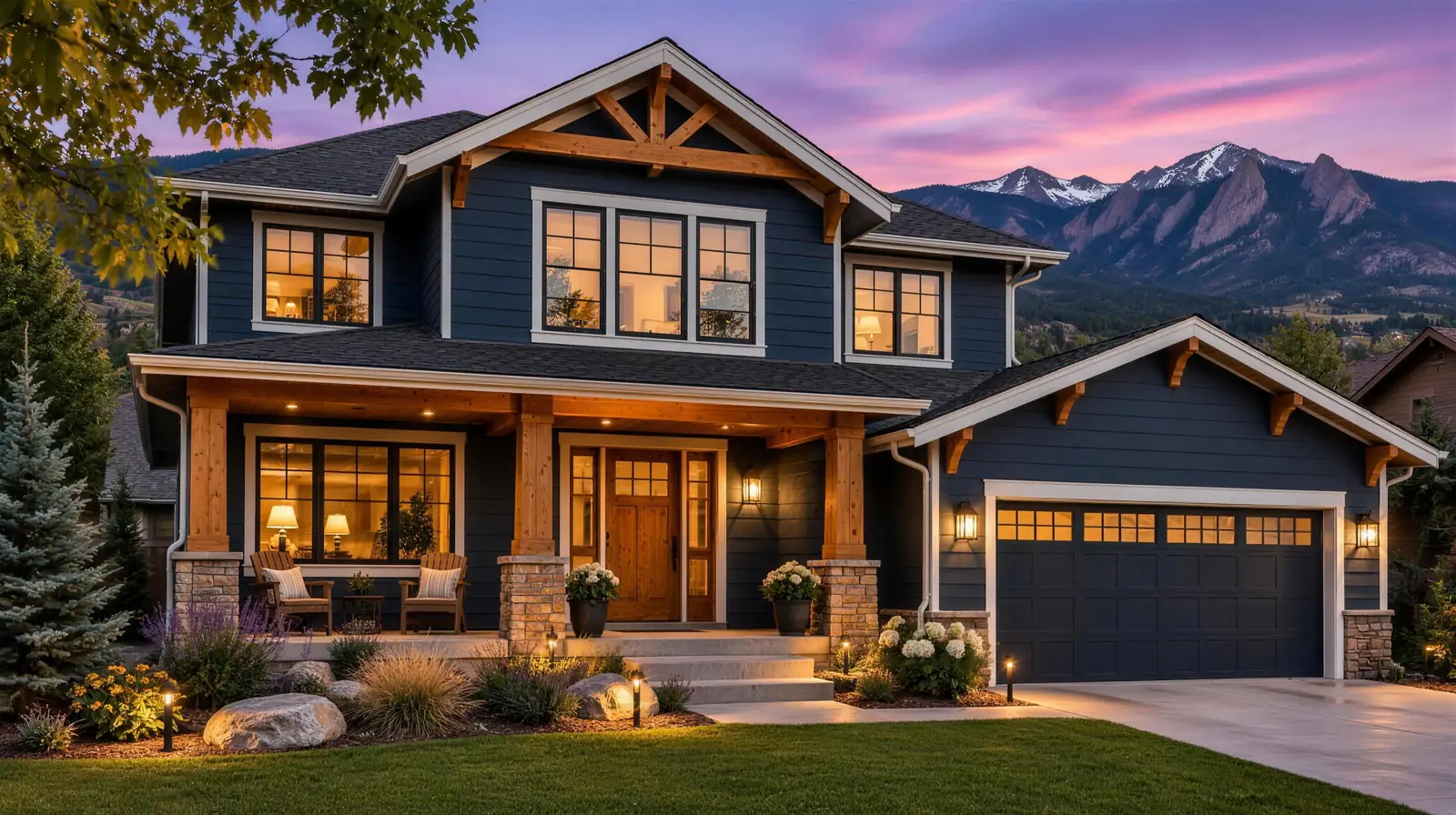
Many homes with a Morrison address are outside town limits, scattered along the foothills and up the canyons. For those, the rules come from Jefferson County and, in some subdivisions, from an HOA or covenants. If you're unsure which applies, check your property records before choosing a new color or adding exterior materials. The house type also changes: foothill homes are more often wood-sided, cedar-trimmed or log, with big decks facing the view.
Homes down in the canyon bottoms near the creek see a different climate from those on open ridges. They get less direct sun, stay damp longer after storms and grow mildew and moss on shaded walls and deck boards. Those surfaces need a thorough cleaning and plenty of drying time before any finish goes on.
Stone, logs and wood siding call for different finishes
Stone in this area, whether it's on an old building in town or a veneer on a newer house, should stay unpainted. Sandstone and other natural stone need to breathe, and paint on stone traps moisture and peels, and it is very hard to take off later.
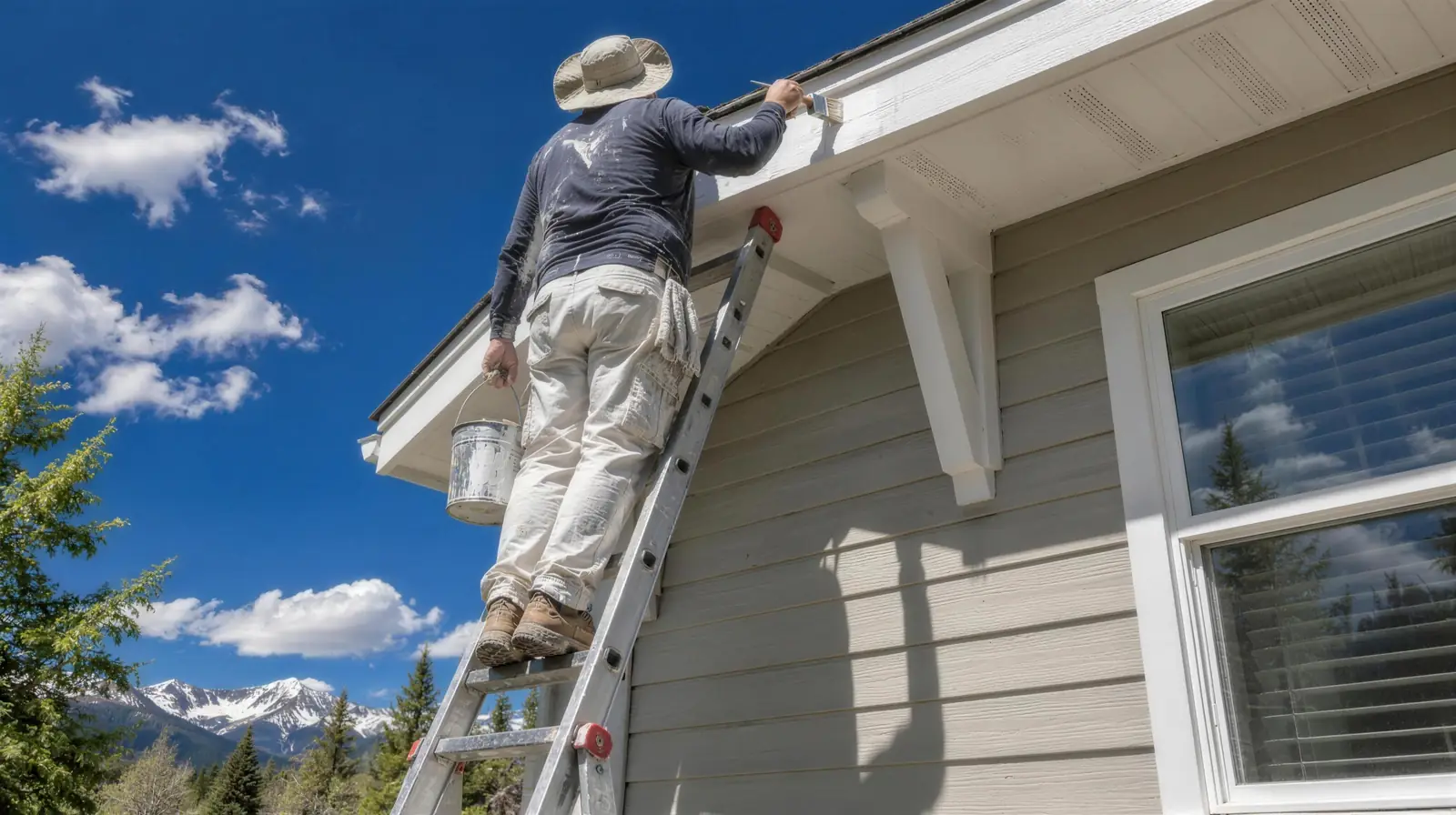
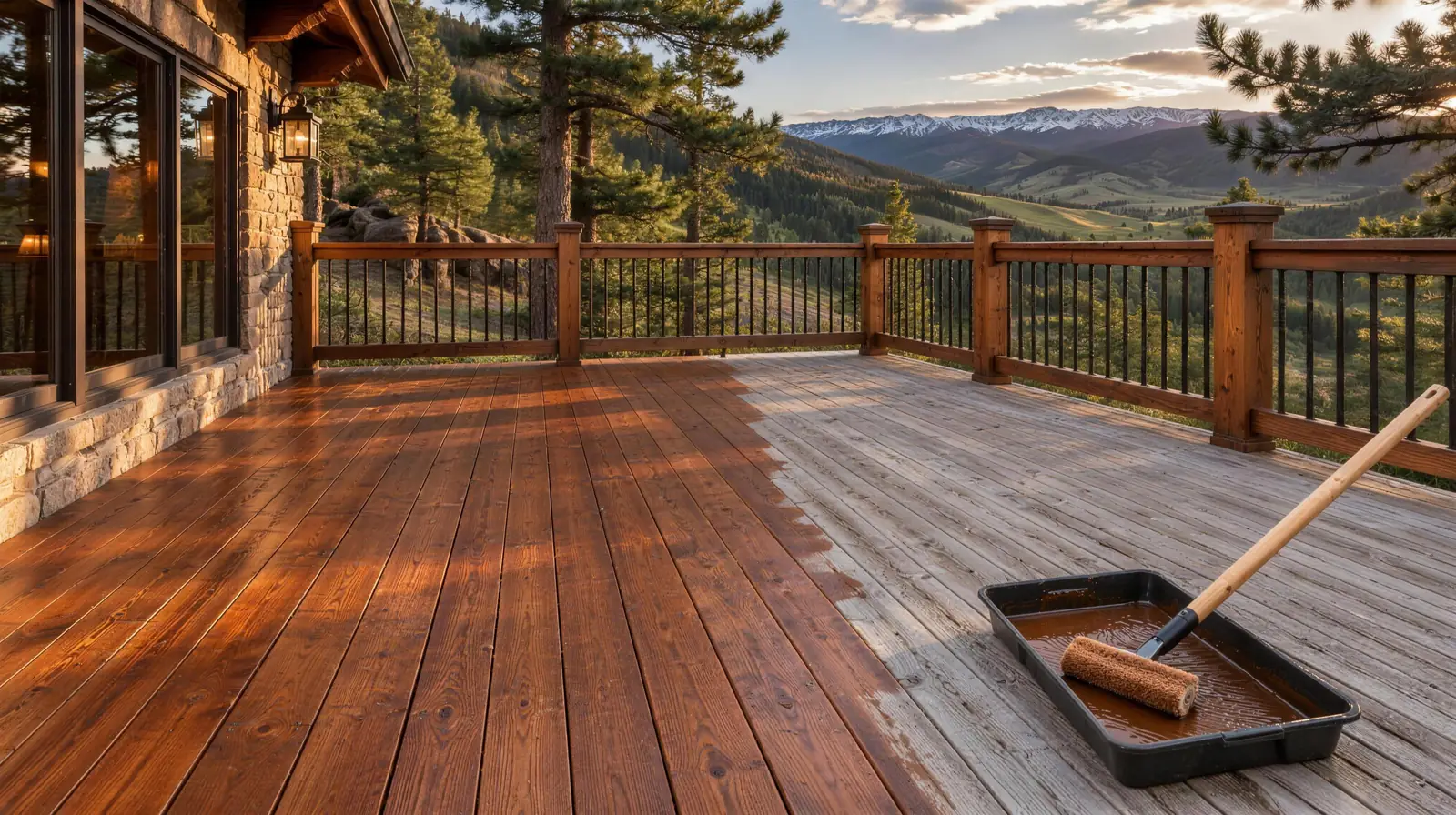
Log and rough-sawn cedar homes generally do better with a penetrating stain than with film-forming paint. Stain soaks in and wears away gradually instead of peeling, which makes recoating simpler. Logs also check and crack as they dry, and the upward-facing checks on the south and west sides collect water and need attention. Painted wood siding and trim get the usual approach: scrape, prime bare wood, seal joints and topcoat. Our deck and fence staining page explains how we choose between transparent, semi-transparent and solid stains, and the same thinking applies to log walls.
Restaining a deck that already has a failed finish starts with stripping what's left, especially film-forming or solid stains that have peeled in patches. A wood brightener after stripping restores the surface so new stain penetrates evenly. The boards then need to dry out before staining, which can take a few days after washing in cool weather.
Sun, altitude and the short foothill season
At these elevations the UV load is high, and south-facing slopes with no tree cover get the full force of it. Clear stains and light semi-transparent stains break down fastest; more pigment holds up longer. Decks and railings, which face straight up at the sky, wear out much sooner than walls.
The painting season in the foothills runs a bit shorter than on the plains. Spring snow can linger later on shaded, north-facing lots, nights cool off earlier in fall, and summer afternoon storms build over the mountains most days. We plan for morning starts and check surface temperatures against the product data sheet in the shoulder seasons.
Before we come out to a Morrison-area home
Steep lots, long driveways and limited parking all affect how we set up, so a little information in advance helps us plan ladders, staging and where the trailer can go. It helps to know:
- Whether the house is inside town limits or in unincorporated Jefferson County
- The siding types: painted lap, cedar, log, stucco or a mix
- Which decks, railings and stairs you want included
- How steep the ground is on each side and whether a lift could reach
- Any HOA or covenant rules on color or stain
- Where a crew truck can safely park
In town, concert nights at Red Rocks bring heavy traffic through Morrison, and we plan work days and deliveries around the event calendar. We also work nearby in Ken Caryl and Golden. When you're ready, request an estimate.