What a dense, mostly multifamily city means for a repaint
Glendale sits along Cherry Creek a few miles southeast of downtown Denver, at roughly the same mile-high elevation. It is small, and much of its housing is stacked: multi-story condo buildings, apartment complexes and attached townhomes, with commercial property mixed in. That shapes almost every decision on an exterior job here.
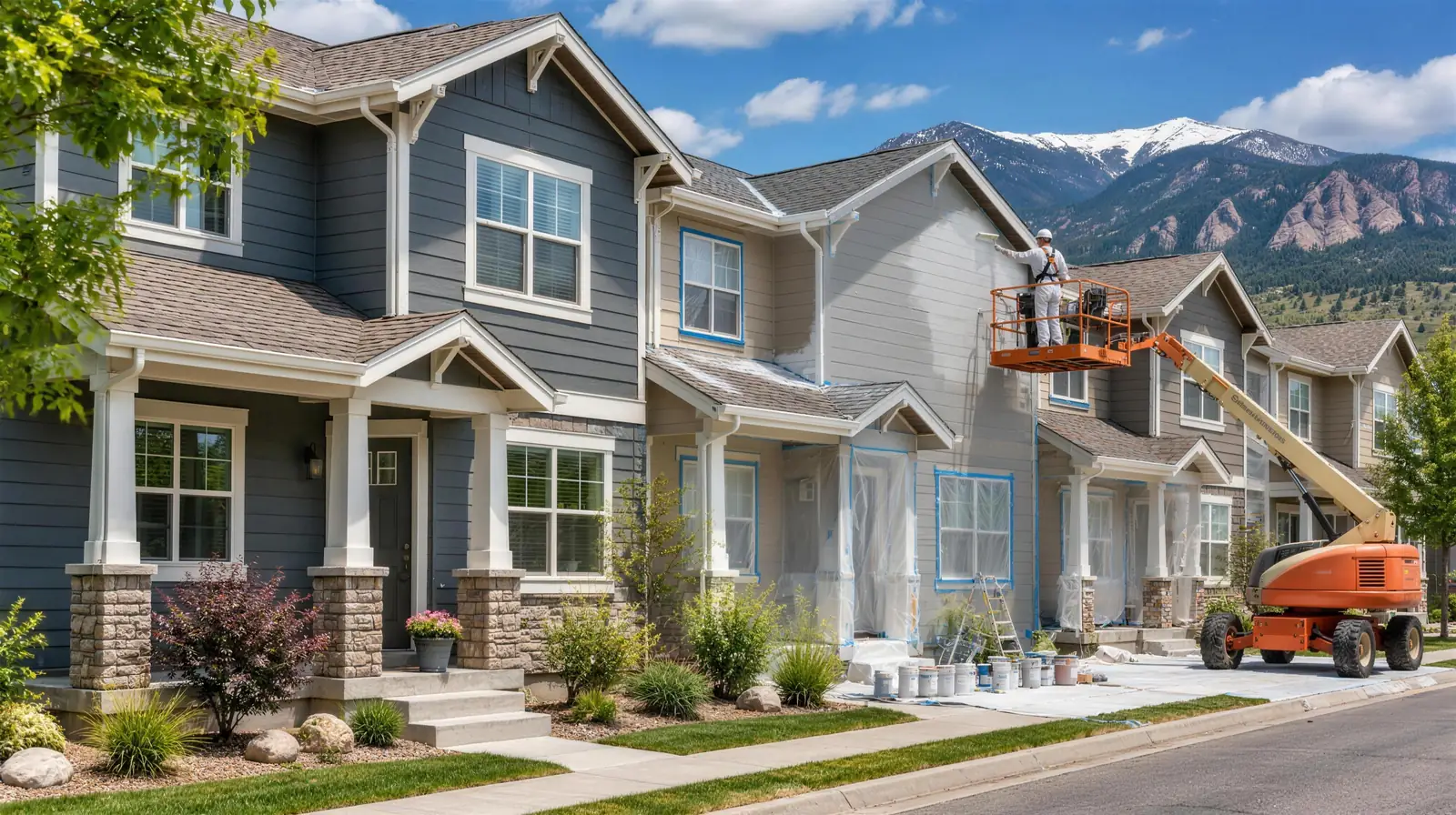
A three- or four-story building has four elevations that age at different speeds, and the upper floors usually need a lift or long ladders. Balconies, metal railings, stairwells, breezeways and dozens of doors add up to far more linear feet of detail than a single house. Surfaces vary too. Brick with painted trim, stucco, wood or fiber cement siding and metal flashing can all show up on one building, and each takes a different primer and finish.
Many buildings are several decades old. Anything built before 1978 may carry lead in older paint layers, so we plan containment and cleanup under the EPA's Renovation, Repair and Painting rule before any scraping starts. Our exterior prep and repair page covers how that work is set up.
The board approves the colors, and the scope
In most condo and townhome communities the exterior is common property, so the association, not the individual owner, decides when it gets painted and in what colors. We work from the board's direction and give them what they need to vote: a written scope by building and elevation, the product line we intend to use, and the prep we think each surface needs.
Color is where boards get stuck. Small paper chips look nothing like a full wall in Colorado light, so we brush large sample patches on the building itself, on a sunny side and a shaded side, and let the board look at them at different times of day. If the community has a reserve study, the repaint is often already penciled in for a particular year, and the scope can be matched to that budget line. More on how we run association projects is on our HOA and townhome painting page.
- Which buildings, elevations and surfaces are in the contract, and which are excluded
- Who owns balconies, railings, doors and garage doors under the declaration
- Approved color scheme, with sample patches signed off on the wall
- Resident notice schedule and who sends it
- Where the lift, trailer and materials can sit each day
- How wood rot or failed sealant found mid-job gets priced and approved
Painting a building while people live in it
Residents do not move out for an exterior repaint, so the work goes building by building and side by side. Before we reach a section, residents get notice to clear balconies, bring in planters and furniture, and keep windows shut on spray days. Cars parked against a wall being sprayed get moved or covered.
Doors are the most disruptive item. An entry door painted in the morning needs time before it can close against weatherstripping without sticking, so we schedule doors early on dry days and tell residents which ones are wet. Pets, deliveries and work-from-home schedules all come up, and a clear daily plan posted for residents saves the board a lot of phone calls.
Where Glendale buildings wear out first
The sun at this elevation carries more UV than at sea level, and it fades and chalks paint faster on south and west walls. Those elevations usually look tired years before the north side does. On multifamily buildings the next weak spots are horizontal: balcony edges, railing caps, stair treads and the tops of trim, where snow sits and melts all winter.
Sealant is the other early failure. Joints around windows, at stucco-to-trim edges and at penetrations dry out and crack after enough freeze-thaw cycles, which lets water behind the finish. We cut out failed caulk and replace it before painting. Stucco walls get a breathable masonry coating, or an elastomeric one when hairline cracking needs bridging, depending on what the wall needs.
Timing a Glendale project
The practical season runs from late spring into early fall. Spring snow can show up into May, summer brings afternoon thunderstorms and the occasional hailstorm, and by October the nights get cold enough that the product data sheet's minimum surface temperature limits how long each day can run. Large buildings take a good part of that window, so associations that want a summer start usually get on the calendar over the winter. We also work in surrounding Denver. To get a scope in front of your board, request an estimate and tell us how many buildings are involved.