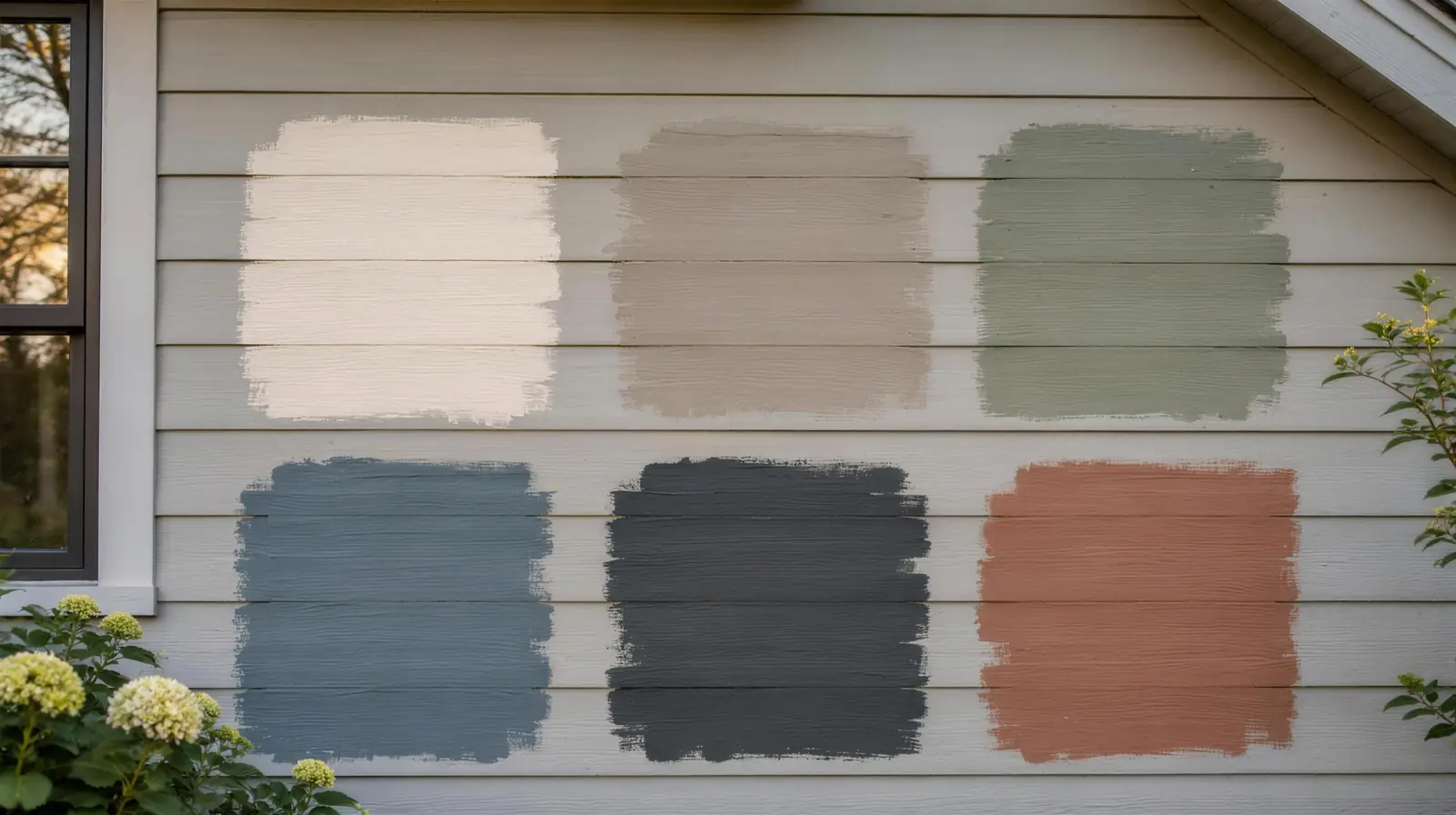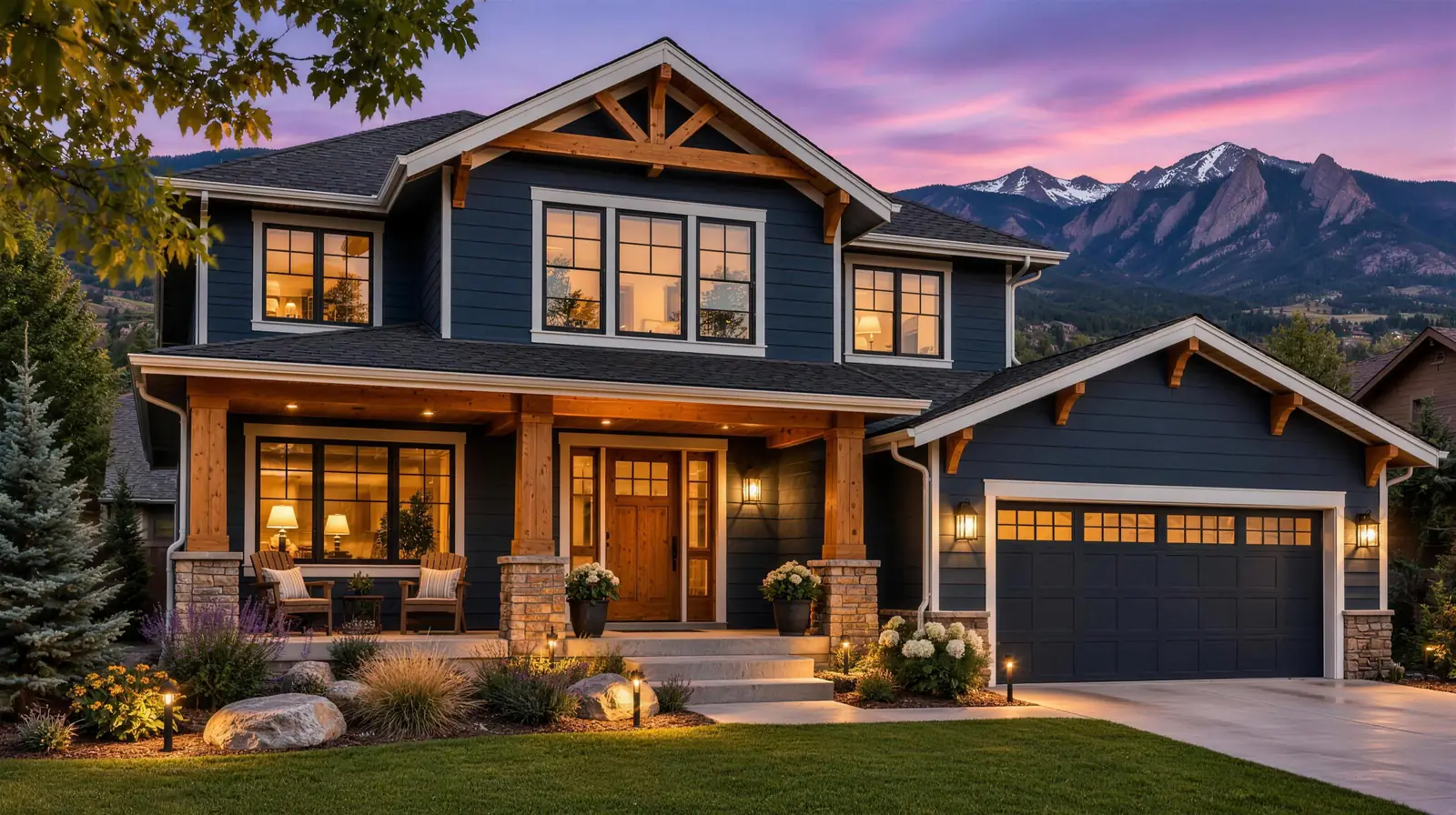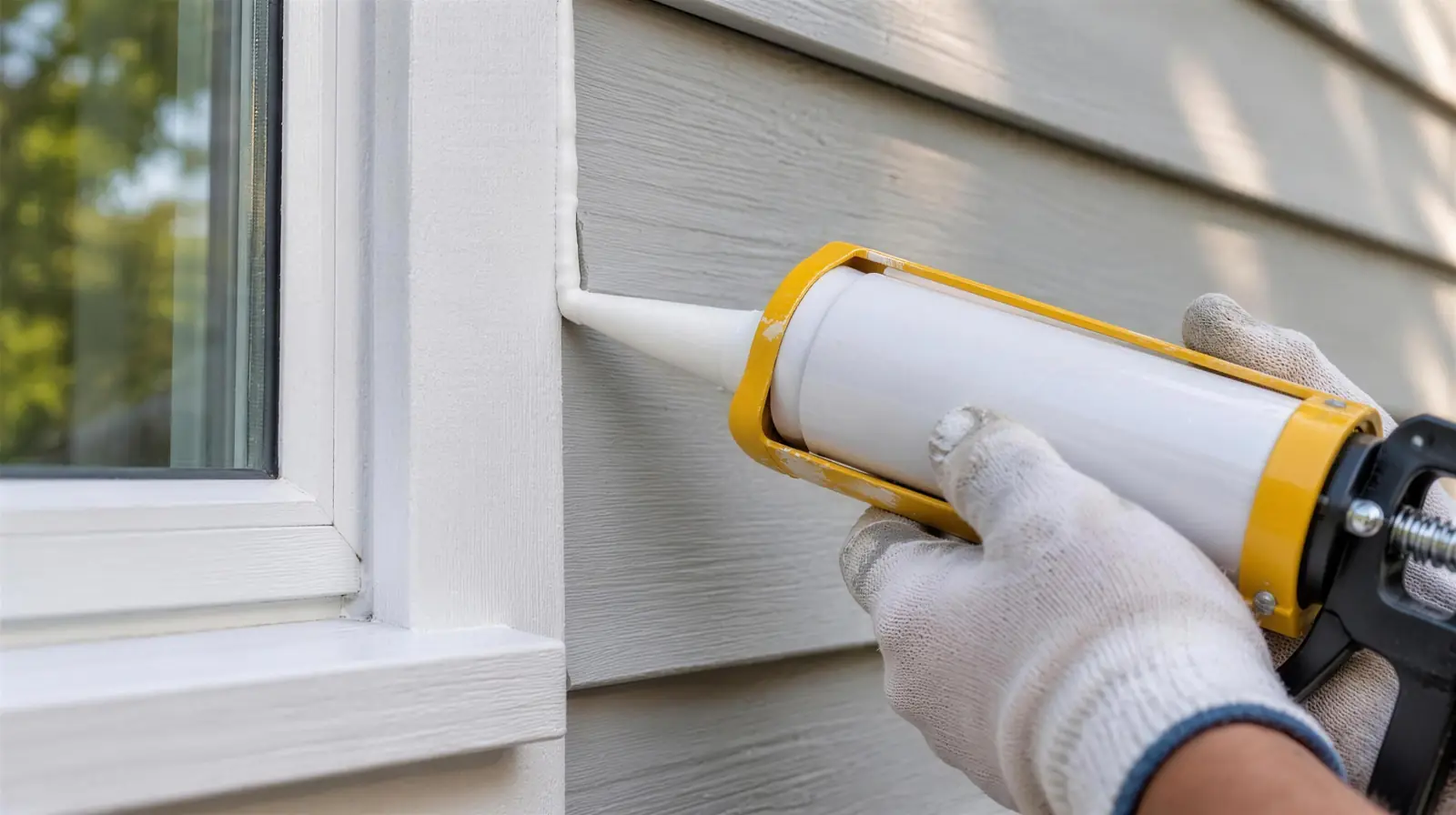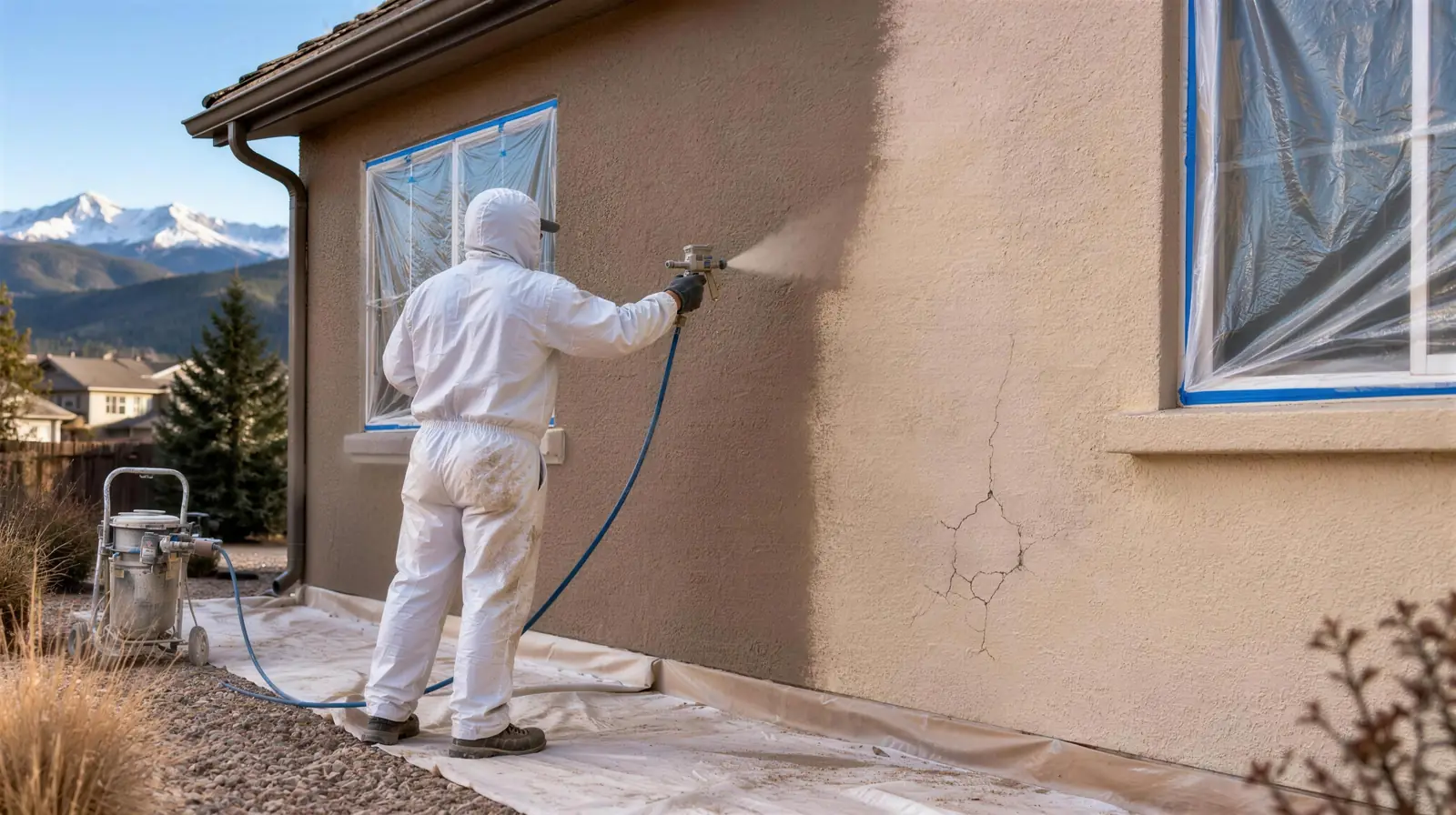
Cold-weather exterior paint is real, and it does stretch the fall season. What it does not do is suspend the chemistry. A latex house paint dries as water leaves and the acrylic particles fuse into a continuous film. Cold slows that fusing, and below a certain point the film never forms properly. The product data sheet tells you where that point is for each paint. Most homeowners never see the data sheet, so here is how to read the lines that matter in October.
Ask your painter for the data sheet of every product going on the house, including primer and caulk. Each maker publishes one, and each is different. That is why this guide does not quote dry or recoat hours: the only figures that count are on the sheet for the exact product.
Line one: minimum application temperature
This is the line everyone looks for first. Many acrylic exterior paints list a minimum between 35 and 50 F. Paints sold as low-temperature formulas sit at the lower end, and standard formulas usually at the higher end.
Air and surface are both on the line
Read the wording closely. Most sheets say the air and the surface must both be above the minimum, and many add that conditions must stay there for a stated time after application. That last clause is the one that sinks fall jobs. A wall can be warm enough at 1 p.m. and well below the minimum at 7 p.m., while the paint is still soft.
What a low-temperature formula changes
Low-temperature paints use binders and additives that let the film form at a lower temperature. They widen the window. They do not change the rest of the sheet: dew point limits, dry times and cure times still apply, and all of them get longer as it gets colder.
Line two: dew point and relative humidity
Data sheets commonly require the surface to be at least 5 F above the dew point during application and drying. Some also give a maximum relative humidity. On the Front Range the air is usually dry, which helps, but fall evenings cool quickly and the gap between surface temperature and dew point closes fast after sunset. Morning dew often sits on shaded walls until late morning.
Painters check this with a hygrometer that reads air temperature and humidity, plus an infrared thermometer for the surface. If the surface is within a few degrees of the dew point, moisture can condense on it even when it looks dry.
Line three: dry and recoat times
Dry-to-touch and recoat times on a data sheet are measured at a stated lab condition, usually around room temperature with moderate humidity. October on the Front Range is rarely that. Colder air and cooler surfaces stretch both times, and the sheet usually says so in a footnote. If the recoat time on a warm day is a few hours, it can run much longer on a cold one. Recoating too soon traps solvent and water under the second coat.
On siding painting jobs in fall, that often means one coat per wall per day, with the second coat the next warm afternoon. Planning a two-coat wall into one cool day is where problems start.
Line four: cure time
Dry is not cured. A latex film keeps hardening for days to weeks after it feels dry, and cold slows that too. Fresh paint that freezes before it has formed a film can fail. Paint that has formed a film and then sees a hard freeze is generally fine, but it stays softer and easier to scuff for longer. Sprinklers that hit freshly painted siding, early snow sliding off a roof and hail all do more harm to a film that has not cured.
How cold affects each type of coating
Not every product on an exterior job reacts to cold the same way. This is the general pattern. The data sheet for the actual product overrides it.
| Coating | Cool-weather behavior | What to watch |
|---|---|---|
| Standard acrylic house paint | Film formation slows as temperature drops toward the minimum | Overnight low and evening dew |
| Low-temperature acrylic | Forms a film at a lower minimum than standard formulas | Longer dry and recoat times; dew point still applies |
| Elastomeric and masonry coatings for stucco | Applied much thicker, so they dry slowly and stay vulnerable longer | Several warm, dry days in a row, not one |
| Alkyd and oil-based enamels | Dry and cure slowly in cold | Very long recoat times; dust and debris sticking to tacky film |
| Primers | Separate minimums, some higher than the topcoat | Primer must be dry before topcoat, per its own sheet |
| Exterior caulk and sealant | Many latex caulks list minimums on the tube and slow to skin in cold | Paint-ready time on the label |
Elastomeric coatings deserve extra caution in fall. They are applied thick to bridge hairline cracks, and that thickness means slow drying. On our stucco painting work we generally move elastomeric jobs earlier in the season, or hold them for spring, when the forecast does not show a run of warm, dry days.
Prep has a temperature limit too
Washing, scraping and wood repair all have to happen before paint, and wet prep is slow in fall. Washed siding takes longer to dry when nights are cold, and wood needs to be dry before it is primed. Epoxy wood fillers and patching compounds list their own temperature ranges. Our exterior prep and repair crews check moisture with a meter before priming bare wood, because a dry-looking board after a cold night can still hold moisture.
If the prep alone will take more good days than the forecast shows, it is usually better to spot-prime bare wood and seal open joints now, then do the full repaint when spring warms up.
Request an estimate and we will tell you which products fit your walls and whether this fall's weather leaves room to apply them correctly.