How Thornton's housing changes from south to north
| Area and era | Typical exterior | What usually needs attention |
|---|---|---|
| Older south Thornton, 1950s and 1960s | Small ranches, painted wood and hardboard siding, some brick and aluminum | Lead-safe prep, fascia and sill rot, chalky old paint |
| Central Thornton, 1970s to 1990s | Two-story and bi-level homes, hardboard and wood lap siding, wood trim | Swollen siding bottoms, failed caulk, faded south walls |
| North Thornton, late 1990s to now | Stucco, fiber cement, engineered wood, stone veneer accents | First repaint, stucco hairline cracks, HOA color approval |
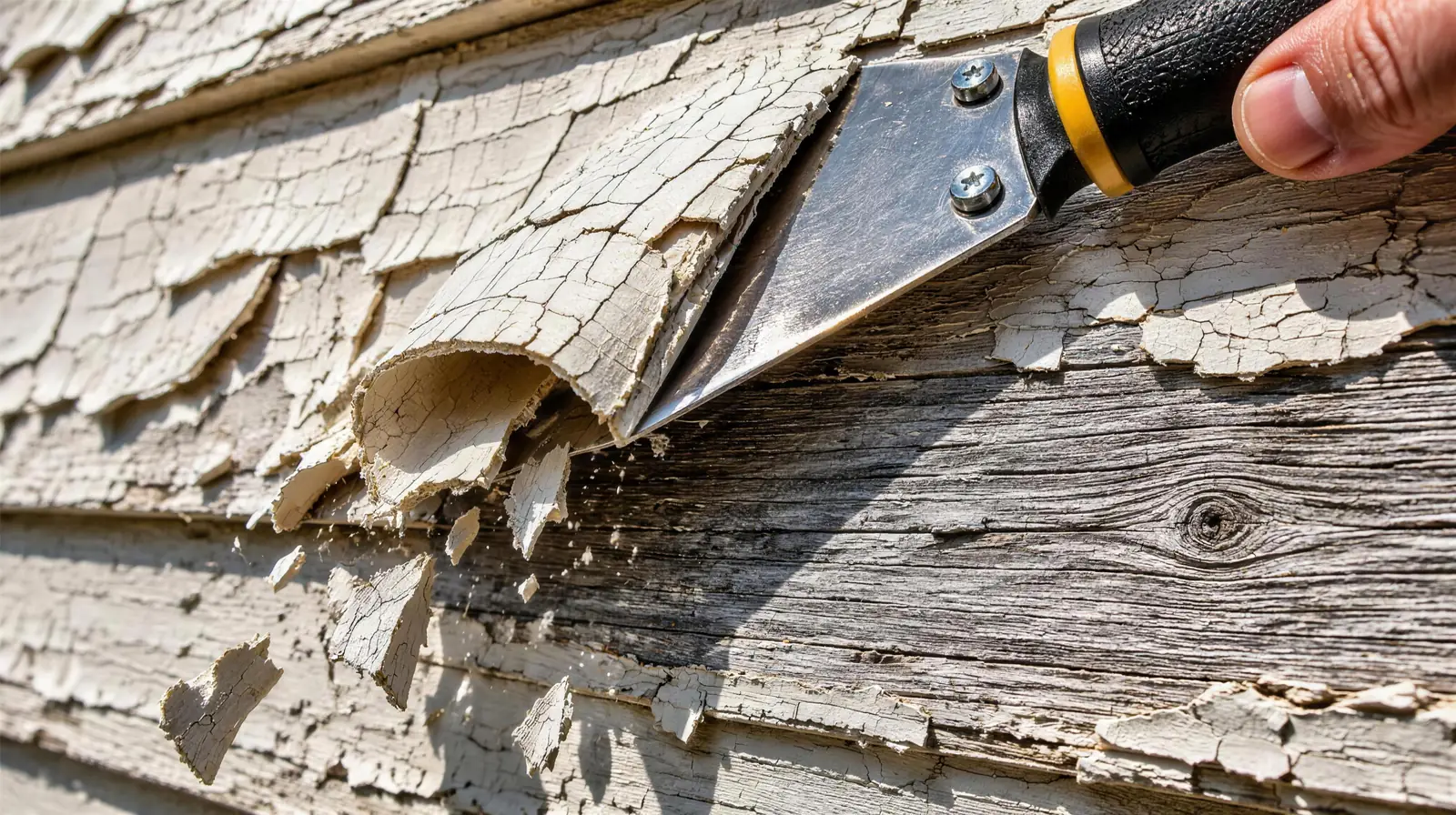
The breakdown is rough, and plenty of streets break the pattern. It still predicts most of what we find on a first walk-around. On the older south-side homes, anything built before 1978 gets lead-safe prep under the EPA's Renovation, Repair and Painting rule: ground containment, wet scraping, HEPA cleanup and no high-pressure blasting of failing paint.
Repainting stucco on newer Thornton homes
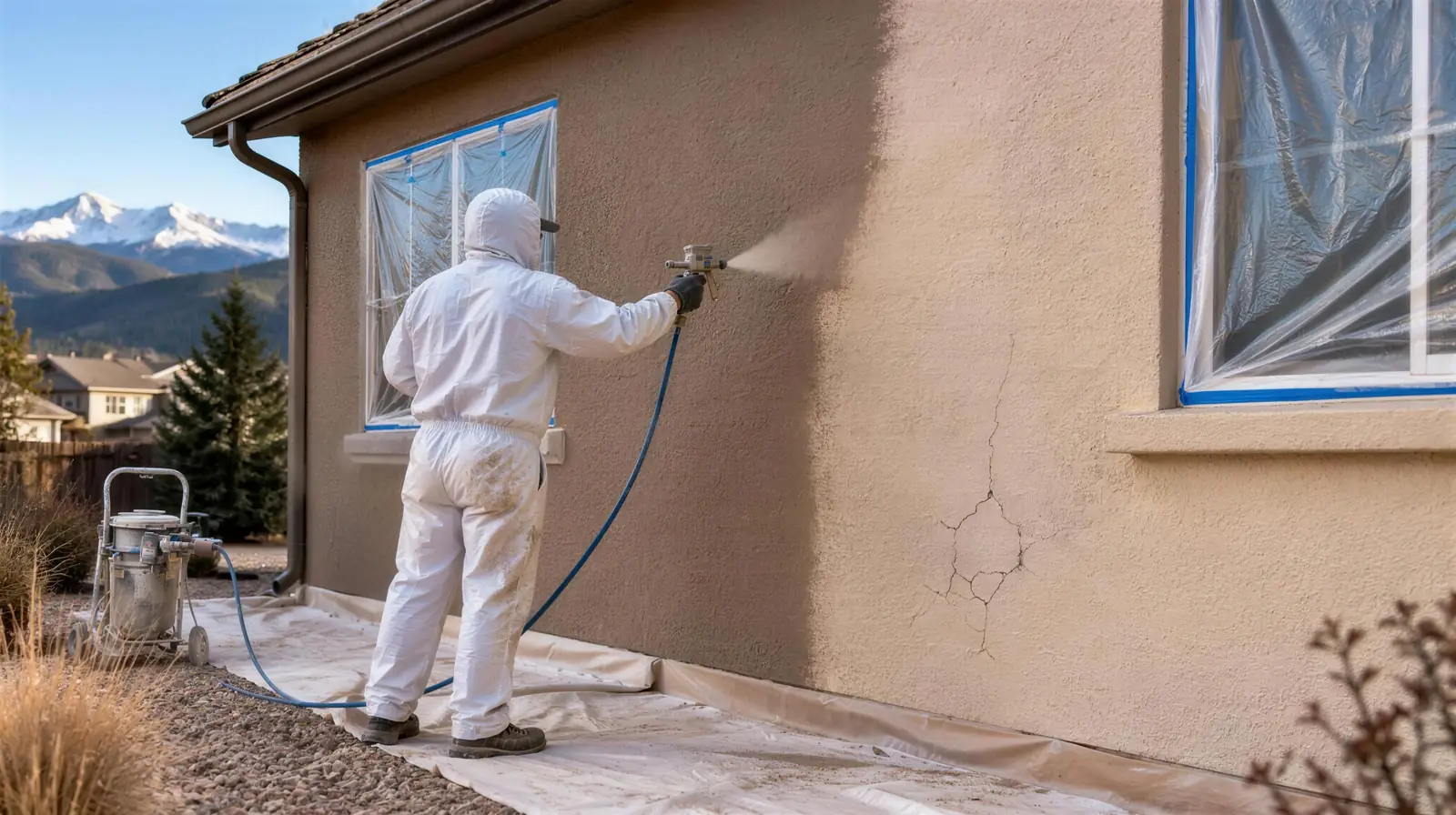
Stucco is the main body material on a lot of north Thornton houses, and it has two needs that ordinary siding paint ignores. It has to breathe, since moisture moves through it. And it moves, which opens hairline cracks around windows and at corners. We choose between a breathable acrylic masonry paint and an elastomeric coating based on the wall. Elastomerics bridge small cracks well but can trap moisture if there's a water problem behind the wall, so we look for staining, efflorescence and soft spots first.
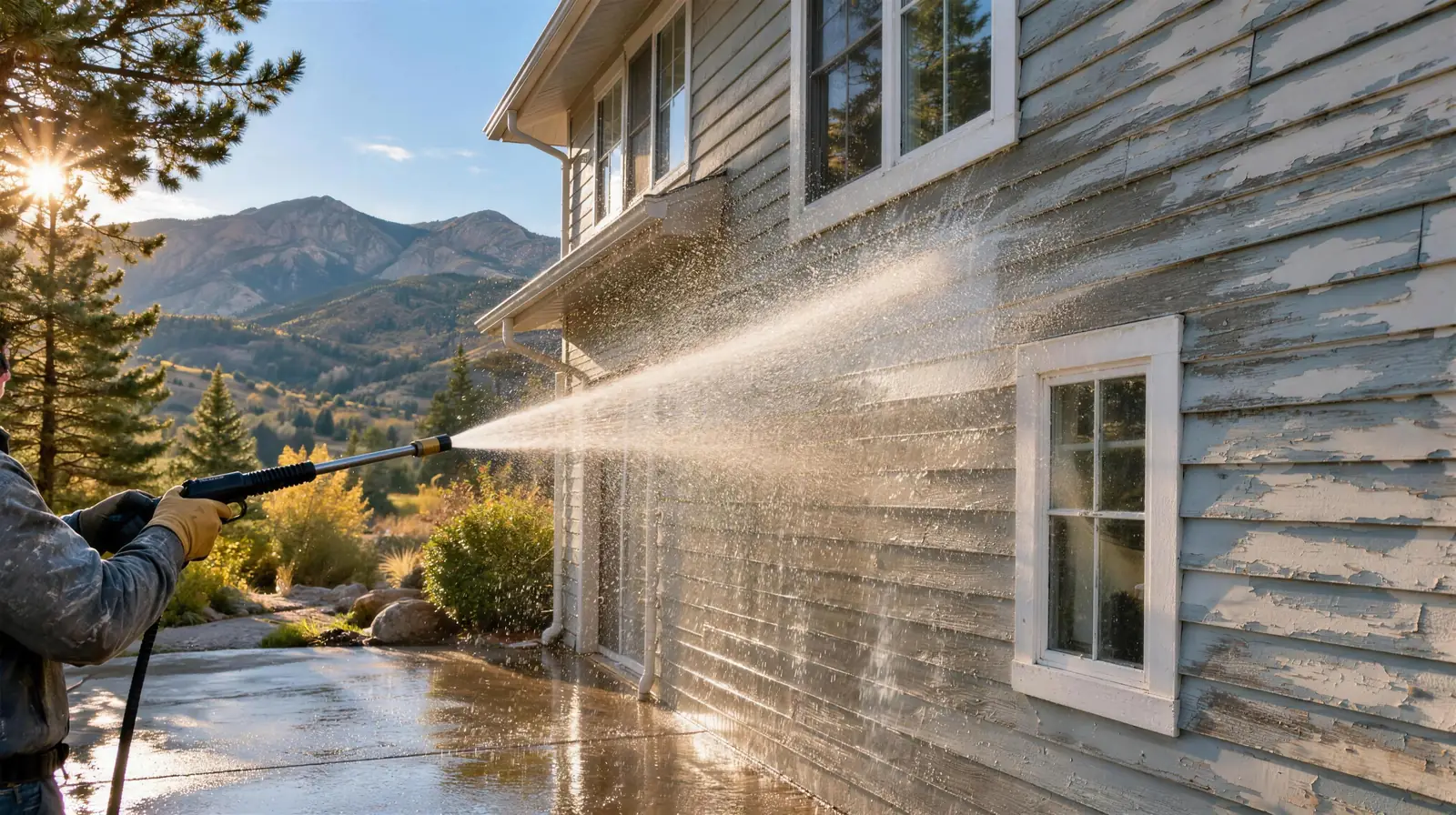
Prep is gentler than people expect: a low-pressure wash, cracks patched with a compatible material, and patches allowed to cure before paint. High-pressure washing can drive water into the wall and erode the finish texture. Details are on our stucco painting page.
First repaints on fiber cement and engineered wood
A lot of north-side homes are coming due for their first repaint, which means working over the builder's original paint job. The body color has usually faded on the south and west, and the caulk at butt joints, corner boards and window trim has shrunk or split. Fiber cement holds paint well, so the work is mostly cleaning, re-caulking and two coats. Engineered wood needs more attention at the edges. Any cut or exposed edge that has lost its coating can wick water and swell, so we seal those before topcoating.
Wind and hail on the open north end
Thornton's northern neighborhoods sit on open ground with little to break the wind, and the north metro gets hail most summers. Hail chips trim paint, dents gutters and can crack fiber cement corners. Wind drives dust into fresh paint, and on gusty days we keep sprayers off and switch to brush and roller on sheltered walls.
Planning around HOA approval
Most newer Thornton neighborhoods have architectural guidelines, and it's common for them to require approval before a color change. Build that review time into your plan, since a request sent in late spring can push your start date into the busiest weeks of summer. The dependable painting stretch runs from late May through September, with shoulder-season days possible when the product data sheet's temperature limits are met.
Our HOA and townhome painting page explains how we put together color submittals. For the similar late 1950s and 1960s housing next door, see our Northglenn page.