Washing matters more here than almost anywhere
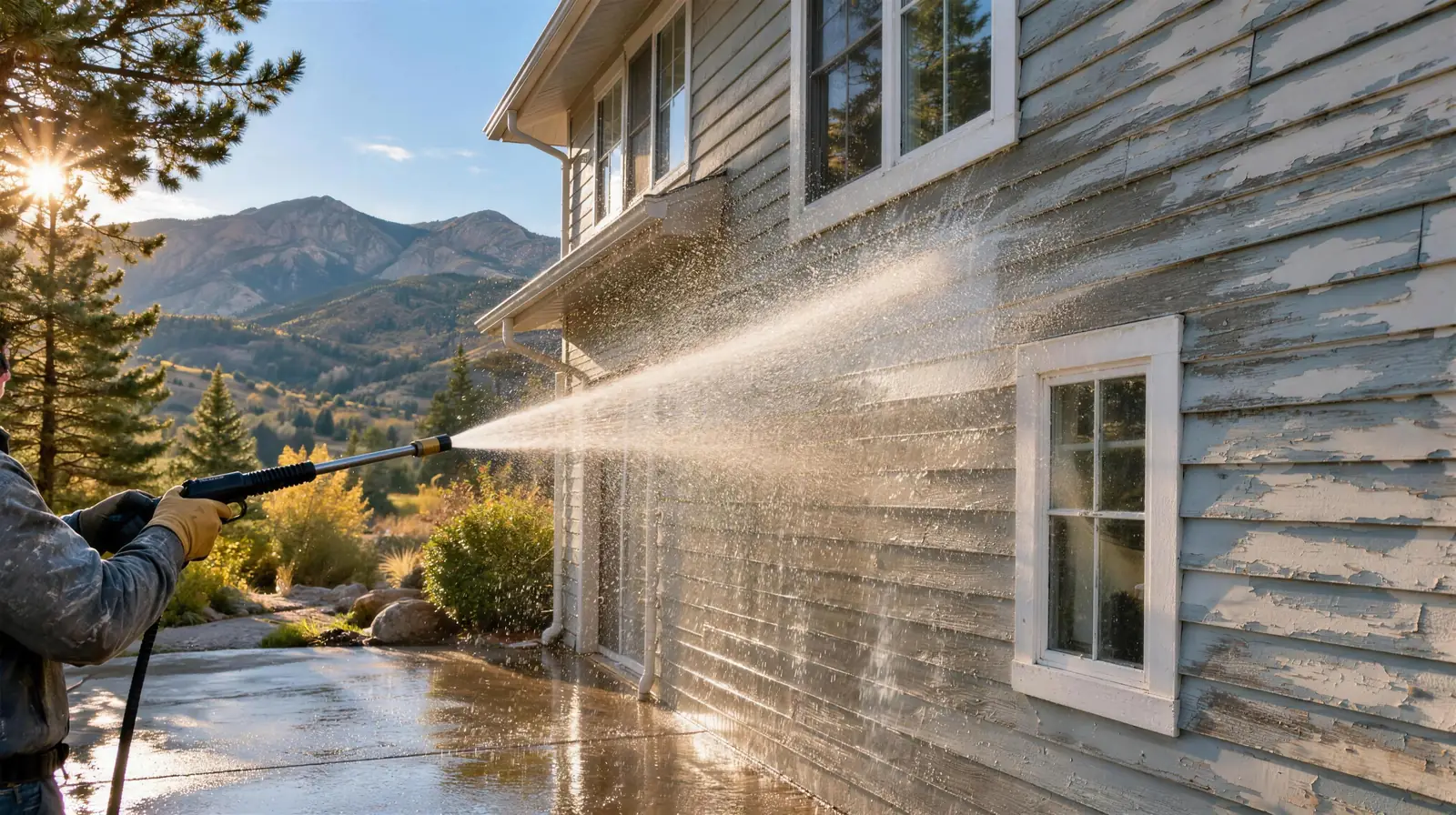
Parts of Commerce City sit close to rail lines, interstates and an industrial corridor, and homes near them can collect a fine film of grime on the siding. Add open-plains dust blowing in from the east, and you get walls that look clean from the street but leave a gray smear on a white rag. Paint applied over that film sticks to the dirt, not the house.
- Wipe-test every elevation with a damp white cloth before choosing a wash method.
- Match the cleaner to the dirt: oily film needs a degreasing detergent, mildew on shaded north walls needs a mildewcide.
- Wash at low pressure on stucco, older wood and any pre-1978 paint.
- Rinse thoroughly, because detergent residue causes its own adhesion problems.
- Confirm the walls are dry before priming, especially after a cool night.
Washing and the rest of our surface prep are explained on our exterior prep and repair page.
The older south end: small houses, many layers
Much of the housing in the older part of the city dates from the middle of the last century, and nearly all of it predates 1978. Expect lead in the original layers, and expect prep to follow the lead-safe practices in the EPA's Renovation, Repair and Painting rule: sheeting on the ground, wet scraping, HEPA cleanup. Many of these are compact frame or brick houses with shallow eaves, so the fascia and the tops of the walls take more weather than they would under deep overhangs.
Window trim, door frames and the wood header above the garage door usually show the worst failure. On houses with several decades of paint, we test adhesion before quoting, since a weak bottom layer changes the scope. Painted brick and block on these homes need a breathable masonry coating, not a standard film that traps moisture and peels after a few freeze-thaw winters.
Newer northern neighborhoods: stucco and approvals
The northern range of the city, including Reunion and the subdivisions around it, has been built mostly since the early 2000s. Stucco bodies with fiber cement or engineered wood accents are common, often with stone veneer at the base. Many of these homes sit under HOA covenants that include architectural review of exterior colors, so the submittal comes before the schedule.
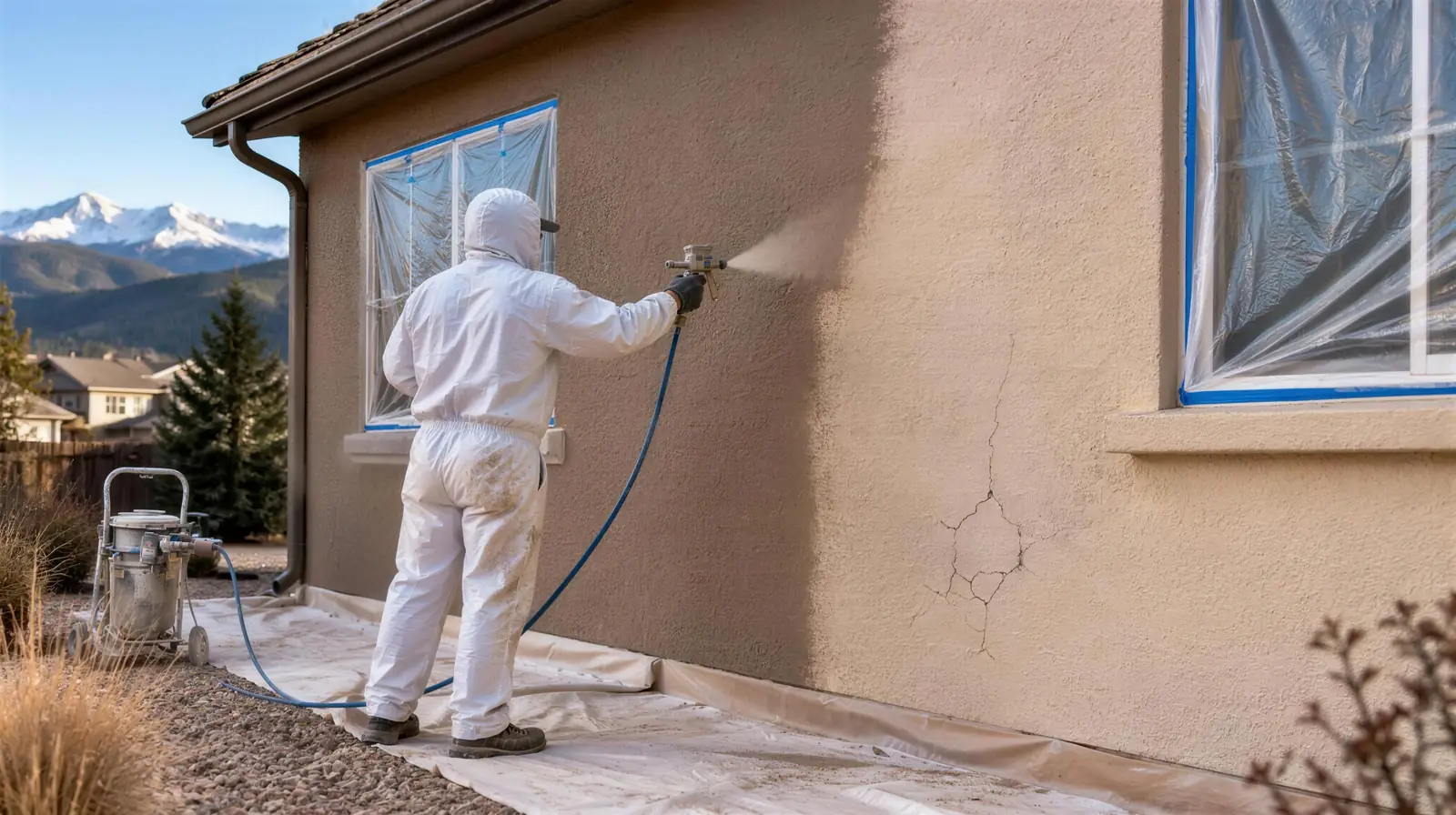
On stucco we use breathable masonry paint or an elastomeric coating matched to the wall's condition, and we mask stone veneer carefully, because overspray on stone is close to impossible to remove cleanly. Our stucco painting and HOA painting pages show how we handle each part.
Plains wind, hail and spray days
Hail is a summer reality across the northeast metro, and a single storm can strip paint off fascia and dent every gutter on a block. If you're dealing with storm damage, line up the repairs before paint. The reliable window for exterior work runs from late May through September, with cooler shoulder days usable when the product data sheet's limits allow. Farm-edge and newer housing to the north is covered on our Brighton page.
Questions to settle before the estimate
A few answers make the walk-around faster and the written scope more accurate:
- Roughly when the house was built, since a pre-1978 date changes the prep plan.
- Your HOA, if you have one, and whether the colors are changing.
- Any storm damage still waiting on repairs or an insurance decision.
- Which walls bother you most, and which ones you haven't looked at closely in a while.
We look at all four sides regardless. Having these answers up front just means fewer surprises once the scope is on paper, and a more realistic start date if HOA review is involved.