Three kinds of property, three different jobs
Older homes near downtown
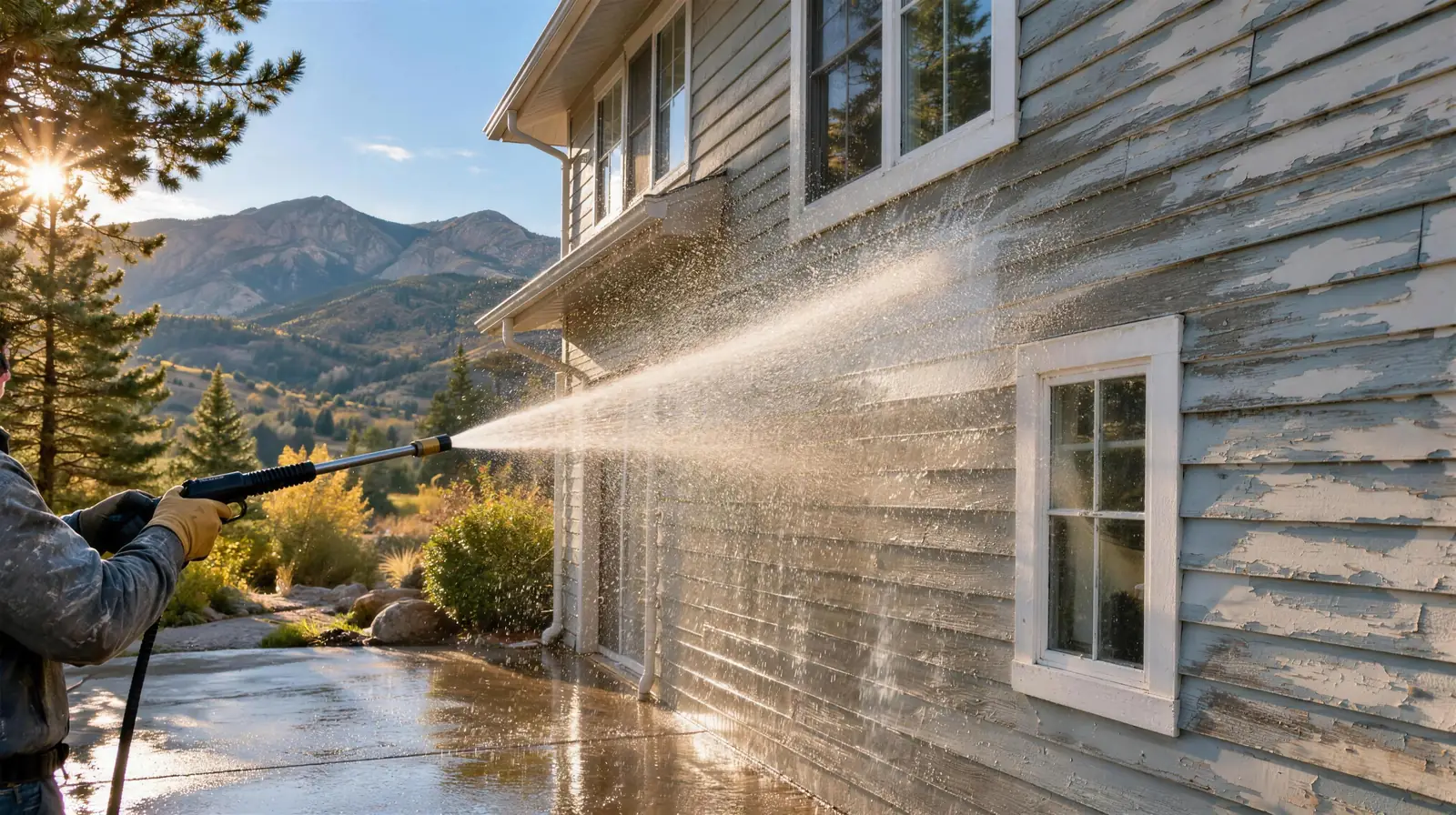
The houses closest to Brighton's historic downtown include early 1900s frame homes and mid-century brick and wood houses. Most predate 1978, so lead-safe prep under the EPA's Renovation, Repair and Painting rule is part of the plan. Old wood siding here is often sound under failing paint, which makes careful scraping, wood repair and priming worth the effort.
Acreage and farm-edge properties
Outside the subdivisions, a house with a detached garage or shop and long runs of fence is a common setup. Board and batten, wood lap siding and metal siding all show up. These jobs are bigger in footprint than in detail, so planning carries more weight: access for ladders and lifts, water for washing, and where equipment can sit without tearing up the yard.
Newer subdivisions
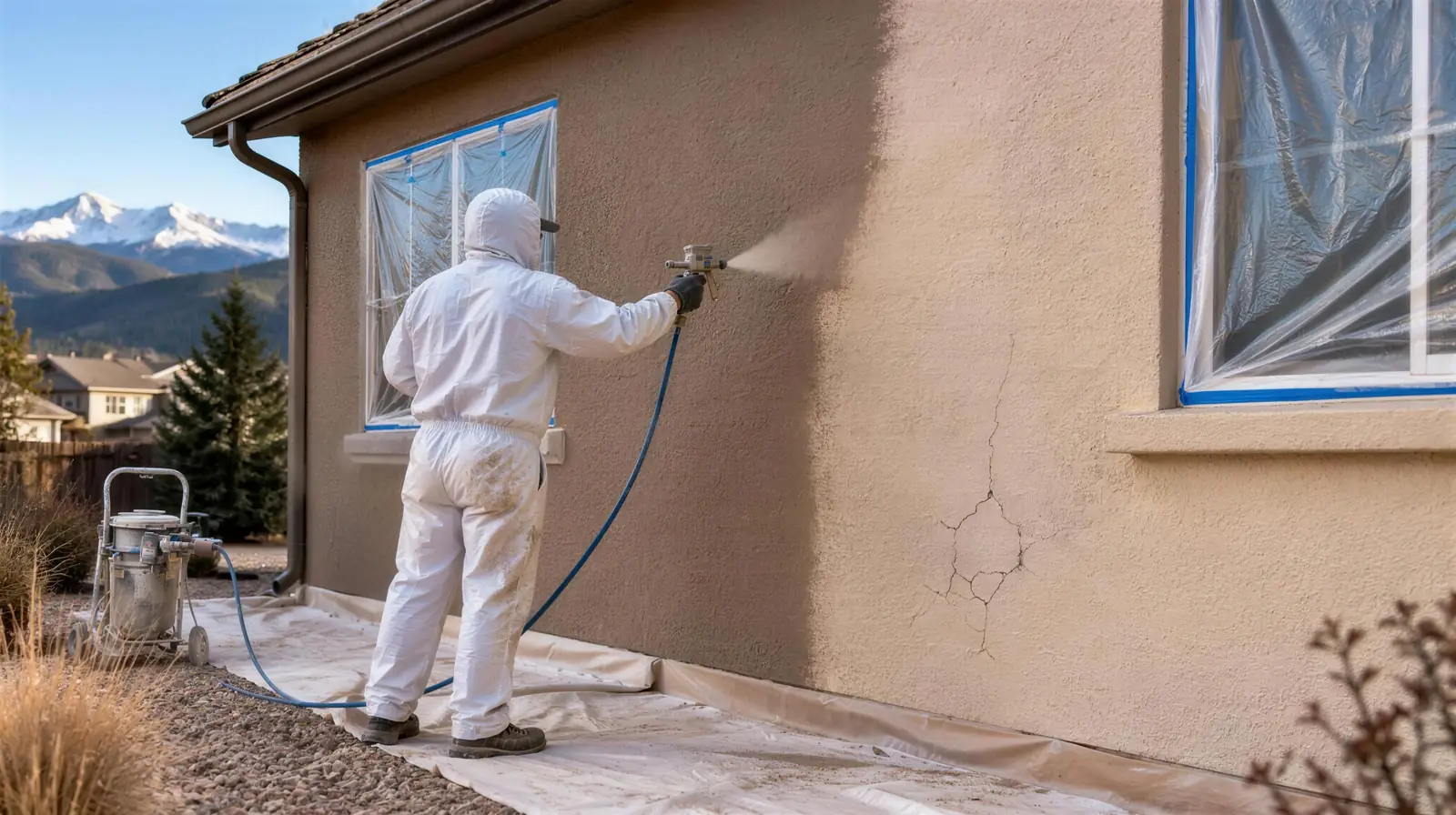
Brighton has added a lot of housing since the 2000s, with fiber cement, engineered wood, stucco and stone accents, and many of those neighborhoods have HOA review of exterior colors. The first repaint on these homes is mostly caulk, cleaning and color approval.
Sprinklers are hard on the bottom of the wall
Irrigated lawns and landscape beds are everywhere in Brighton's neighborhoods, and a sprinkler head aimed slightly wrong can hit the same patch of siding several times a week all summer. The result is a band of peeling, blistered or mineral-stained paint along the bottom couple of feet of the wall, and on wood or engineered wood, swollen bottom edges.
Fences, outbuildings and long stain lines
On acreage and larger lots, the fence can cover more square footage than the house. Wood fences take full western sun and the wind off the plains, and stain fades and grays fastest on the sunny faces of the boards. On rough fence boards, a penetrating stain on clean, dry wood usually holds up better than a film-forming paint, which tends to peel as the wood swells and shrinks. Our deck and fence staining page covers how we prep and choose stains.
Detached garages and sheds that match the house are easy to fold into the same scope with the same colors and prep. If a structure on the property is outside the kind of work we do, we'll say so at the estimate.
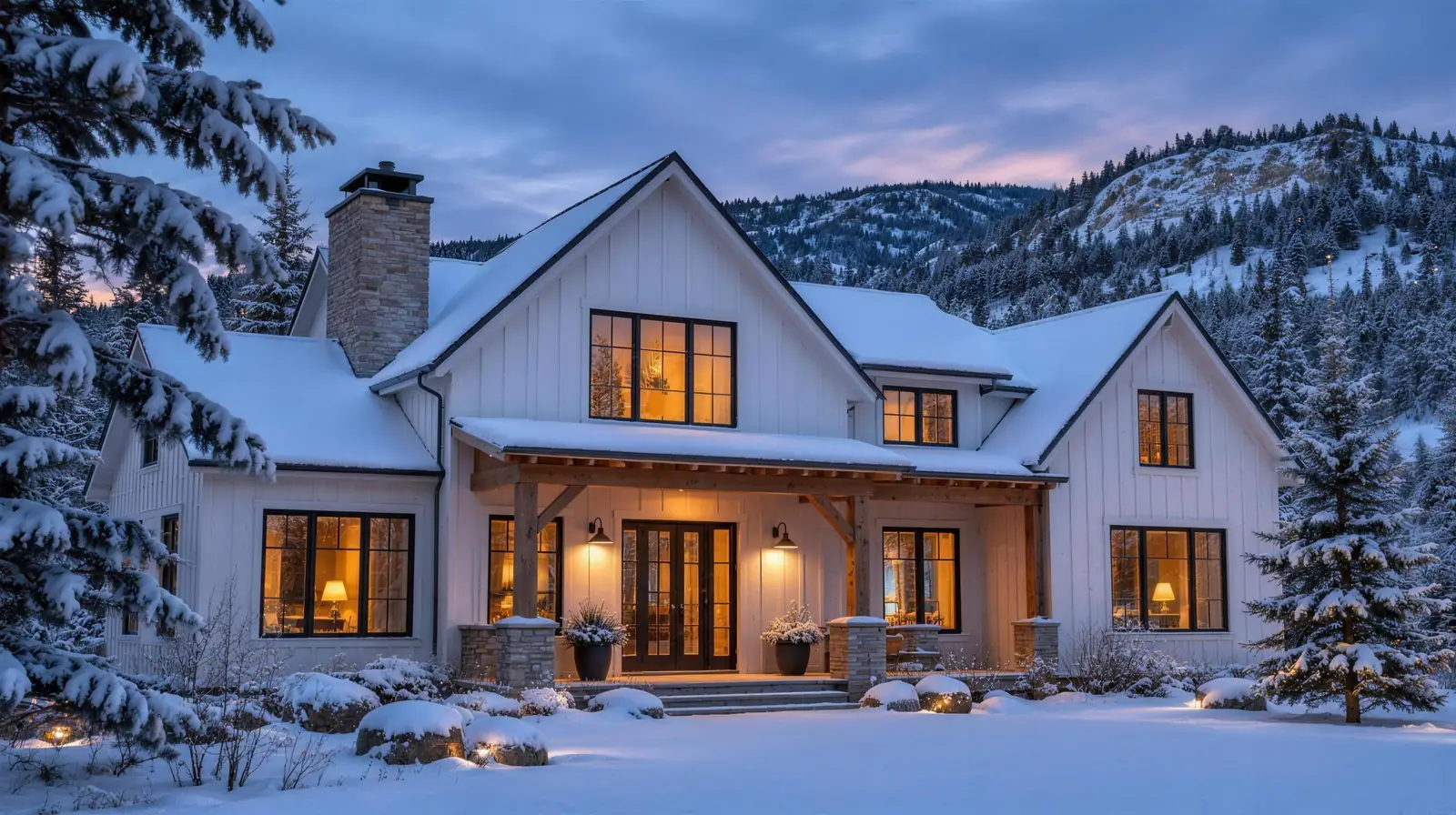
Board and batten and the farmhouse look
If this, then that
- If your board and batten is rough-sawn wood, then a solid-color stain or a paint made for rough surfaces works better than a smooth-finish paint, and spraying with back-brushing works the coating into the texture.
- If the battens are lifting or cupped, then they get refastened or replaced before paint, or every gap will show in the shadow lines.
- If you're going white or near-white, then plan on careful caulking and stain-blocking primer on knots, since bleed-through shows on light colors.
- If the siding is metal, then a full wash and a metal primer on any bare or rusted spots come before the topcoat.
Our siding painting page goes deeper on each material.
Season and access on the edge of the plains
Brighton's reliable painting window runs from late May into September, and windy spring days are the biggest schedule disruption, especially on open acreage with nothing to block a west or north wind. Hail is a regular summer risk across Adams County. Fall can offer calm, dry weeks, and we use them as long as overnight lows stay above the paint's minimum temperature while it cures. For homes closer to the metro, our Thornton page covers the neighboring subdivisions.