Scoping the job to the house you actually have
On a small house the budget goes further when it's aimed at the surfaces that are failing. Plenty of homes here don't need a full repaint every cycle. They need the trim, fascia and doors brought back, with the body color touched up or left for another year. We walk every side and tell you which surfaces are still protecting the house and which are letting water in.
If this, then that
- If the body color is faded but intact and the trim is peeling, then a trim, fascia and door repaint is usually the right first step.
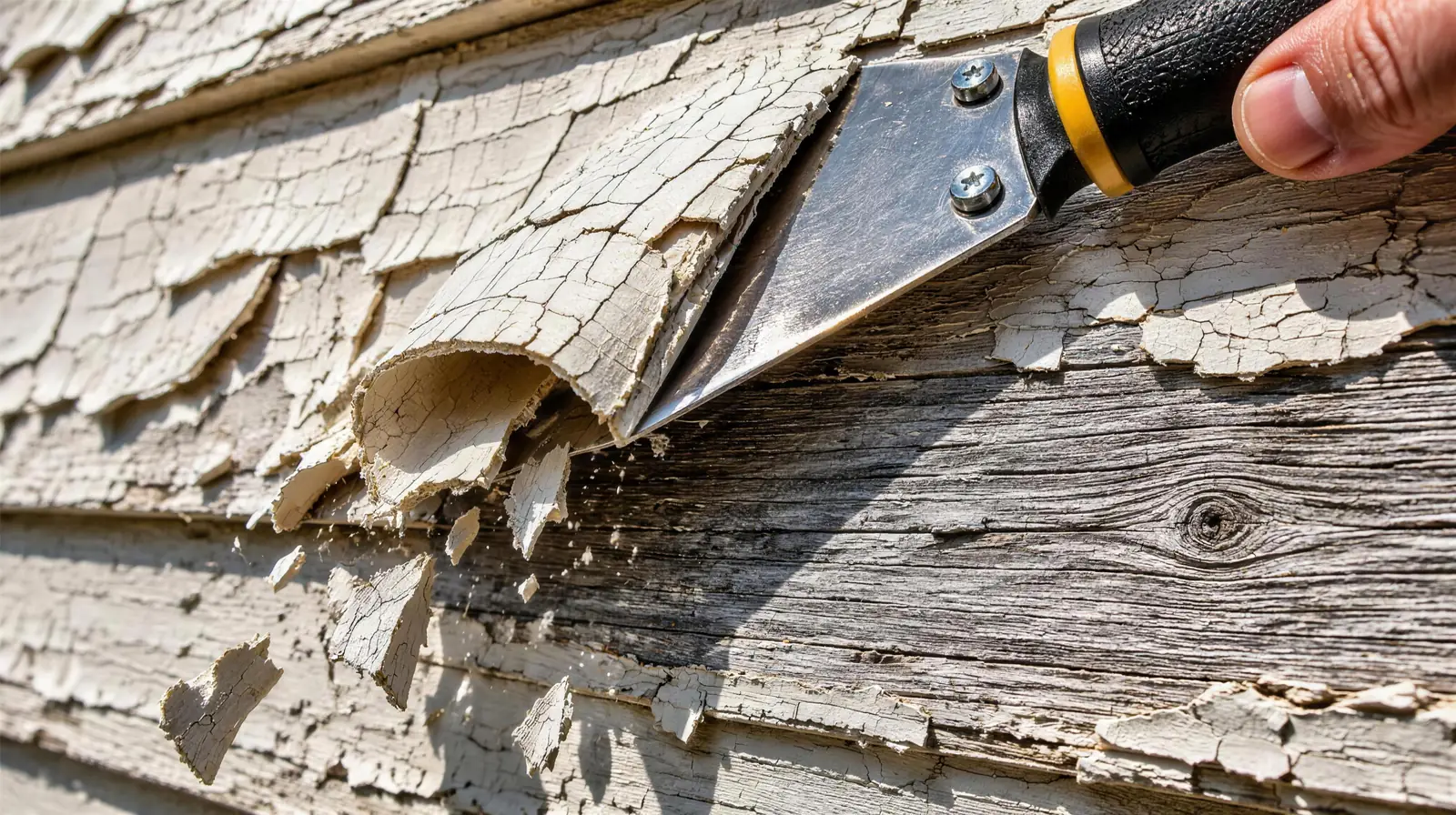
- If one wall, often the south or west one, is chalking or peeling while the rest looks fine, then repainting that elevation can work, though new and old paint will read slightly differently for a while.
- If siding is bare in spots or caulk has failed all around the house, then a full repaint is a better use of the money than piecemeal fixes.
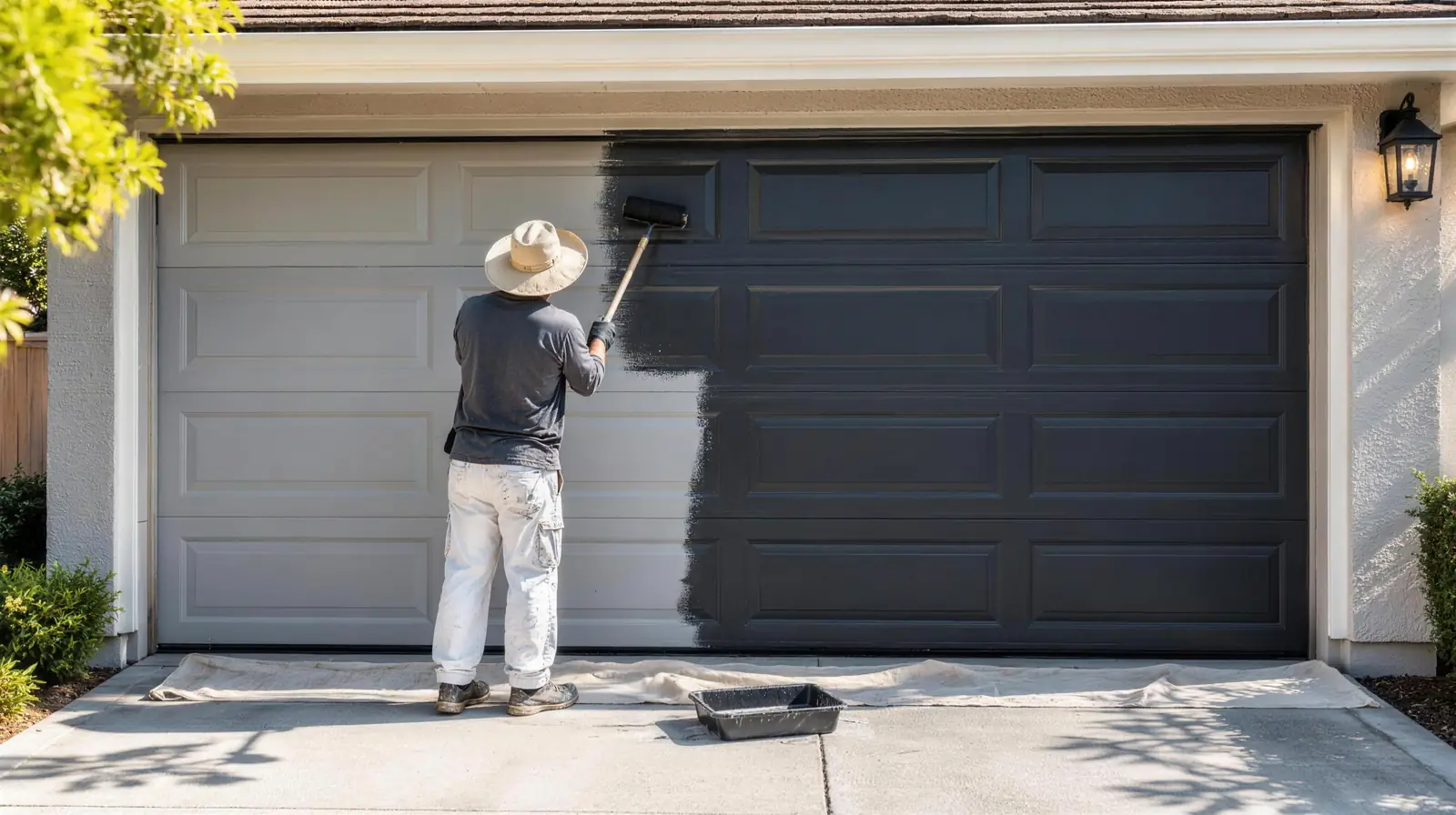
- If the garage door is the eyesore, then that's a contained job on its own.
Trim-only and door work is described on our trim and fascia painting page.
Painting metal and vinyl siding
Aluminum and steel siding show up on older single-family homes here and on many manufactured homes. Metal holds paint well when the surface is ready for it: the chalk washed off completely, bare or rusted spots on steel treated and primed with a metal primer, and a topcoat the paint maker lists for metal. Skipping the wash is the most common reason paint peels off aluminum within a couple of years.
Vinyl siding can be painted too, with one firm limit. Dark colors absorb heat, and vinyl can warp when it gets too hot. Paint makers offer vinyl-safe color lines formulated to limit heat buildup, and we choose from those. Without one, the safe rule is a color no darker than the original. Strong sun at this altitude makes that rule matter more, not less.
Old hail dents don't affect adhesion, but they catch the light more once the siding has a fresh, even sheen. A flat or low-sheen finish hides them better than satin.
Our siding painting page covers metal and other siding types in more detail.
Manufactured homes: what we check before quoting
A manufactured home takes paint differently from a site-built house, and the community it sits in often has its own rules. Our walk-around covers these points:
- Community rules on exterior colors, work hours and crew parking, in writing from the community manager.
- Whether the siding is metal, vinyl or a composite panel, since each needs a different primer.
- Seams and fastener heads on metal siding, where rust and leaks start.
- Skirting condition, because paint on cracked or loose skirting doesn't last.
- Roof edge trim and window surrounds, which are often the first things to lose paint.
Sun, hail and the north metro calendar
At roughly 5,400 feet, UV exposure is strong enough that sun-facing walls chalk and fade years ahead of shaded ones. Hail is a regular summer event across the north metro, and on metal siding it leaves dents that paint won't hide. If hail damage is part of the picture, sort out repairs or panel replacement first and paint afterward. On small houses, the side facing the street is often not the one in the worst shape, so look at the back and the west wall before deciding what needs paint this year.
Most exterior work here happens from late May through September. Shoulder-season jobs are possible on warm stretches, as long as surface and overnight temperatures meet the minimums on the product data sheet. Small jobs like a door or a single elevation can sometimes fit into a short warm spell in October when a full repaint can't.
If you're just over the line in a neighboring city, see our Northglenn or Thornton pages.