Fairway Irrigation and Lawn Sprinklers
Homes that back onto a golf course live next to a lot of water. Course irrigation and the house's own sprinklers both spray the lower walls, and over the years that leaves mineral deposits, keeps the bottom of the siding damp and lifts paint along the foundation line. Wood trim and siding near grade are usually the first parts of the house to show rot.
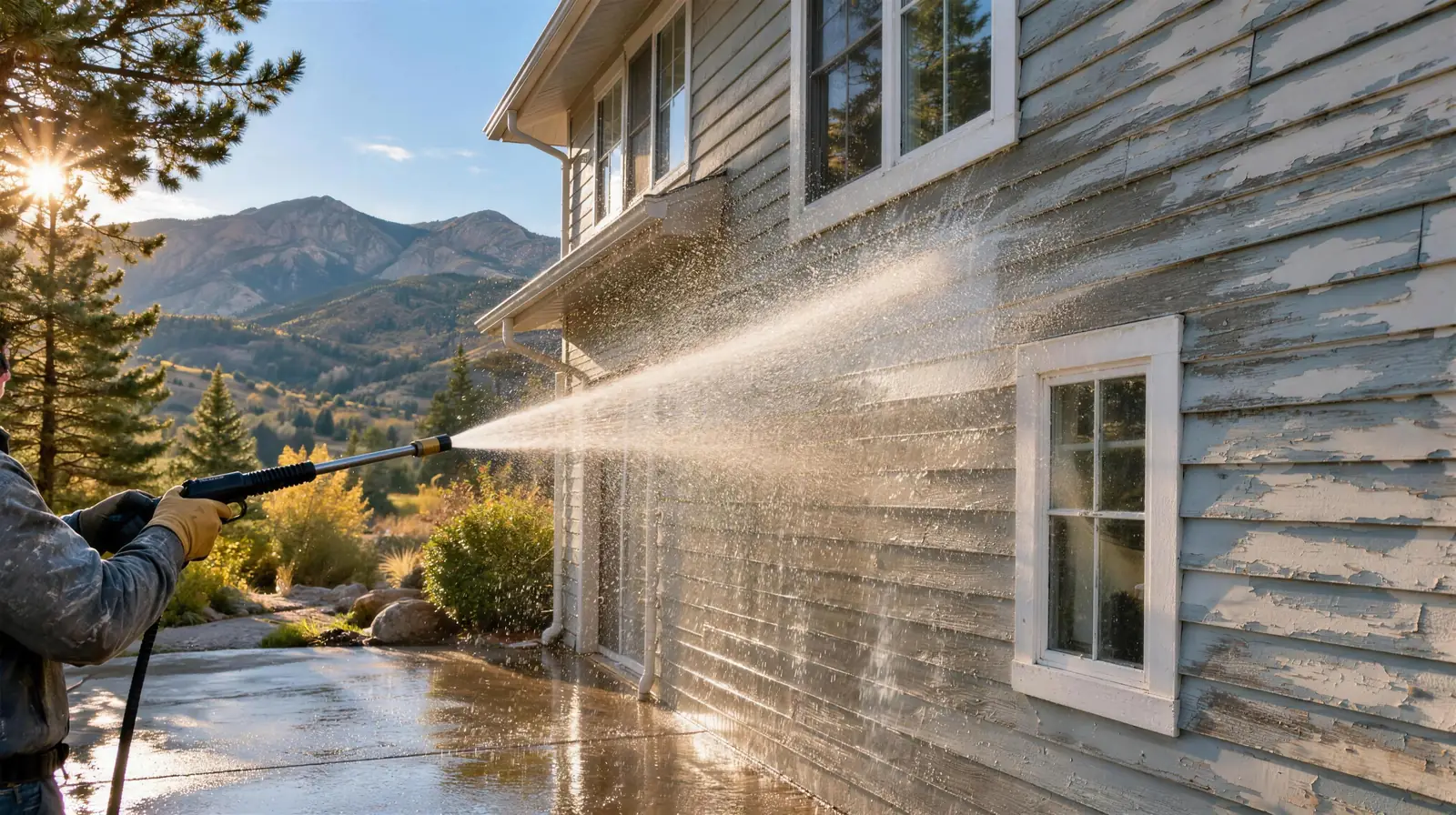
We clean mineral staining before painting, because a coating applied over hard-water residue bonds to the residue, not to the wall. Where a sprinkler head is the cause, adjusting it matters more than any paint choice. We can't control course irrigation, so on fairway-facing walls we pay extra attention to sealing the bottom edges of siding and trim.
Fairway homes also catch the occasional golf ball. Those strikes chip paint and stucco and dent metal, and we patch and prime the marks so water doesn't get in.
Mid-Century Customs and Their Remodels
The original houses here were mostly custom builds, often single-story with brick, wood siding and broad roof overhangs. Many have since been expanded or reworked with stucco, newer wood or fiber cement. A single house can carry four or five surfaces from different decades.
Remodels also leave transitions: a stucco addition butting into original wood siding, or new fiber cement trim beside old pine. Those joints move differently through freeze-thaw cycles, so we use a flexible sealant there and check them closely during prep.
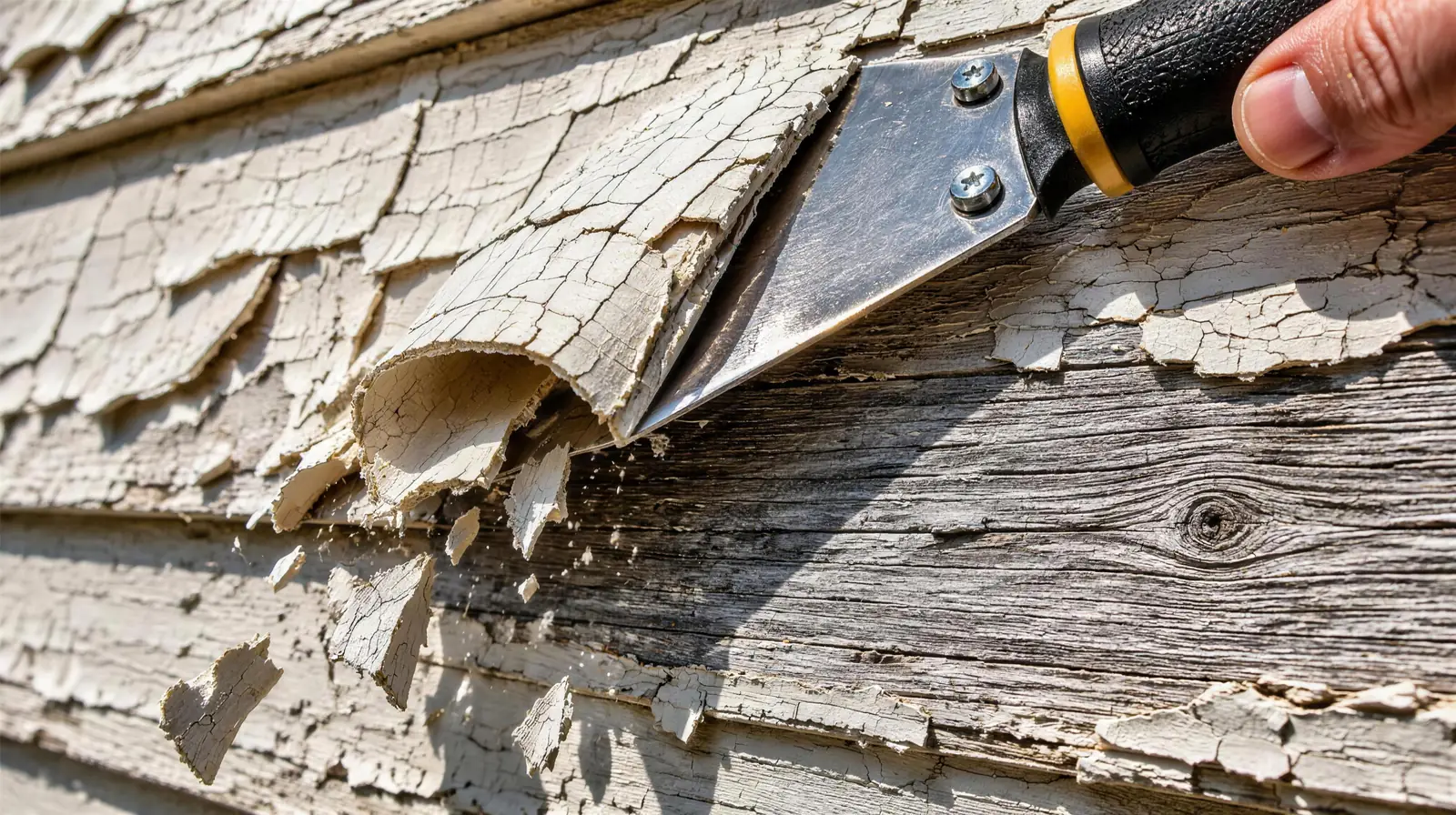
Pre-1978 homes may have lead in those older layers, so any scraping follows lead-safe practices. Our prep and repair page has the details.
Painting Trim Without Repainting Everything
Brick and stone houses often need nothing on the walls. The trim, fascia, soffits and doors are what age.
If this, then that
- If the brick or stone is unpainted and sound, then we leave it alone and repaint only the wood and metal around it.
- If trim paint is chalky but tight, then washing, light sanding and two topcoats will do.
- If fascia is peeling at the miters and end grain, then we scrape, seal the end grain, prime and recoat those runs.
- If soffit vents or boards are stained from roof leaks, then the leak gets fixed before anything is painted.
- If you're changing the trim color, then the doors and garage door usually need to change with it.
More on that work at trim and fascia painting.
Decks and Patios Facing the Course
Decks and wood pergolas built to face the fairways often face south or west as well, which puts them in the harshest sun. Stain on those surfaces fades and wears long before the walls of the house do. We clean, brighten and restain wood decks, and we keep the deck and the house trim on separate schedules, since horizontal wood almost always needs attention more often.
Shade trees around the older properties help some decks and hurt others: leaf litter and damp corners lead to mildew and soft boards at the ends. We check board ends, stair stringers and the ledger area before quoting stain, since staining over soft wood only hides it for a season.
Fences along the course and between lots get the same sun and sprinkler exposure as the decks. If they're stained the same color as the deck, we usually suggest doing both in one visit so the colors age together. Details are on our deck and fence staining page.
Questions Worth Asking
Ask how the painter will deal with hard-water spotting, whether older trim will be tested for oil-based paint, and how they'll protect a yard that backs onto a course. If your house has covenants, check for color rules before choosing. Homes nearby in Littleton share many of the same eras. Request an estimate and we'll walk the house and decks with you.