Spending the Paint Budget Where It Counts
Not every repaint needs to be a full makeover. On a lot of Sheridan houses, the north and east walls are holding up fine while the south and west sides are peeling, and the sills and fascia are where water is getting into the wood. We'd rather spend time on the walls that are failing than on the ones that just need a wash and a coat.
Here's what we look at first on a house like this:
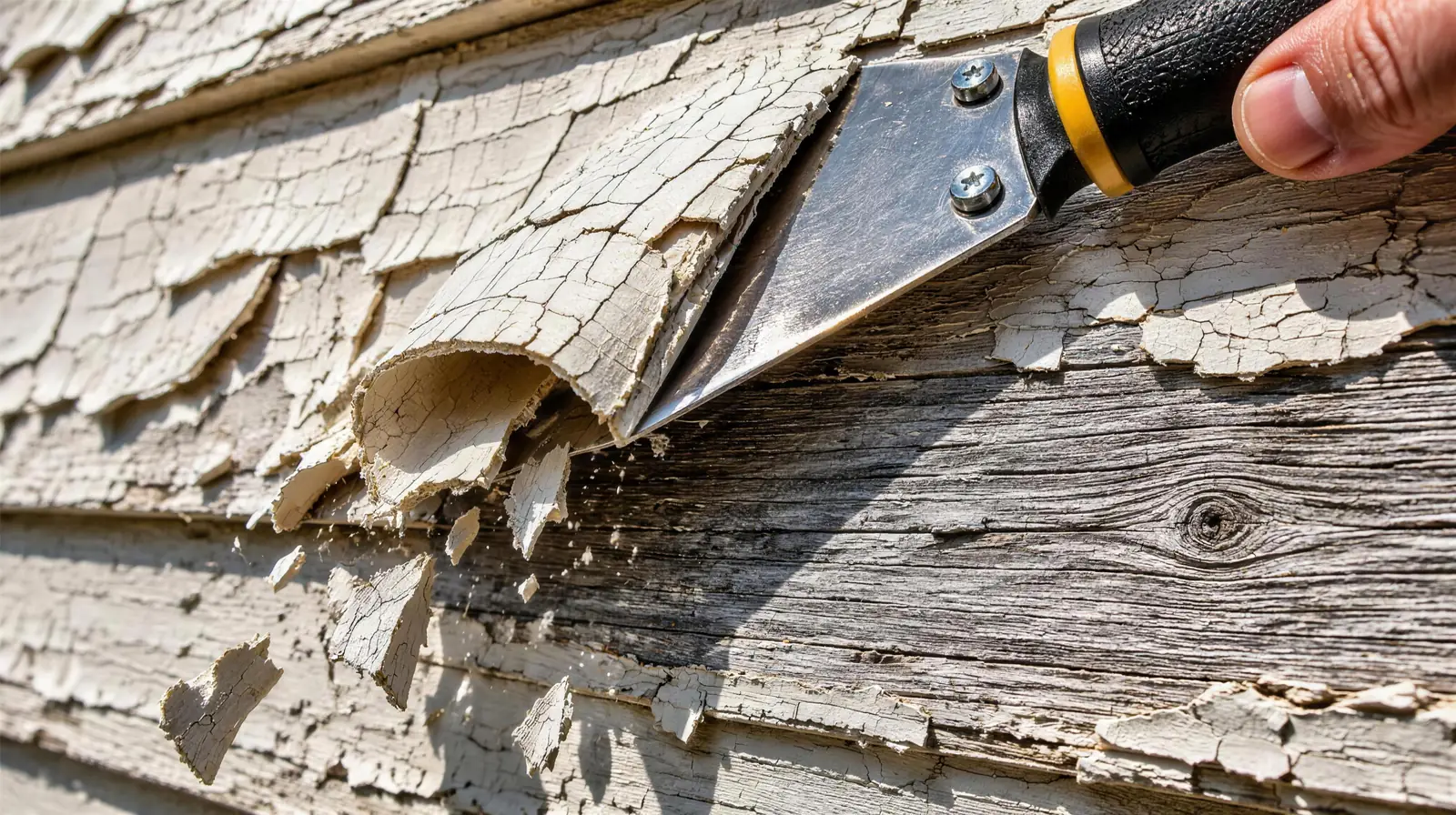
- Peeling to bare wood on south and west walls, which tells us how far scraping has to go.
- Soft wood at window sills, door thresholds, corner boards and the bottom of the siding.
- The fascia and gutter line, where snowmelt and ice sit every winter.
- Gaps where siding meets trim, which need caulk before paint.
- What the siding actually is, since many homes were re-sided over the years.
Old Paint, Lead and Careful Scraping
Most homes here were built before 1978, so older paint layers may contain lead. We treat them that way unless testing shows otherwise. Under the EPA's Renovation, Repair and Painting rule that means plastic on the ground to catch chips, wet scraping, no dry power sanding, no open-flame removal and daily cleanup. Kids, pets and garden beds stay out of the work zone.
Older houses often have oil-based paint under newer latex coats. When the bottom layers lose their grip, the whole stack lifts in sheets. We scrape back to paint that is firmly attached, feather the edges, and use a primer suited to the old surface before any topcoat. Skipping primer over bare and glossy spots is a common reason a new coat peels within a season or two. Our prep and repair page goes through each step.
The Siding You're Likely to Find
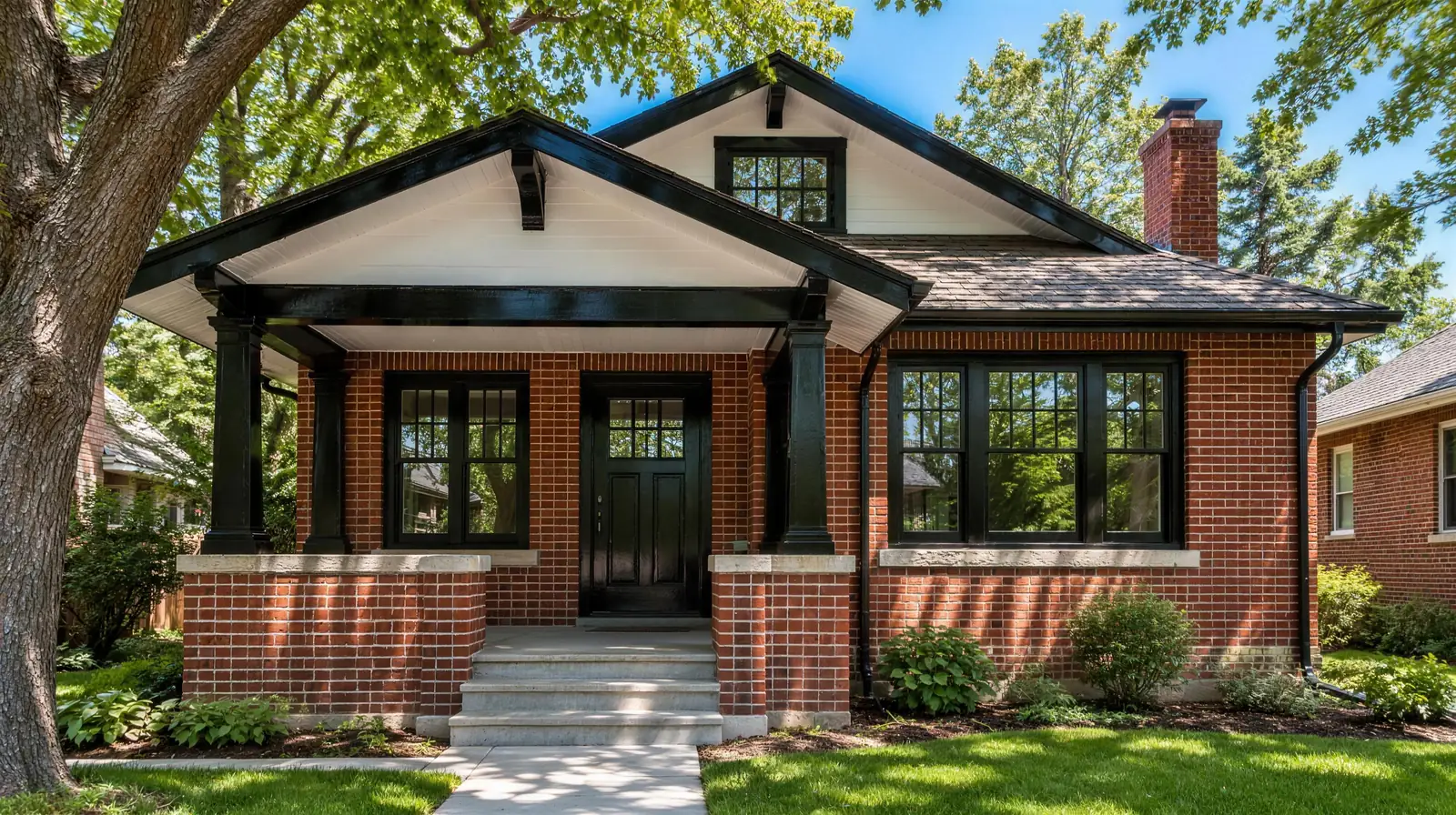
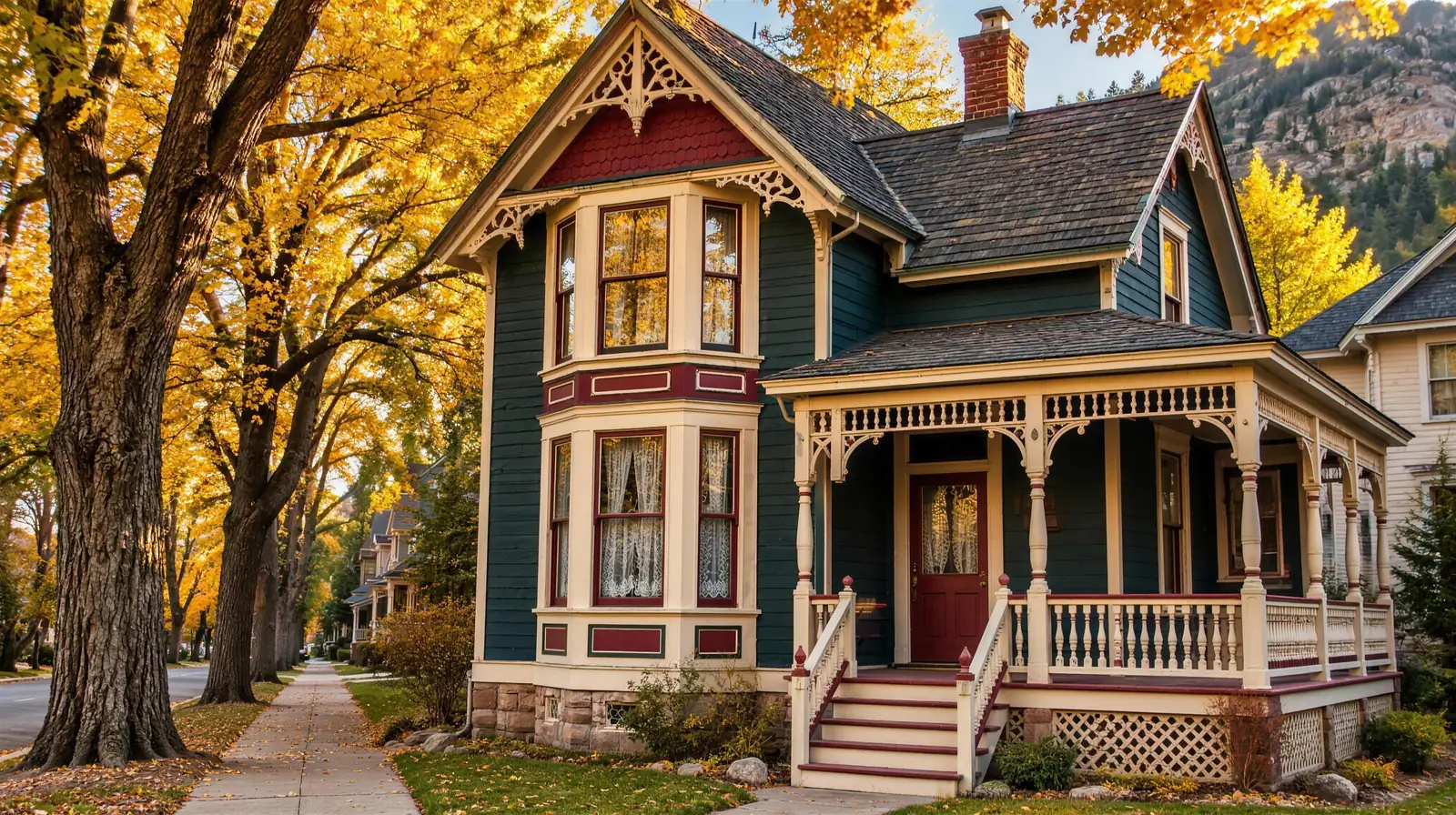
Mid-century homes around the metro were re-sided many times, and Sheridan houses are no exception. Under a single roof you may find several of these:
Wood lap siding is the most common original surface. It paints well once loose paint is gone and bare spots are primed. Aluminum or steel siding was often installed over the original wood. It can be painted after a good wash to remove chalk, with a primer where the factory finish is worn through and a topcoat rated for metal. Cement-based shingle siding from the 1940s and 1950s may contain asbestos, so we clean it gently and never sand or hard-scrape it. Brick is often left unpainted, with painted trim around it.
More on each type is on our siding painting page.
Sun, Thaw and Ice at the Roof Edge
Sheridan sits low for the Front Range, around the same elevation as Englewood and Denver, but the sun is still strong enough to chalk and fade south walls quickly. Winter is the bigger enemy for small houses with low roof pitches. Snow melts on sunny days, refreezes overnight, and builds ice along the gutter. Water backs up behind it and soaks the fascia and the top of the siding.
The painting season runs from late spring to early fall, set by the minimum temperatures on the product data sheet and how cold the nights get. Small houses can often be finished in a short stretch of good weather, which makes it easier to fit the work between spring winds and the first hard frosts. In early spring and late fall we start on the walls that get morning sun and leave shaded sides until the surface has warmed.
Before You Call
Take a few photos of the worst walls and any soft wood you've noticed. Know roughly when the house was built and whether you've had it re-sided. Homeowners in Englewood have very similar houses and questions. Request an estimate and we'll walk the whole house with you and write the scope wall by wall.