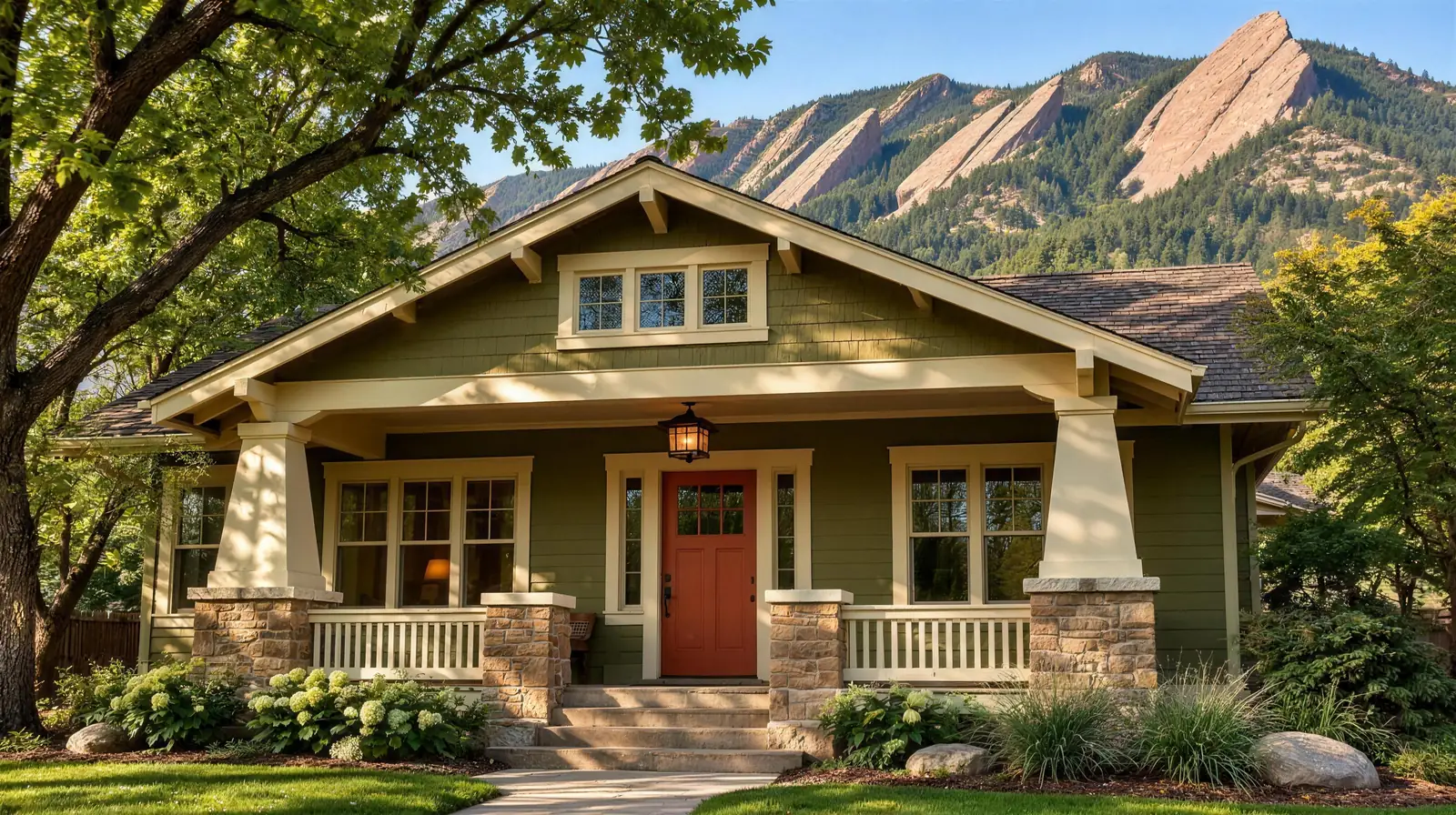
Porches are where older Berthoud homes need the most work
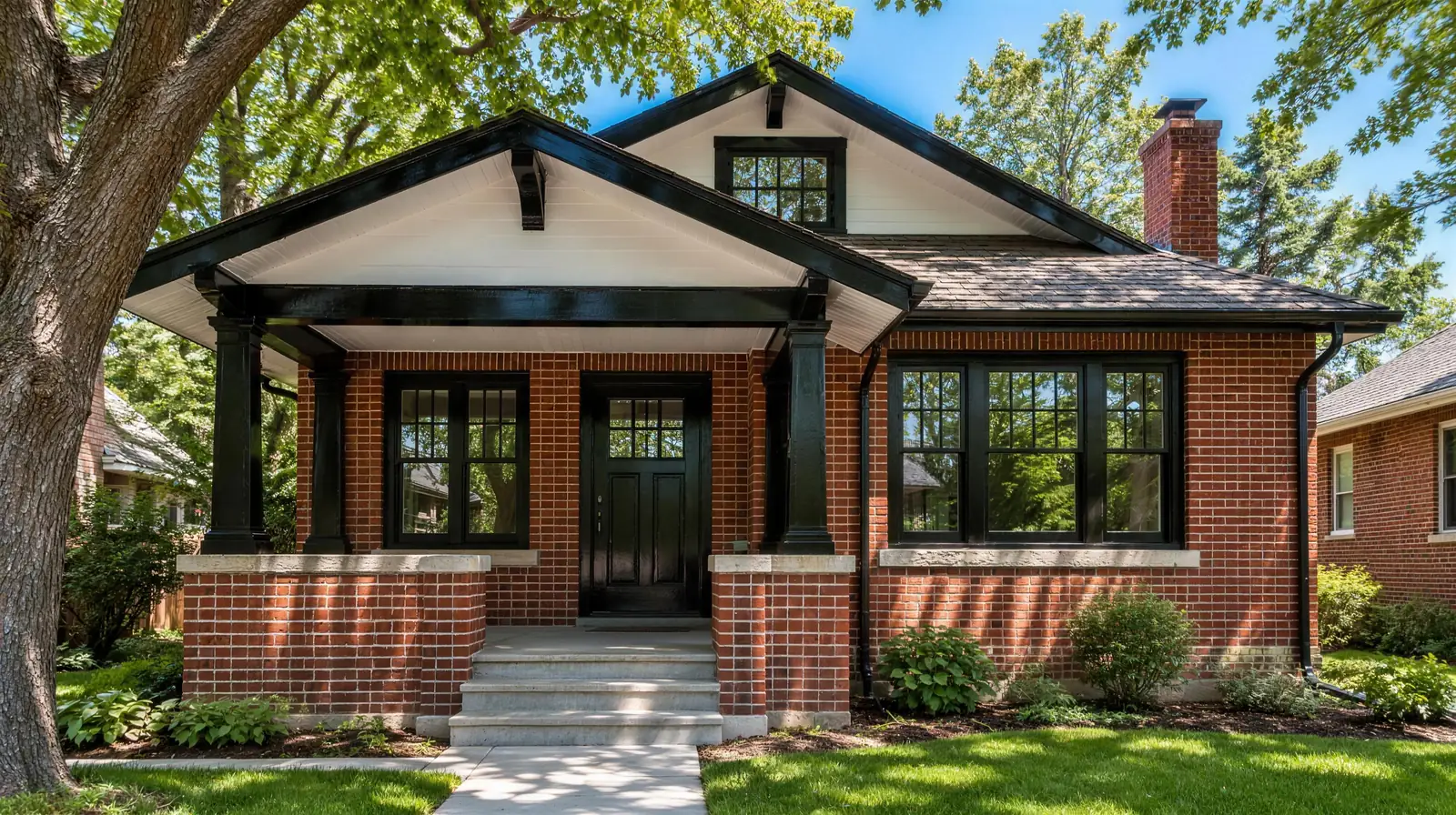
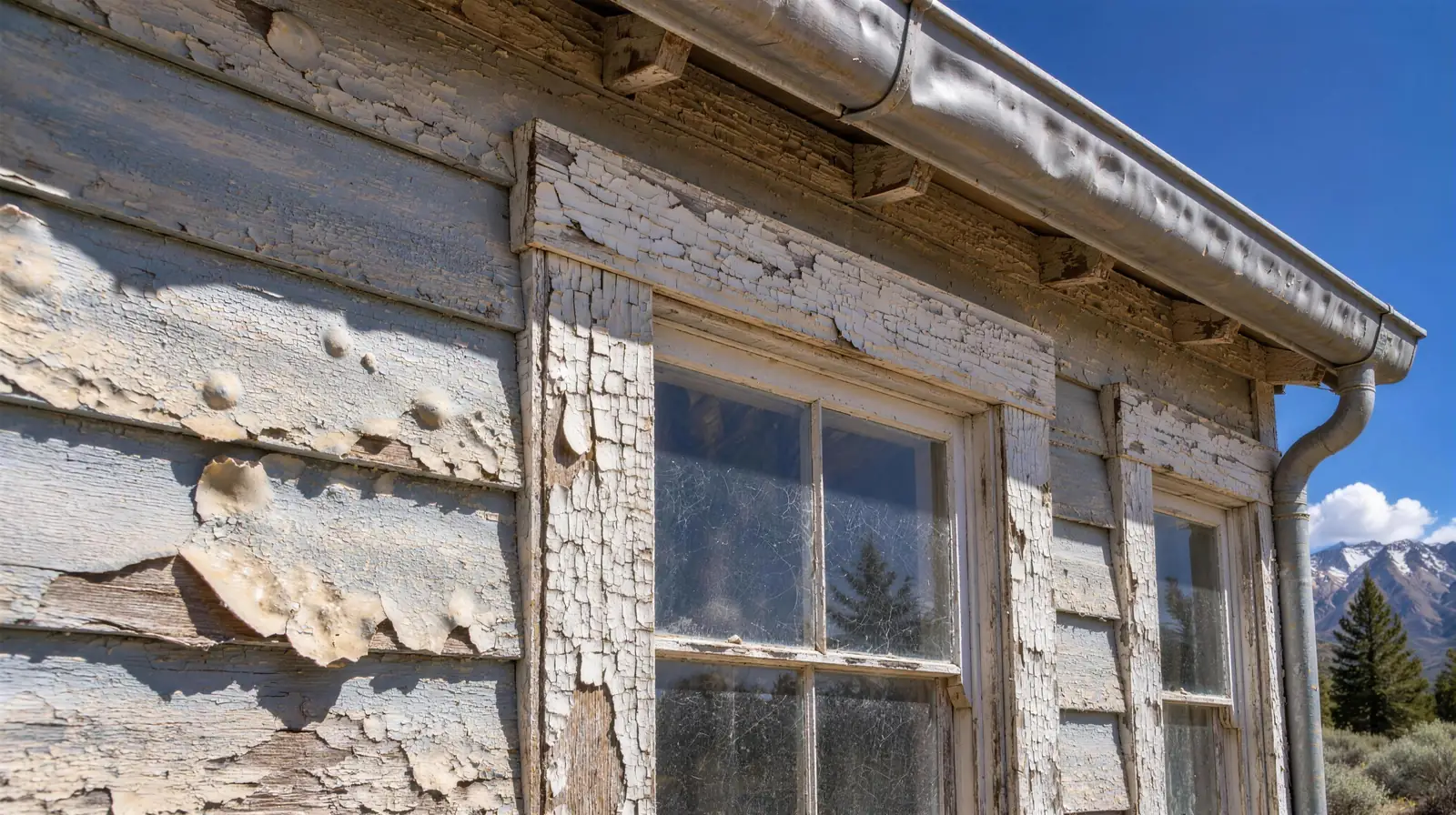
The blocks around Berthoud's downtown hold early twentieth century houses, many with full front porches, turned or tapered columns, and wood lap siding under many coats of paint. Porches take more weather than any other part of the house. Snow melts on the floor boards, water runs down column bases, and the steps get the full afternoon sun.
Our exterior prep and repair page explains the scraping, wood repair and priming steps in more detail.
Lead-safe prep on pre-1978 houses
If your home was built before 1978, assume some of the older paint layers may contain lead until testing says otherwise. The EPA's Renovation, Repair and Painting rule sets lead-safe work practices for paid work that disturbs that paint. On a Berthoud porch or clapboard wall, that means plastic sheeting on the ground, wet scraping, no open-flame stripping, no dry power sanding without dust collection, and careful daily cleanup. It takes longer than scraping into the flower beds. It also keeps paint chips out of your yard, where kids and pets play.
West winds and the painting calendar
Berthoud is only a few miles from the foothills, and west winds can gust hard here, especially from late fall into spring. Wind dries paint too fast on the surface, carries overspray, and blows grit into wet trim. We spray on calm mornings, keep brush work for breezier hours, and won't start a large wall when gusts are forecast.
The steadiest painting weather usually runs from late spring through September. Summer thunderstorms build over the mountains in the afternoon and can bring hail, so we try to finish exposed coats before mid-afternoon and check product data sheets for the rain-free time each coating needs.
Picking trim colors for an older house
Older Berthoud homes have more trim than newer ones: corner boards, window casings, porch rails, fascia, brackets. That gives you room for a body color, a trim color and an accent for the door or porch ceiling. We brush sample patches on the sunny and shaded sides of the house, because color reads lighter in strong high-altitude sun. More on trim, fascia and doors is on our trim and fascia painting page.
- Look at the samples at mid-morning and late afternoon before you commit.
- Keep the porch floor color practical; it shows dirt and wear first.
- Choose a trim white that suits the body color; stark whites can look blue in bright sun.
- Decide whether gutters get painted to match the fascia or the body.
Newer homes on the edges of town
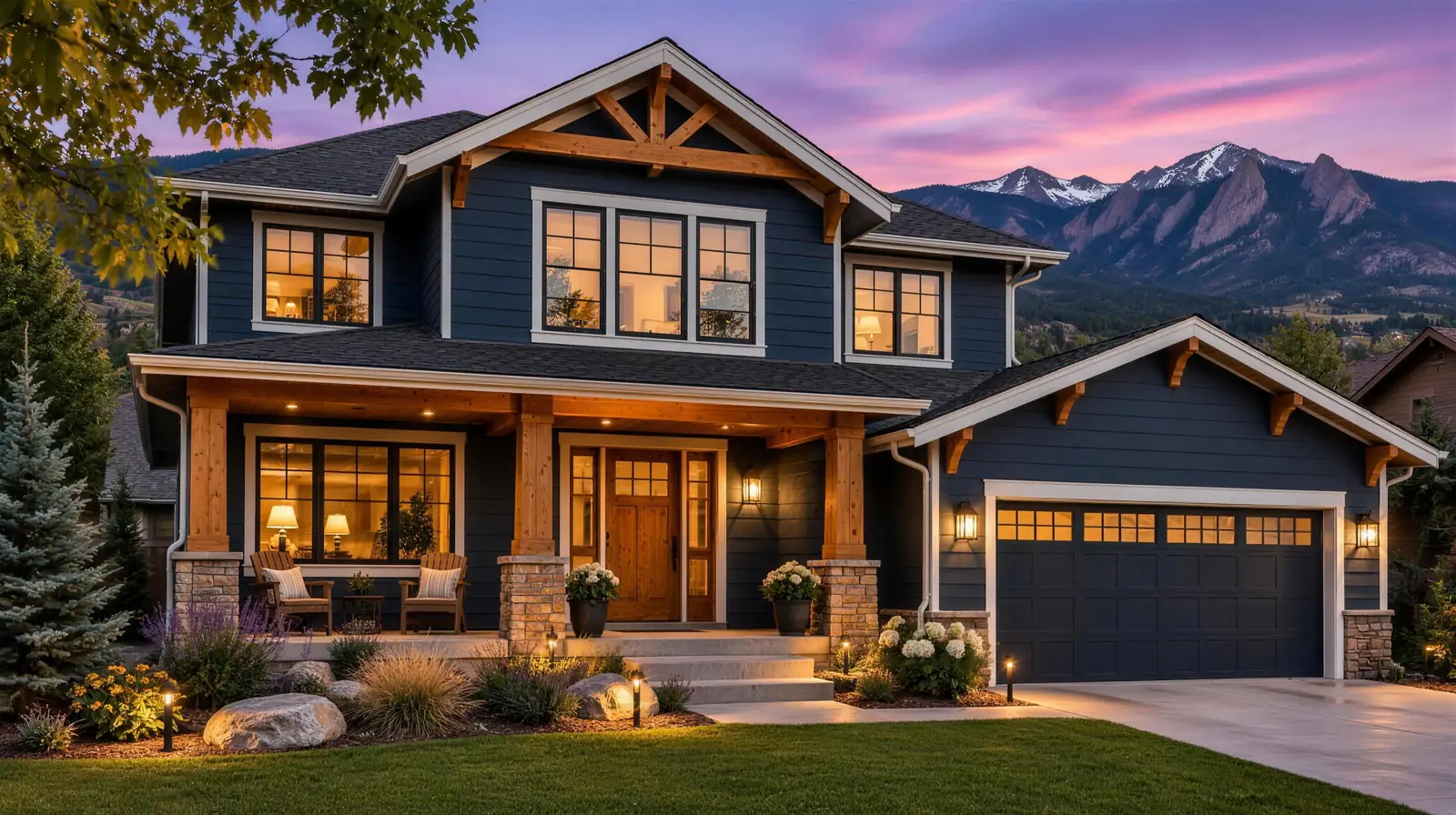
The subdivisions east and south of the old town look more like the homes along I-25: engineered wood or fiber cement siding, stone accents and HOA rules on color. Prep is lighter, but builder caulk at window trim and butt joints is usually cracked by the first repaint, and the south and west walls tend to be chalky enough that paint won't bond until they're washed. Engineered wood needs a close look at the bottom edges and anywhere a roof line or deck ledger dumps water onto the siding. Those homes also have less trim to break up a wall, so body color does more of the work, and a slightly deeper shade than the builder's beige usually hides dust and sprinkler marks better. If you live toward Loveland, our Loveland exterior painting page covers that side of the area. Either way, request an estimate and we'll look at the whole house with you.