How Dacono homes weather
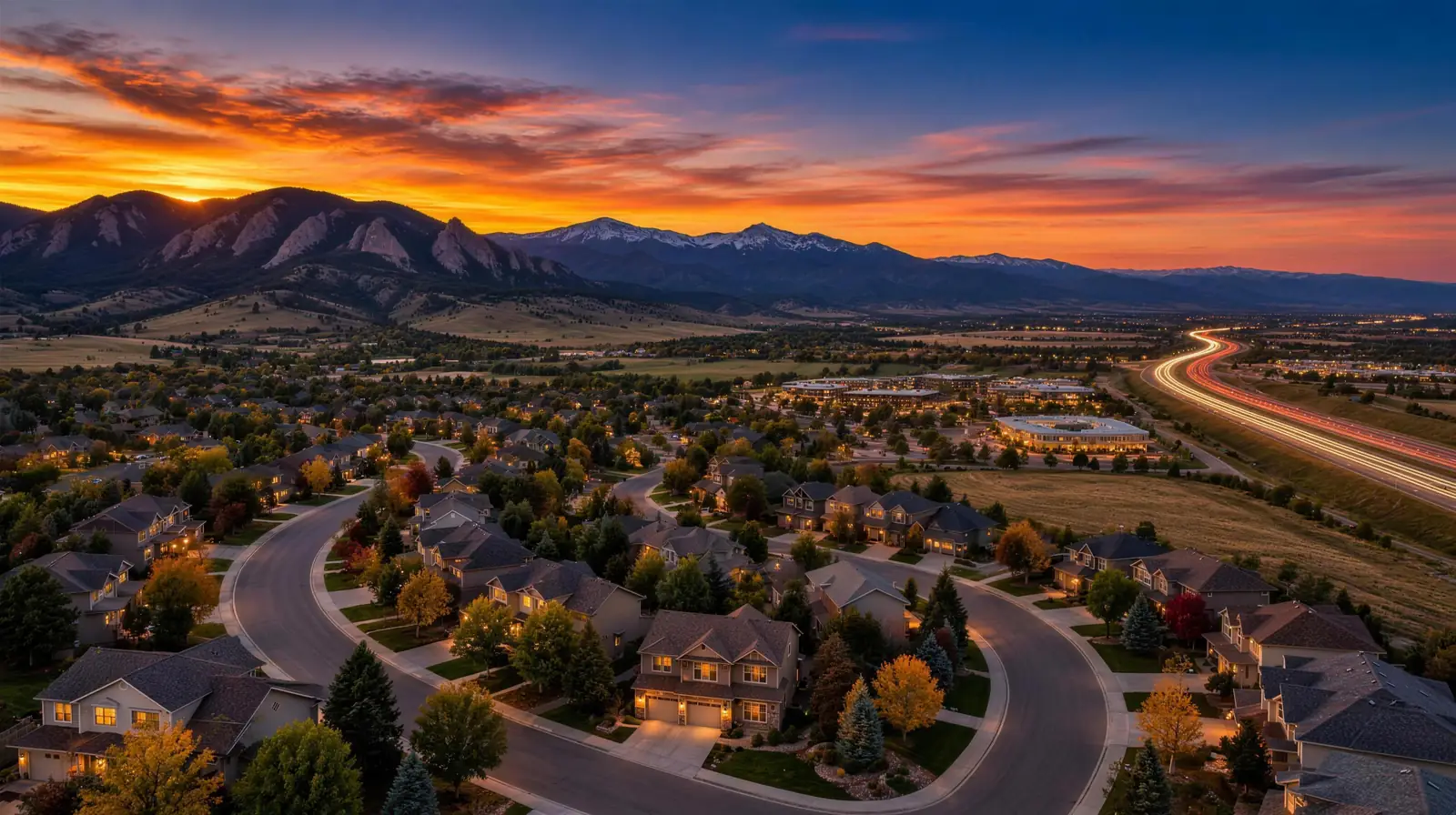
Dacono is one of the three Carbon Valley towns near I-25, along with Frederick and Firestone, and like its neighbors it began as a coal town. The original town has older, smaller homes, some old enough to fall under lead-safe rules for pre-1978 houses. Most of Dacono's housing came later, much of it in subdivisions with engineered wood or fiber cement siding, painted trim and wood privacy fences.
At about 5,000 feet with little to block the weather, these houses take sun and wind from every direction. Trees in newer neighborhoods are young and small, so walls get little shade. That's a big reason south and west walls here often look faded well before the rest of the house.
Wind on the open plain
Wind is the daily scheduling question for us in Dacono. Spraying in a breeze drifts paint onto cars, roofs, fences and the house next door, and lots in newer subdivisions sit close together. So we spray only on calm stretches, usually mornings, and brush and roll when it picks up. Wind also dries paint faster, which can leave lap marks across big wall sections; working smaller sections, in shade where possible, keeps a wet edge.
Repaint now or wait?
If this, then that
- If paint rubs off on your hand as chalk but nothing is peeling, then the coating is wearing thin and a repaint within a season or two will protect the siding.
- If caulk at trim and siding joints has cracked or pulled away, then recaulk soon even if painting waits, because those gaps let water reach engineered wood edges.
- If a hailstorm left chips on trim and garage doors, then prime and touch up the bare spots before winter.
- If only the front door or garage door looks rough, then paint those first. They're small jobs that change how the house reads from the street.
- If the color still looks even and the caulk is tight, then wait and check again next spring.
For garage doors, front doors and fascia, see our trim and fascia painting page.
Colors that hold up in full sun
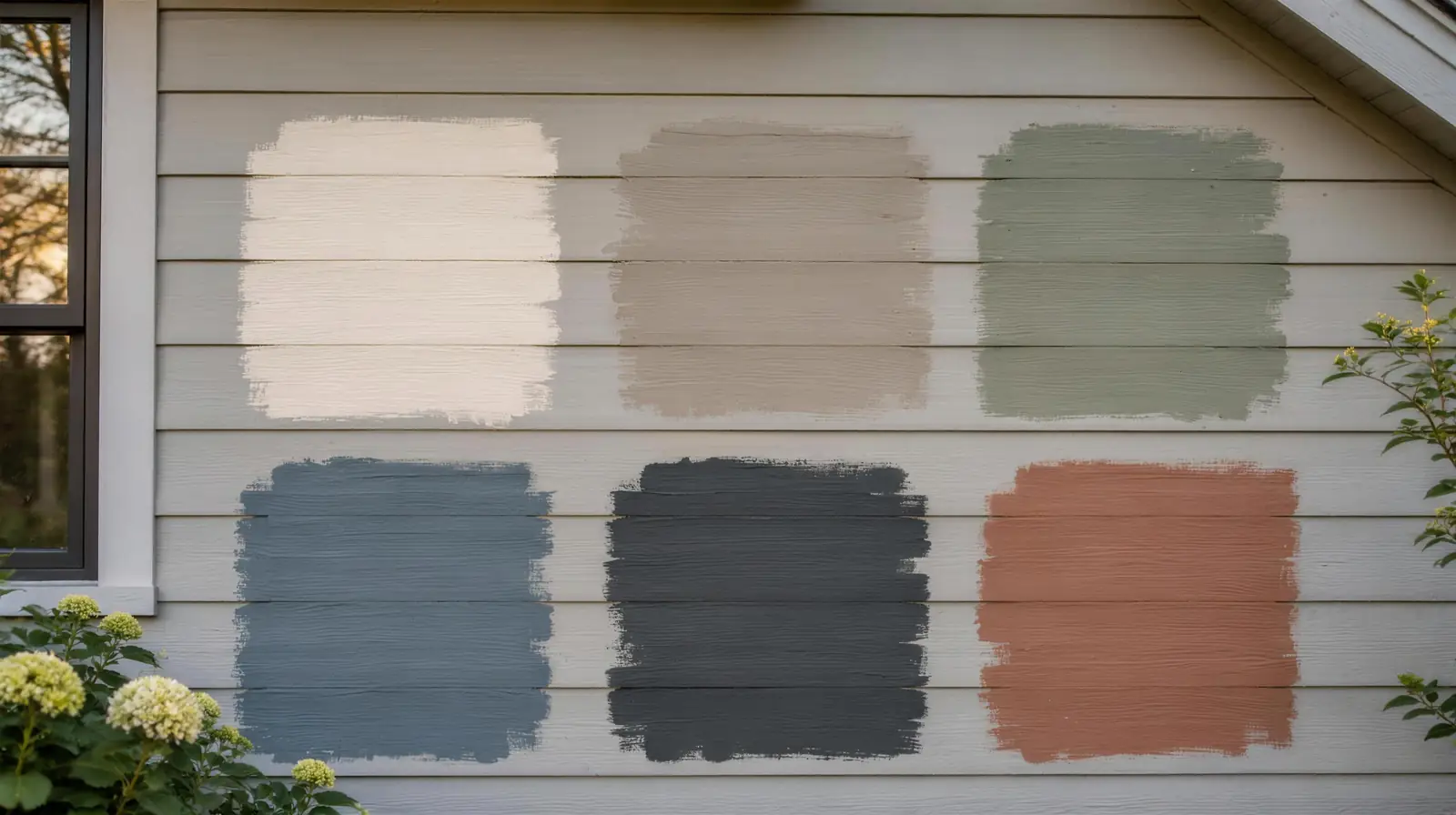
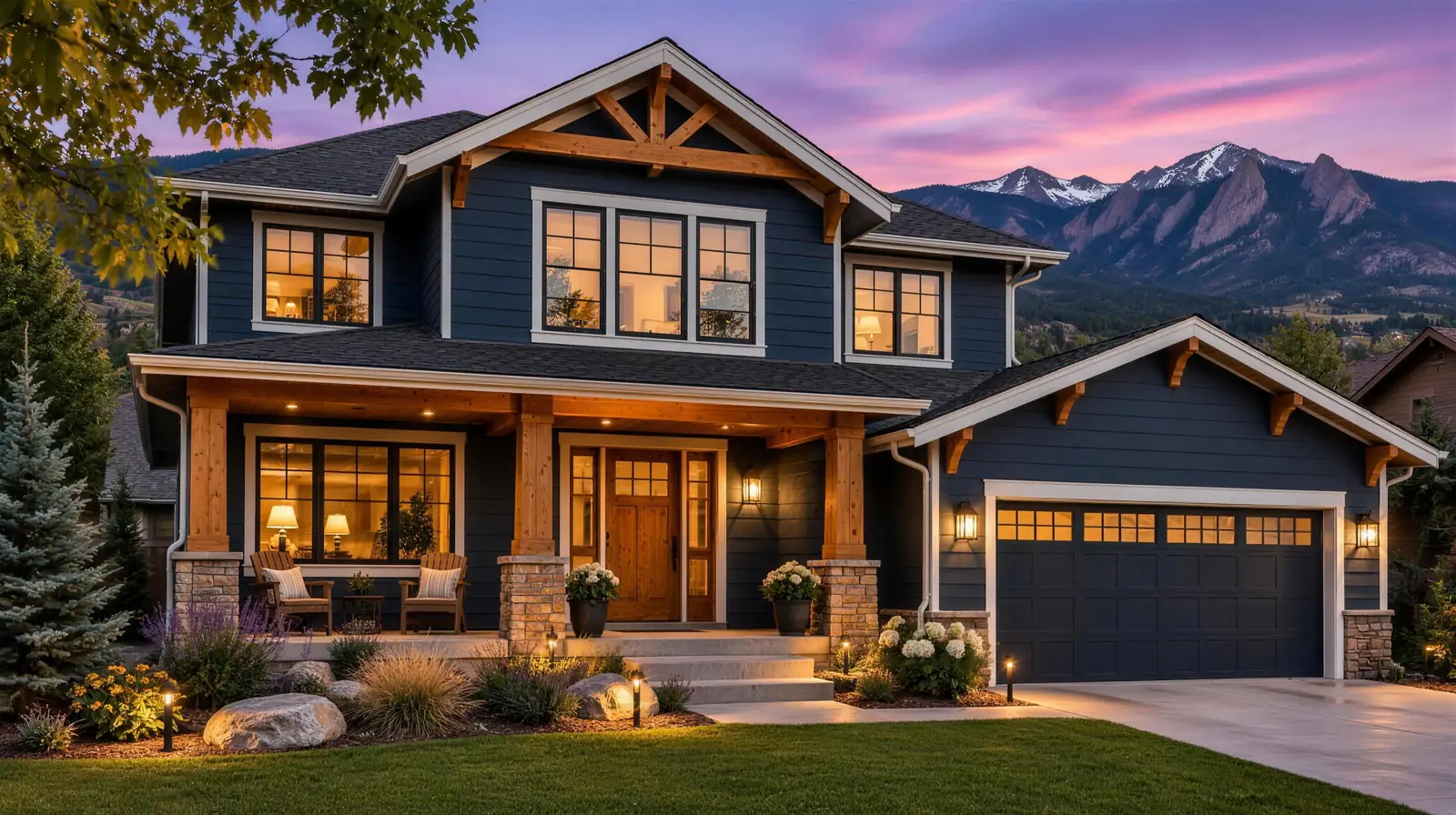
With so little shade, color choice matters more in Dacono than in older, tree-lined towns. Deep, saturated colors such as strong reds, blues and greens fade faster under high-altitude UV, and the change is most obvious on south and west walls. Very dark body colors also run hotter in direct sun, which works the caulk joints harder through daily heating and cooling. Light colors show dust and sprinkler spotting sooner. Mid-tones tend to be the most forgiving. Before going much darker than your current color, check the siding maker's guidance; some limit how dark a coating can go. If your neighborhood has an HOA, its approved palette narrows the choice anyway.
Fences take the worst of it
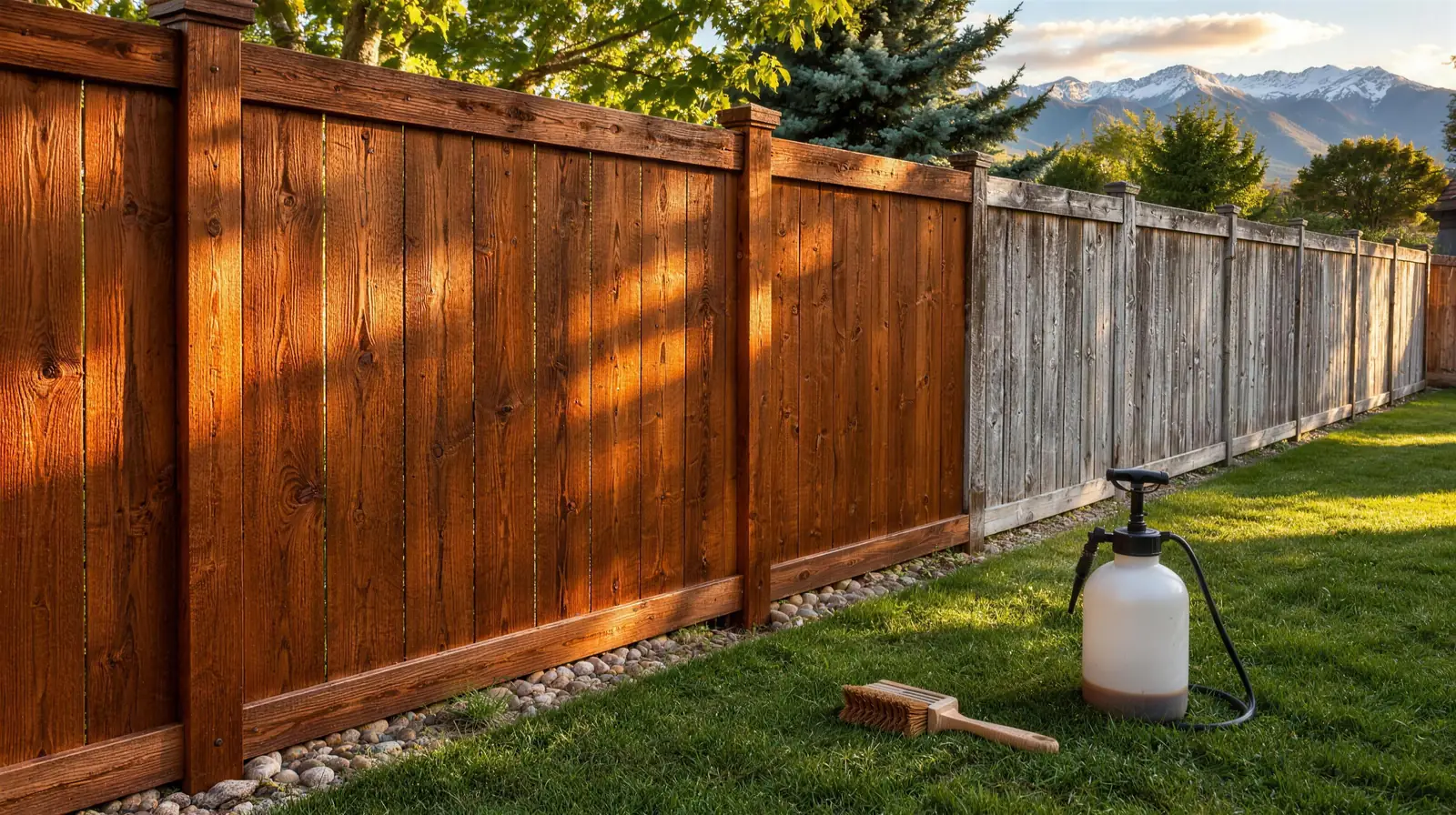
Wood privacy fences are common around Dacono yards, and they weather faster than the house. A fence has no roof overhang, takes sun on both faces and collects sprinkler spray and snow at its base. Once the wood turns gray and starts to check, stain soaks in unevenly. We clean and brighten the wood first, let it dry fully, then apply a penetrating stain. Our deck and fence staining page covers product choices.
What we check when we walk a Dacono house
We start with the sunny walls and the side storms come from, then look at the bottom edges of siding where sprinklers hit, the caulk around windows and the garage door. We note any boards with swollen edges and ask whether colors need HOA approval. Homes just up the road in Frederick follow a similar pattern.
Request an estimate and we'll put what we find in writing.