Mature Trees Change the Prep
Much of the Village is heavily treed, and the High Line Canal corridor runs through it with its big cottonwoods. Trees are a large part of why the neighborhoods look the way they do, and they also shape the paint job. Shaded walls stay damp longer after rain and snow, and north sides under a canopy grow mildew and algae that paint will not stick to. Sap, seed fluff and leaf debris collect on trim and in gutters, and branches that touch the roofline wear through fascia paint.
Our prep on these houses starts with washing that includes a mildew treatment where we find growth, followed by a thorough rinse and full drying time. We ask for trees to be trimmed back from the house before the crew arrives, because painting under a branch that rubs the eave means repainting that spot again soon.
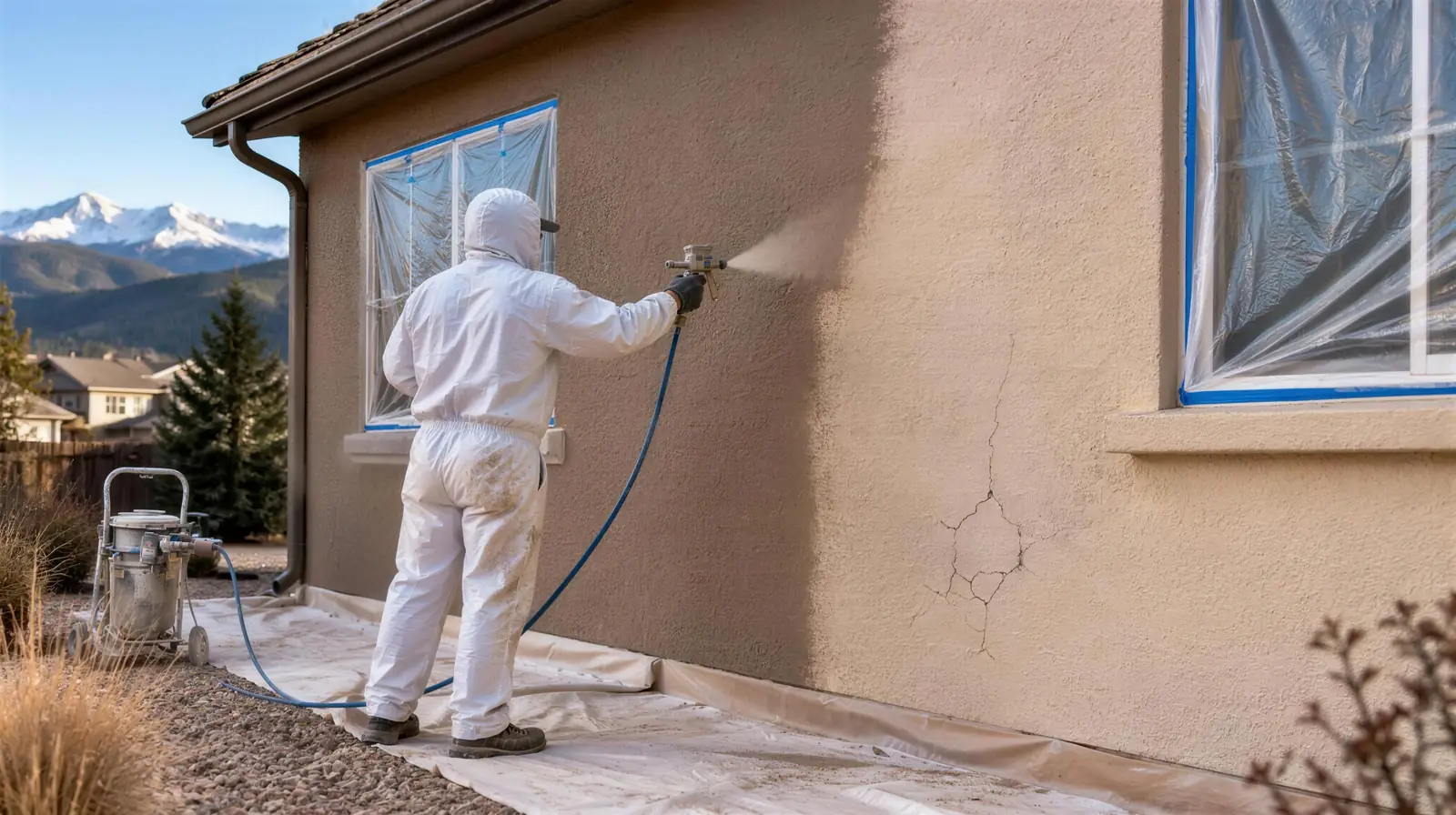
The opposite side of the same house may face an open lawn in full sun. At this altitude that wall chalks and fades quickly, so a single house often has two very different prep plans.
Remodels and Additions: Making Old and New Read as One House
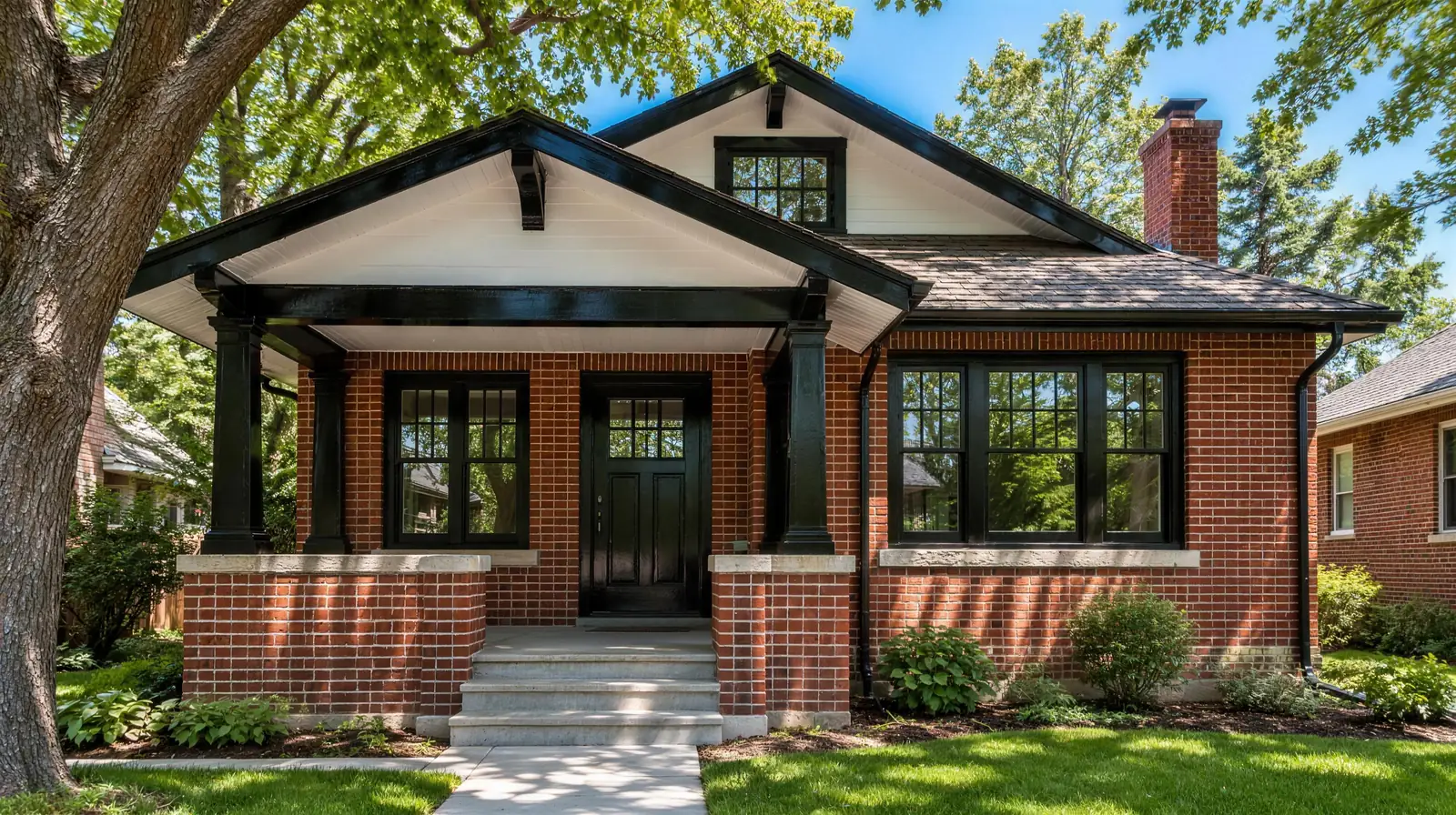
Many homes here have been added onto, sometimes more than once. The result can be original brick or painted wood on the main house and fiber cement, stucco or newer wood on the addition. Those surfaces absorb paint differently, so the same color can look like two colors in different sheens.
We prime each substrate with the product it needs, then use the same topcoat and sheen across the whole house. Where the textures differ a lot, we test both surfaces side by side before committing. Details on each siding type are on our siding painting page.
Detail Work Is Most of the Job
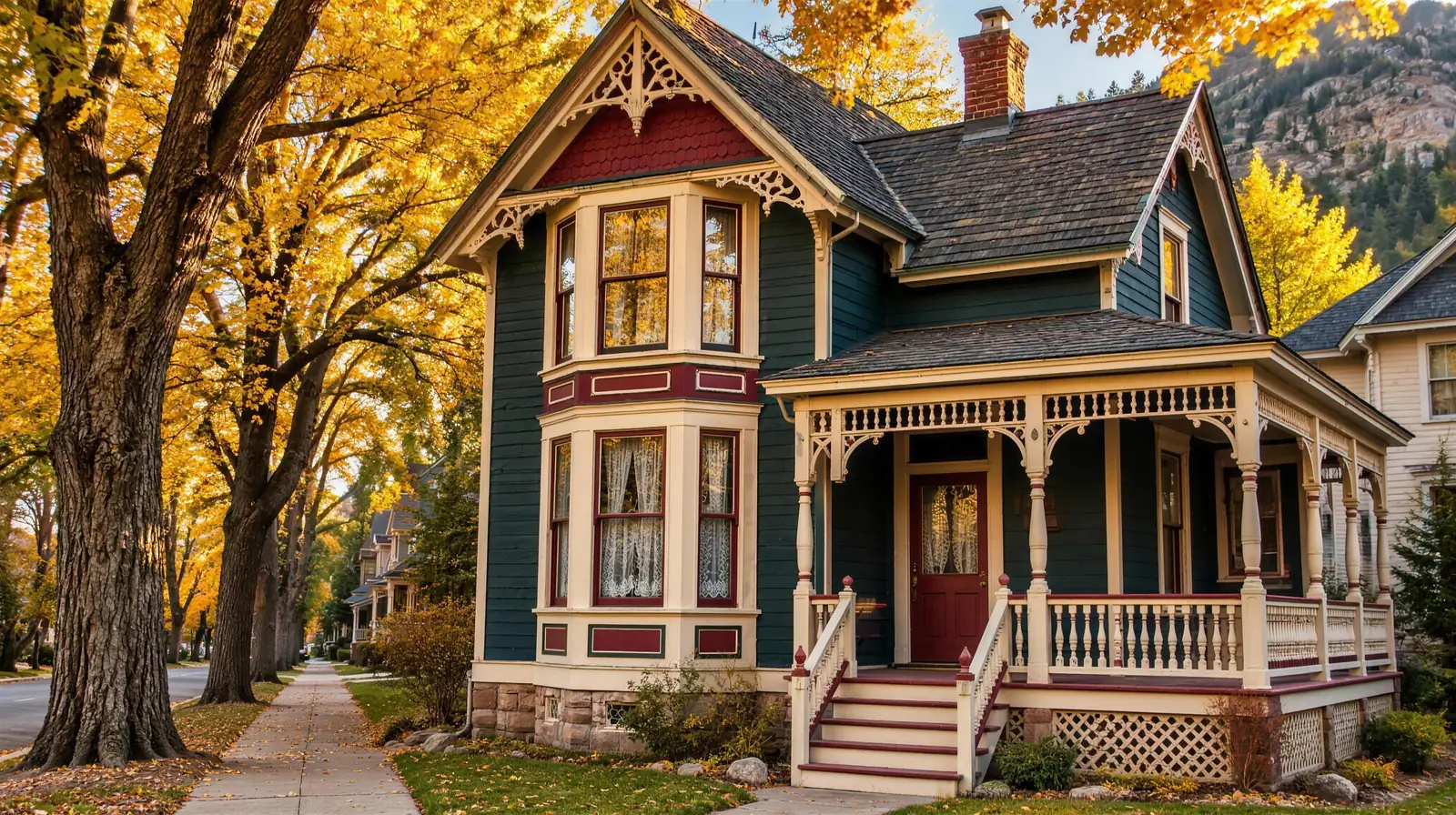
On a large traditional home, the walls are often the quick part. Divided-light windows, shutters, columns, dentil and crown moldings, multiple entry doors and garage doors are where the hours go. Most of that is brushwork, and the quality of the caulk lines and cut lines is what you see from the front walk. We cover our approach on the trim and fascia page.
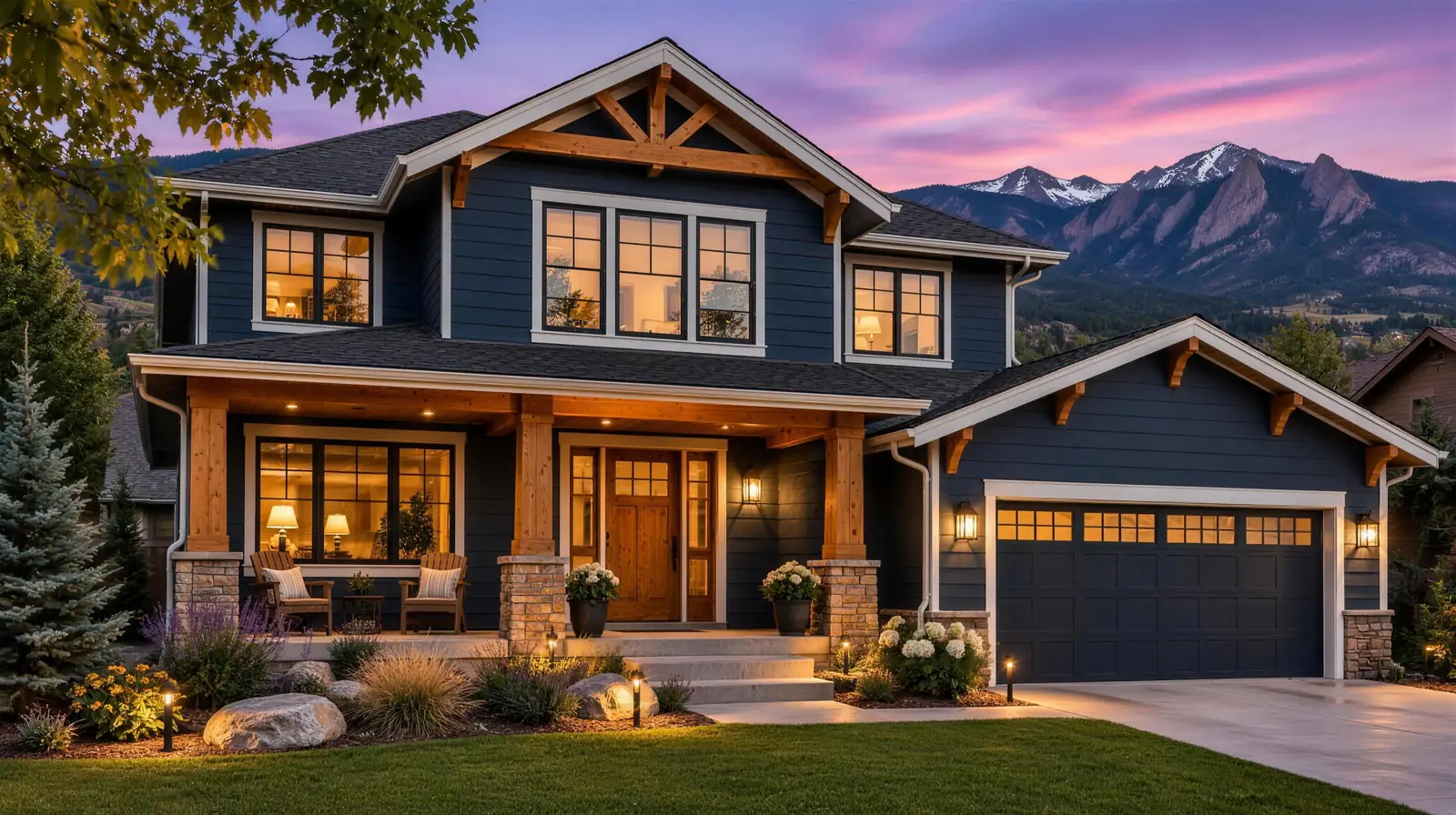
Dark colors like navy, charcoal and deep green are popular on these houses. They look sharp, but they show lap marks and uneven sheen more than lighter colors, and they absorb more heat. We apply them in smaller sections, keep a wet edge, and avoid painting a dark wall while it's in direct sun.
Working on a Large Property
Long drives, gated entries, irrigation zones and landscaping all need planning before the first day. We ask for sprinklers near the house to be turned off or adjusted during the work, so walls stay dry and fresh paint doesn't get spotted. We also confirm where equipment can be staged, how pets will be kept clear, and which areas of the yard and hardscape need extra protection. Stone patios and walks get covered before any paint goes up nearby.
Older estates may also have outbuildings, pool houses, garden walls or long runs of painted fence. We price each one as its own line, so you can decide what to include this year and what can wait.
Bigger houses take longer, so the job is more likely to run into a storm or a cold morning. We plan the order of elevations around the weather and the shade, starting where the walls will be dry and warm enough first.
What Matters Most Here
The bottom line
On homes in Cherry Hills Village, the paint itself is rarely the weak point. Mildew left under new paint, mismatched sheen between old and new walls, and rushed detail work are what make a repaint look tired early. Ask any painter how they handle those three.
Nearby Greenwood Village has a similar mix of large homes and materials. Request an estimate and we'll walk every elevation with you.